Tebboune Outlines National Economic Future, Industrial Drive
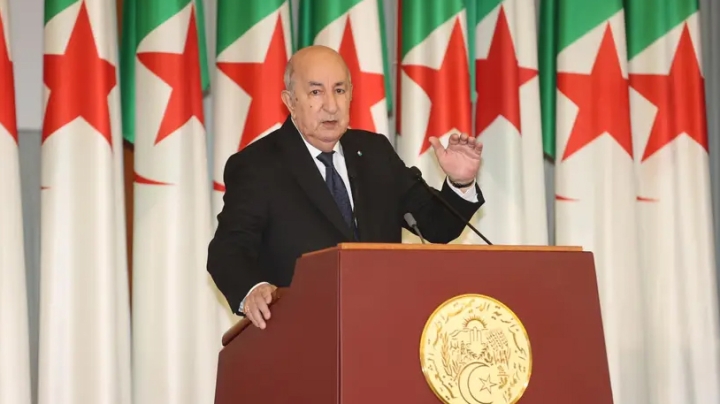
President Abdelmadjid Tebboune recently met with economic operators at the Abdellatif Rahal International Conference Center in Algiers to outline the next phase of national economic development. This pivotal meeting established priorities to develop the national economy, with ambitions to achieve a gross domestic product of $400 billion. The primary focus centers on accelerating economic diversification, significantly reducing dependence on hydrocarbons, and expanding the national production base to enhance the contribution of non-hydrocarbon sectors to wealth creation.
The President's initiative emphasizes strengthening national economic capabilities through the development of local production and an improved investment climate. Efforts will be directed towards achieving self-sufficiency in strategic sectors, thereby reducing import expenditure and reliance on foreign markets. The industrial sector is highlighted as a fundamental driver in Algeria's gradual transition away from hydrocarbon dependency, with projections indicating it could record the highest growth rate between 2027 and 2029, estimated at 5.9%.
Key to this industrial expansion is the mining sector, which holds a central position in the state's strategy for economic diversification. Major structural projects, including the Gara Djebilet iron and steel mine in Tindouf, the integrated phosphate project in the east, and the zinc and lead mine project in Béjaïa, are actively underway. These projects are not only crucial for resource exploitation but also for supplying essential raw materials to develop other processing industries, broaden local production chains, and increase the national economy's added value. The President also reaffirmed support for investors, committing to provide conducive conditions for productive projects that transform national potential into tangible output and economic value.
The meeting is expected to define a clear roadmap for the upcoming period, establishing economic priorities such as accelerating investment projects, boosting production capacities, and advancing sectors where Algeria possesses the potential to lessen its reliance on external markets. Economic operators are encouraged to engage actively in this dynamic by intensifying sustainable, productive investments. Such commitments are vital to support growth, diversify income sources, and bolster the national economy's independence against global fluctuations, while curtailing the depletion of public treasury resources through imports.