Geneva Session Passes AI and Human Rights Text; Algeria Helps Draft
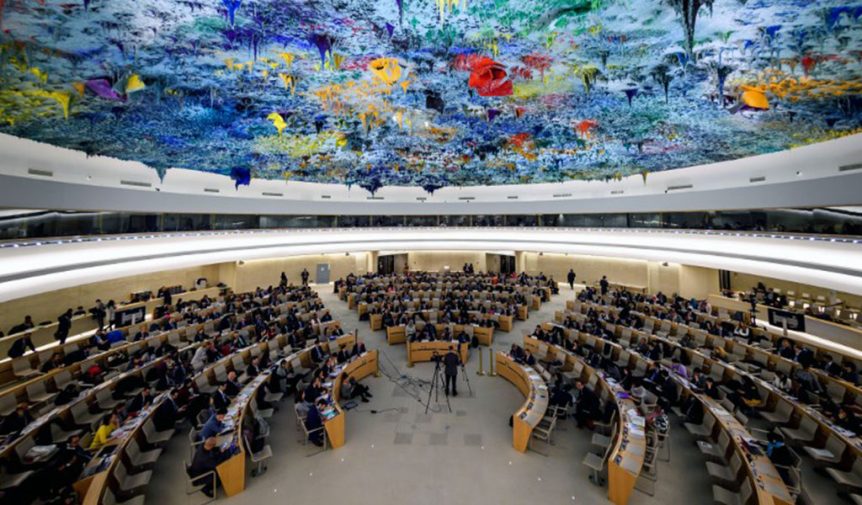
The United Nations Human Rights Council recently adopted a resolution addressing the implications of artificial intelligence (AI) for the promotion and protection of human rights. Passed on Tuesday in Geneva during the Council's 63rd session, the resolution was presented by an interregional core group that included Algeria, alongside Bangladesh, Egypt, Austria, Greece, Nepal, Guyana, and Kuwait. Algeria played an active role in both drafting the resolution and the subsequent negotiations, contributing significantly to its eventual adoption. The initiative was well-received by participating delegations and civil society organizations, underscoring its relevance in current global discussions.
The resolution explicitly integrates the priorities of developing countries, notably focusing on reducing the technological gap in AI, fostering stronger international cooperation, and facilitating the transfer of expertise and technology. It also considers AI's impact on the future of work and the right to development. The text emphasizes that the design, development, deployment, and use of artificial intelligence must adhere strictly to international law, including international human rights law, and that AI governance should be guided by the principles enshrined in the United Nations Charter, such as international cooperation, sovereign equality, and non-discrimination.
Further, the resolution advocates for inclusive AI governance that acknowledges diverse national contexts, capacities, and development levels. It calls for expanded participation from all states, particularly developing countries, in discussions surrounding AI governance, while encouraging approaches that uphold human dignity, transparency, accountability, and effective human control over AI systems. Additionally, the resolution reminds private sector companies, including technology firms, of their human rights responsibilities and promotes international cooperation, capacity building, technical assistance, and technology transfer for the benefit of developing nations, alongside increased access to public digital products and open-source AI models.
The adoption of this resolution reinforces Algeria's commitment to defending the priorities of developing countries within UN forums and its contribution to formulating balanced approaches that harness modern technological opportunities while safeguarding human rights. This engagement also solidifies Algeria's active presence in global AI governance processes, consistent with its steadfast dedication to multilateralism and international cooperation founded on sovereign equality and solidarity among states. A roundtable titled "Human rights at the heart of AI: strengthening capacities and bridging the gap" is scheduled for the Council's 65th session, with a report on the matter to be prepared by the UN High Commissioner for Human Rights for the 66th session.