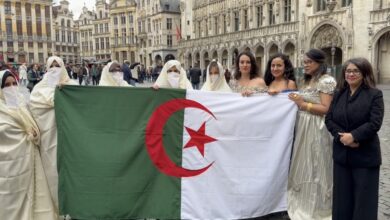
Minister Ben Douda Celebrates Tuareg “Akhbay” Dress in Djanet
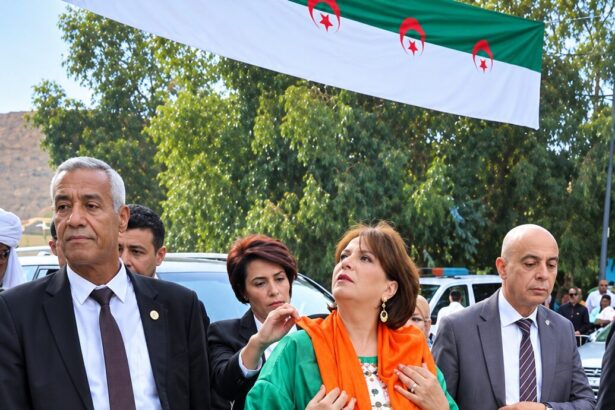
Minister of Culture and Arts, Malika Ben Douda, recently honored the traditional dress of Tuareg women in the Azjar region, drawing attention to the elegance and dignity of women in Djanet. She specifically celebrated the “Akhbay” dress, highlighting it as an authentic expression of the area's profound cultural and social identity. This recognition underscores the vibrancy of Algeria's diverse heritage.
In her reflection, Minister Ben Douda described the “Akhbay” dress as possessing vibrant colors and inherent dignity, embodying elements of the desert environment, the hues of the oasis, mountain shadows, and the essence of sunset evenings. She further noted that its intricate details carry the memory of mothers who transmitted regional traditions across generations. This view extends beyond mere aesthetics, connecting the elegance of Tuareg women to the collective memory of Djanet, affirming that heritage protection encompasses customs, traditions, and cultural expressions as integral to societal identity, not solely historical monuments.
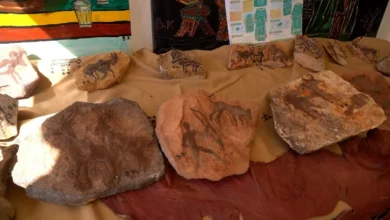
The celebration of the “Akhbay” coincides with Djanet hosting the inaugural Algerian International Rock Art Festival, scheduled from October 20 to 24, 2026. This festival aims to showcase the richness of the region's cultural heritage and reinforce efforts to protect, value, and transmit it to future generations. Traditional Tuareg costumes transcend aesthetic appeal, forming a vital component of both material and intangible heritage, conveying significant social and cultural meanings that reflect the distinctiveness of Tuareg society and its deep connection to the Saharan environment. An academic study published in the “Qabas Journal for Human and Social Studies” in 2022 also underscored the importance of traditional clothing and jewelry among the Tuaregs of the Greater Algerian South for preserving identity and cultural continuity.
Consequently, the “Akhbay” dress stands out as a symbol of elegance and authenticity within Azjar's local memory, representing a form of heritage passed down by women through successive generations. This emphasizes the need for its documentation, promotion, and the preservation of its craftsmanship and cultural meanings. Through such initiatives, Djanet's Rock Art Festival not only honors the human memory etched on mountain faces but also embraces a living memory sustained by its women through their dress and traditions, demonstrating that heritage is a dynamic, renewing force within daily community life, rather than merely a preserved artifact in museums.