Companies Transition to Investment for Sustained African Economic Footprint
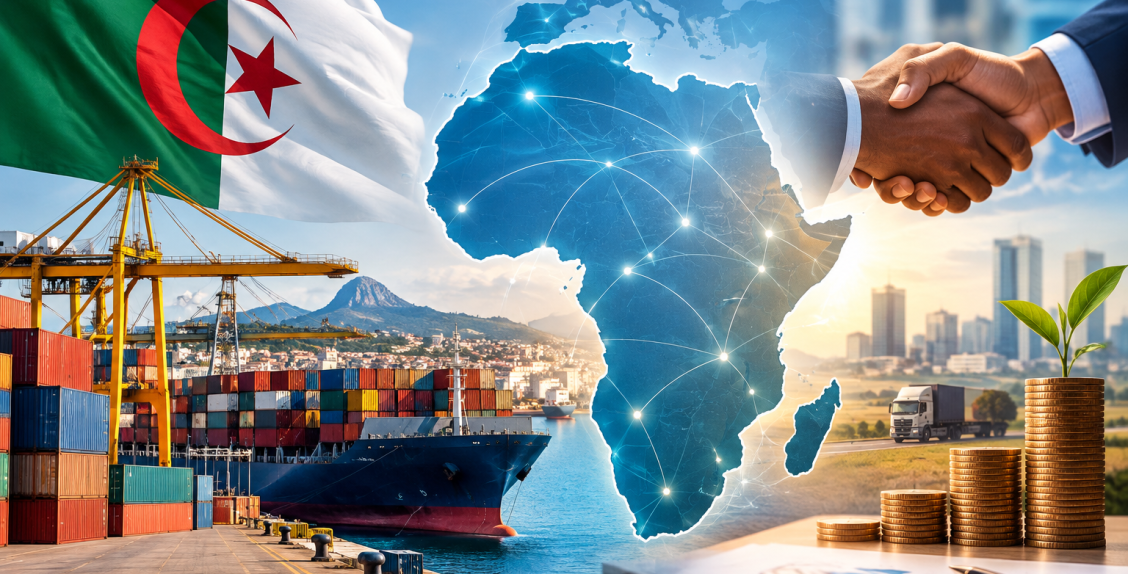
Algerian companies are currently embarking on a strategic shift in their engagement with African markets, moving beyond a model primarily focused on single export transactions. This evolving approach aims to build extended economic relationships through local partnerships, advanced distribution channels, and direct investment, thereby fostering a sustainable economic footprint. Economist Abdel Nour Gachi emphasizes that this transition is crucial for creating shared value chains and establishing a lasting presence within the continent’s diverse markets, transforming Africa into a dynamic space for production, partnerships, and investment.
Evidence of this expanding economic engagement is reflected in Algeria's growing share of intra-African trade, which increased from 1.9% in 2022 to 2.2% in 2024. Furthermore, non-hydrocarbon exports experienced a 16% growth in the first quarter of 2026 compared to the same period in 2025. The African Inter-Trade Fair, hosted by Algeria in 2025, underscored significant economic opportunities, facilitating over $48.3 billion in signed contracts. Algerian companies secured $11.4 billion in direct contracts and had an additional $11.6 billion in deals under negotiation, indicating a substantial total potential engagement of approximately $23 billion and highlighting the potential to convert trade encounters into ongoing economic partnerships.
To solidify their position, Algerian companies are leveraging local partners who offer essential market knowledge, alongside developing robust distribution networks. Practical opportunities for expansion exist in sectors such as building materials, processing industries, food, chemical, plastic, pharmaceutical, and electrical equipment. Initial market testing through exports can lead to establishing warehouses, distribution centers, production units, or joint ventures. Regional connectivity projects, including the Trans-Saharan Highway and the Tindouf-Zouerate road, are enhancing logistical capabilities for goods movement towards West African markets, facilitating the creation of regional distribution hubs. The expansion also extends to the services sector, with Algerian expertise in engineering, public works, construction, telecommunications, and digital solutions being exported, creating additional revenue streams and extended economic ties.
Direct investment represents a more advanced stage of this expansion, allowing companies to establish local manufacturing plants, distribution hubs, or logistical platforms. This approach enables greater proximity to consumers, better adaptation of products to market needs, and reduced operational costs, while simultaneously fostering local supplier and distributor networks. The African Continental Free Trade Area (AfCFTA) provides an expansive economic framework for Algerian businesses to achieve gradual regional expansion across a market of over 1.4 billion people. The overarching objective is to convert immediate trade opportunities into sustainable projects and value chains, ultimately boosting the added value of Algerian exports and cementing a permanent economic position in Africa.