Doha Global Forum Hosts Algerian Investment Reform Presentation
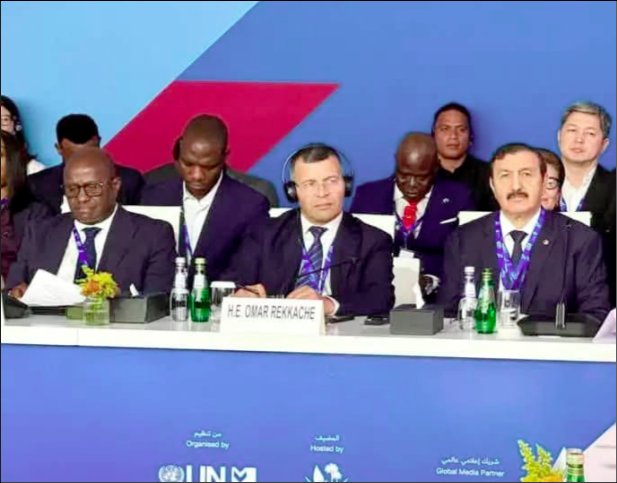
Omar Rekkache, Director General of the Algerian Agency for Investment Promotion (AAPI), recently presented Algeria's experience in reforming its investment system during the Global Investment Forum 2026 in Doha. His intervention took place at a high-level roundtable, which focused on the pivotal role of investment promotion agencies and special economic zones in shaping a new era of investment. The forum was held from October 25 to 27.
Mr. Rekkache highlighted the profound changes in global investment, emphasizing the need to move beyond merely attracting foreign capital. He underscored current objectives, including ensuring the effective realization of projects, facilitating their operationalization, and establishing integrated productive ecosystems designed to generate sustainable added value for host economies. In this context, Algeria has embarked on reforms to modernize its legal framework for investment, digitize services, simplify administrative procedures, and facilitate access to economic land, all aimed at enhancing investor reception and support mechanisms.
The AAPI Director General also elaborated on the complementary missions of Algeria's national investment promotion and support institutions. He noted that AAPI is responsible for promoting Algeria as an investment destination, identifying potential investors, and developing partnerships, while the National Single Window for Investment handles project-related procedures and decisions. Rekkache further addressed special economic zones, advocating for their design as integrated productive ecosystems supported by robust infrastructure, reliable energy, efficient logistics, and skilled human capital, with a focus on their integration into the national economy through local supplier relationships and value chain participation.
Regarding the performance evaluation of investment promotion agencies, Mr. Rekkache argued that solely measuring registered projects and announced investment amounts is insufficient. He advocated for an approach that considers concrete economic outcomes, such as the number of projects effectively entering production, the added value created, jobs generated, technology transfer, and contributions to export development.