Africa’s Historical Injustice Must Guide UN Security Council Reform, Attaf Says
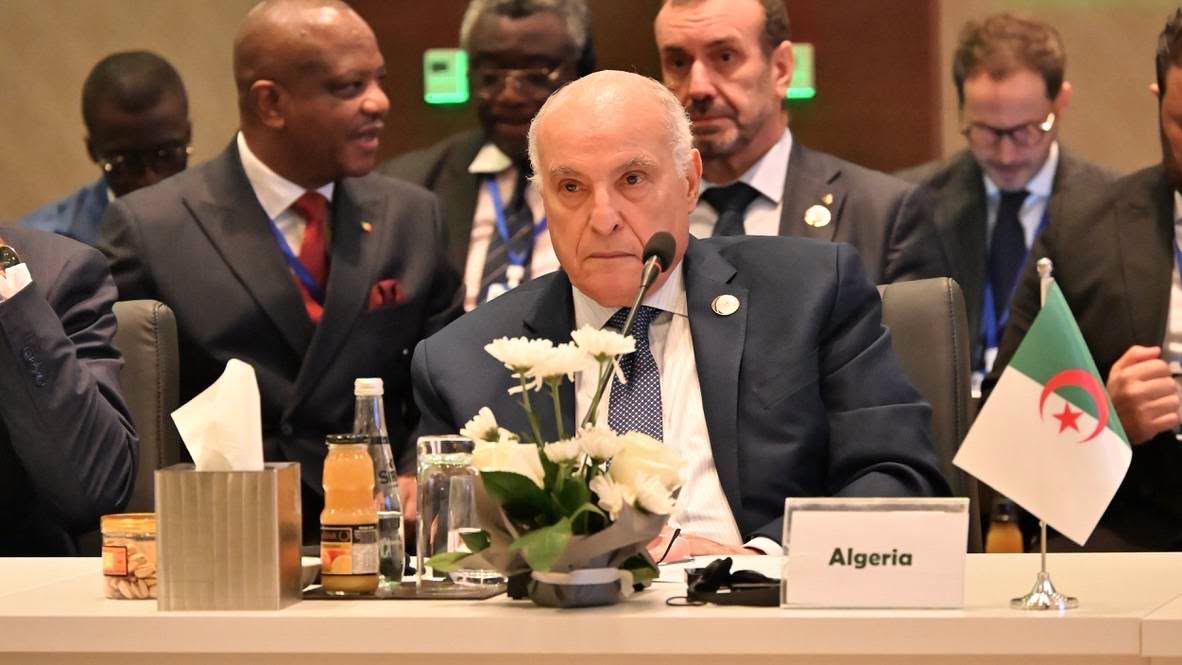
Algerian Minister of State, Minister of Foreign Affairs, National Community Abroad, and African Affairs, Mr. Ahmed Attaf, asserted that the reform of the United Nations Security Council must prioritize addressing the historical injustices suffered by Africa. Speaking in Tripoli, Libya, at the 14th Ministerial Meeting of the African Union's Committee of Ten (C-10) on Security Council Reform, Minister Attaf emphasized that this reform is no longer merely a conventional negotiation, but rather a fundamental matter of justice, legitimacy, and credibility for the international system. He noted that the multilateral system faces a critical test of its capacity to resolve crises and restore confidence in global institutions.
Minister Attaf highlighted that the current structure of the Security Council fails to reflect significant global transformations, including shifts in power balances, political maps, and the substantial expansion of UN membership. He pointed out that in 1945, when the international system was established, most African nations were under colonial rule, leaving the continent without a voice. Consequently, it is deemed unacceptable, illogical, and unproductive for Africa to continue having limited representation in non-permanent seats and no permanent membership on the Council.
Africa, Minister Attaf stressed, demands the rightful and legitimate correction of this historical injustice, asserting that history should not be an impediment to current progress. The continent seeks a complete transition from merely bearing the consequences of the collective security system to fully participating in decision-making, ensuring equal treatment with other regional blocs. Algeria has welcomed the African Union's unified position on Security Council reform, as embodied in the Ezulwini Consensus and Sirte Declaration, presented by the C-10 group during intergovernmental negotiations.
Minister Attaf underlined that Africa's willingness to engage in negotiations does not signify a relinquishment of its principled stance, emphasizing that the continent's unity is its strength. He called for a concerted political effort to broaden support for Africa's demands, clarifying that rectifying injustice for Africa will not diminish any nation's status but rather enhance the Security Council's legitimacy and credibility. He affirmed Algeria's commitment to the UN intergovernmental negotiation process as the sole legitimate framework for achieving comprehensive and balanced reform, ultimately ensuring Africa's effective presence and greater representation, including permanent seats and veto power, at the heart of international decision-making.