
CACJobat, Interior Ministry Enhance Public Service Digitization
The National Fund for Paid Holidays and Unemployment Due to Bad Weather for the Building, Public Works, and Irrigation Sectors (CACJobat) has introduced three new digital services designed to streamline administrative procedures and enhance remote service delivery. These services, which include activity suspension, reactivation, and cancellation, are part of an ongoing effort to digitize administrative processes and expand the scope of remote public services. This initiative aligns with the Ministry of Labor, Employment, and Social Security's policy to promote the use of digital solutions, simplify administrative pathways, and bring public services closer to citizens, ultimately aiming to improve performance, service quality, and accessibility without temporal or geographical constraints.
The newly launched digital platforms allow users to complete procedures such as activity suspension, reactivation, and cancellation electronically, eliminating the need to visit fund agencies in person. Users can also track their requests online, which enhances the clarity of file processing and provides greater flexibility and transparency in managing transactions. Concurrently, CACJobat is actively upgrading its information system and strengthening its technological infrastructure by developing integrated digital solutions. These advancements are set to improve the seamless exchange of information across various services and systems, facilitating a gradual transition towards a more digitized and innovative administrative model.
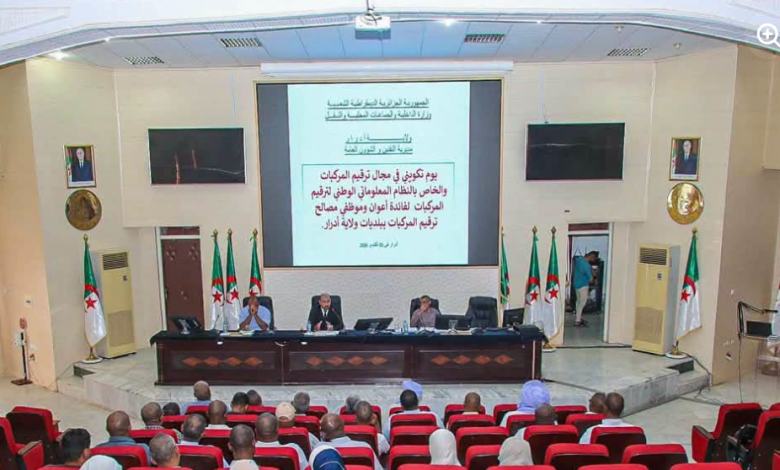
In a parallel effort to advance digital transformation and modernize administrative management, the Ministry of Interior, Local Communities, and Transport organized a training day on the national information system for the national vehicle registration file. Held across various wilayas, this initiative was implemented under the instructions of Minister Saïd Sayoud, aimed at continuing the digitization and modernization of public administration. The training involved officials from relevant departments, alongside engineers and agents from vehicle registration offices at the wilaya, daïra, and municipal levels, who received technical and practical explanations on the latest updates and additions to the national information system. This included specific details on registering new imported vehicles, expanding the system's reach, and refining its operational mechanisms.
The training session also served as a crucial opportunity to bolster coordination among the various involved departments, standardize operational procedures, and identify and address any challenges encountered. This focus ensures the accuracy, security, and continuous updating of data within the system. Emphasis was placed on the importance of proficiently utilizing the information system and adhering strictly to established regulatory and technical procedures. These measures are designed to enhance the performance of relevant services, strengthen coordination and information exchange, and guarantee that file processing occurs under more efficient and transparent conditions, ultimately improving the quality of public service and simplifying procedures for citizens.