American Expert Validates Tebboune’s Morocco Pipeline Assessment
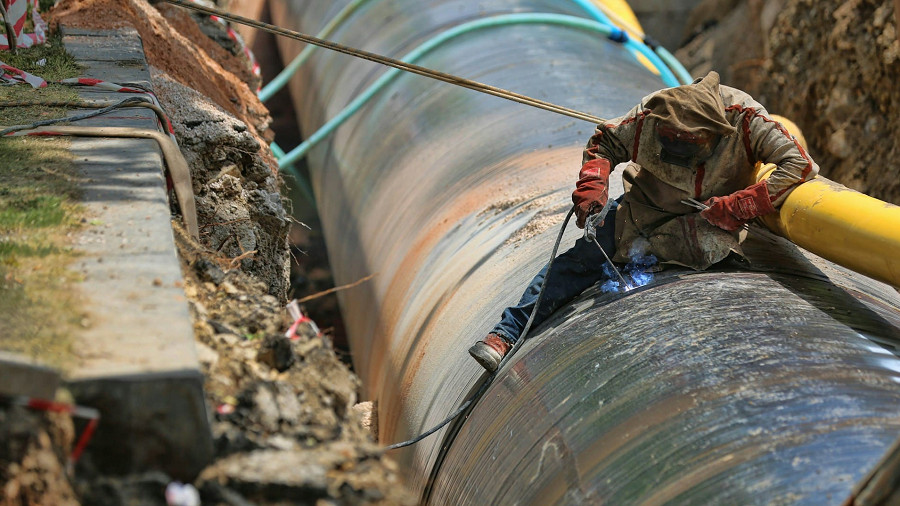
President Abdelmadjid Tebboune's earlier statements regarding the economic impossibility of the Morocco-Atlantic Gas Pipeline (AAGP) have been validated by American expert Jeffrey Porter, director of North Africa Risk Consulting. While initial reactions to President Tebboune's comments suggested political posturing, Porter's technical analysis demonstrates that the head of state simply articulated an incontrovertible mathematical truth: the project's accounting equation is structurally unworkable.
Porter's analysis highlights that the primary flaw of the AAGP is its extensive geography, requiring transit through 11 countries to connect Nigeria to Morocco. Within the hydrocarbons industry, each transit country demands a passage royalty, typically paid in kind, equivalent to 5% of the transported gas volume. According to Porter, accumulating 11 distinct royalty agreements instantly destroys any financial viability, pushing the return on investment far beyond the acceptable horizon for any private fund or international institution. To illustrate this financial absurdity, Porter references the TransMed gas pipeline, which connects Algeria to Italy via Tunisia, transporting 20 billion cubic meters of gas annually, with Tunisia, as the sole transit country, receiving 50 million dollars per month in royalties. Extrapolating these figures proportionally, an AAGP with a planned capacity of 30 billion cubic meters per year would incur a single transit right value of 75 million dollars per month. Multiplied by 11 countries, the total monthly cost would reach 825 million dollars, resulting in an annual revenue loss of 9.9 billion dollars for Nigeria. Such a sacrifice of national production is deemed unacceptable for any sovereign state.
In contrast to the Atlantic route's impasses, the Trans-Saharan Gas Pipeline (TSGP), currently nearing concrete finalization, emerges as the most rational and immediately viable alternative. By limiting its route to just three countries, the TSGP drastically reduces intermediaries and transit fees, bringing the overall construction cost down to between 10 and 13 billion dollars. Furthermore, this terrestrial corridor leverages existing giant gas infrastructures in southern Algeria, such as the Hassi R’Mel hub, facilitating much faster commissioning and competitive delivery costs to secure international market supply. Operationally, the Trans-Saharan project shows a concrete timeline and significant progress, with work officially launched on the Algerian section in Aoulef, Adrar wilaya, under Sonatrach's direct supervision. Niger has also initiated topographic surveys to finalize its 841-kilometer pipeline route, preparing for construction to commence early next year. This synchronized effort among Algeria, Niger, and Nigeria underscores the partners' commitment to realizing the infrastructure in the short term.
A gas pipeline is fundamentally built to generate profits, and the AAGP fails this essential criterion. President Tebboune’s assertion that the project would never materialize was not mere rhetoric; supported by Jeffrey Porter’s rigorous calculations, it reflects the economic realities that render the Africa-Atlantic gas pipeline commercially insurmountable due to its inherent lack of profitability.