Research and Investment Drive Sidi Bel Abbès Economic Progress
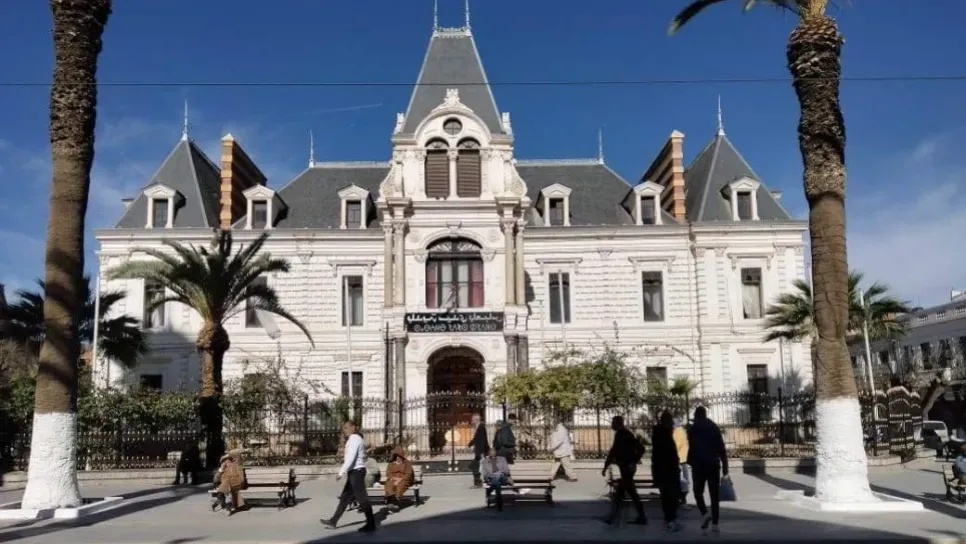
Sidi Bel Abbès province is establishing itself as a distinctive model for economic development in Algeria, effectively blending significant food security capabilities with promising industrial expansion. Located approximately 400 km west of Algiers, the region serves as a crucial transit hub connecting western provinces to the south, supported by an active railway line that streamlines goods transportation and distribution. Its strategic proximity to western ports and airports further provides a key logistical advantage, reducing costs for transport and exports. The province's rich historical industrial heritage in mechanical, processing, and electronics sectors, alongside a fertile agricultural basin, underpins its multifaceted economic strength.
The current economic dynamism in Sidi Bel Abbès is marked by a resurgence, driven by new investments and a robust local workforce. Six industrial and investment projects have been established, including facilities for furniture manufacturing, marble and granite processing, pump production, plastic conversion, and a factory for perfumes, cosmetics, and hygiene products. Additionally, the region hosts a significant facility in Ben Badis for drying and canning agricultural products, capable of producing 1300 tons annually, and a cancer drug manufacturing plant in the city of Sidi Bel Abbès with an output of 400,000 boxes per year. This growth is supported by Djillali Liabes University, which is increasingly recognized internationally and collaborates with the National Electronic Industries Company and vocational training centers to supply qualified human resources and skilled labor.
Scientific research and educational initiatives from Djillali Liabes University play a pivotal role in bridging academic innovation with market needs, fostering a knowledge-based economy. The university has actively promoted the creation of startups by students and faculty, leading to the registration of eight new enterprises under the "Proto Market 1" plan, with ongoing projects focusing on energy generation from used oil, ozone gas applications for sterilization and water treatment, and advanced material separation technologies. In agriculture, the university is leveraging ozone gas in irrigation to enhance crop yield and accelerate growth, with experimental successes at the Institute of Agricultural Sciences. An agreement with Italy's Tuscia University further aims to promote scientific cooperation and research, aligning with broader national strategies to modernize agricultural practices.
Sidi Bel Abbès significantly contributes to national food security, boasting 363,000 hectares of arable land and aiming to produce 1.4 million quintals of cereals in 2026. The state is actively supporting this objective by enhancing storage capacity, providing ten new facilities, each with a 50,000 quintal capacity, complementing existing cooperative storage and a large silo under construction. This strategic focus includes the localization of the Sonalika Famag factory, an Algerian-Indian partnership for agricultural tractor manufacturing, which is integral to President Abdelmadjid Tebboune's national strategy to boost agricultural mechanization, modernize production methods, and reduce import dependency. These concerted efforts aim to restore the province's leading position in cereal production, projecting a cultivation target of 132,000 to 136,000 hectares for the 2026-2027 season.