Tunisia: Key Ennahda Leaders Released Amid Protests
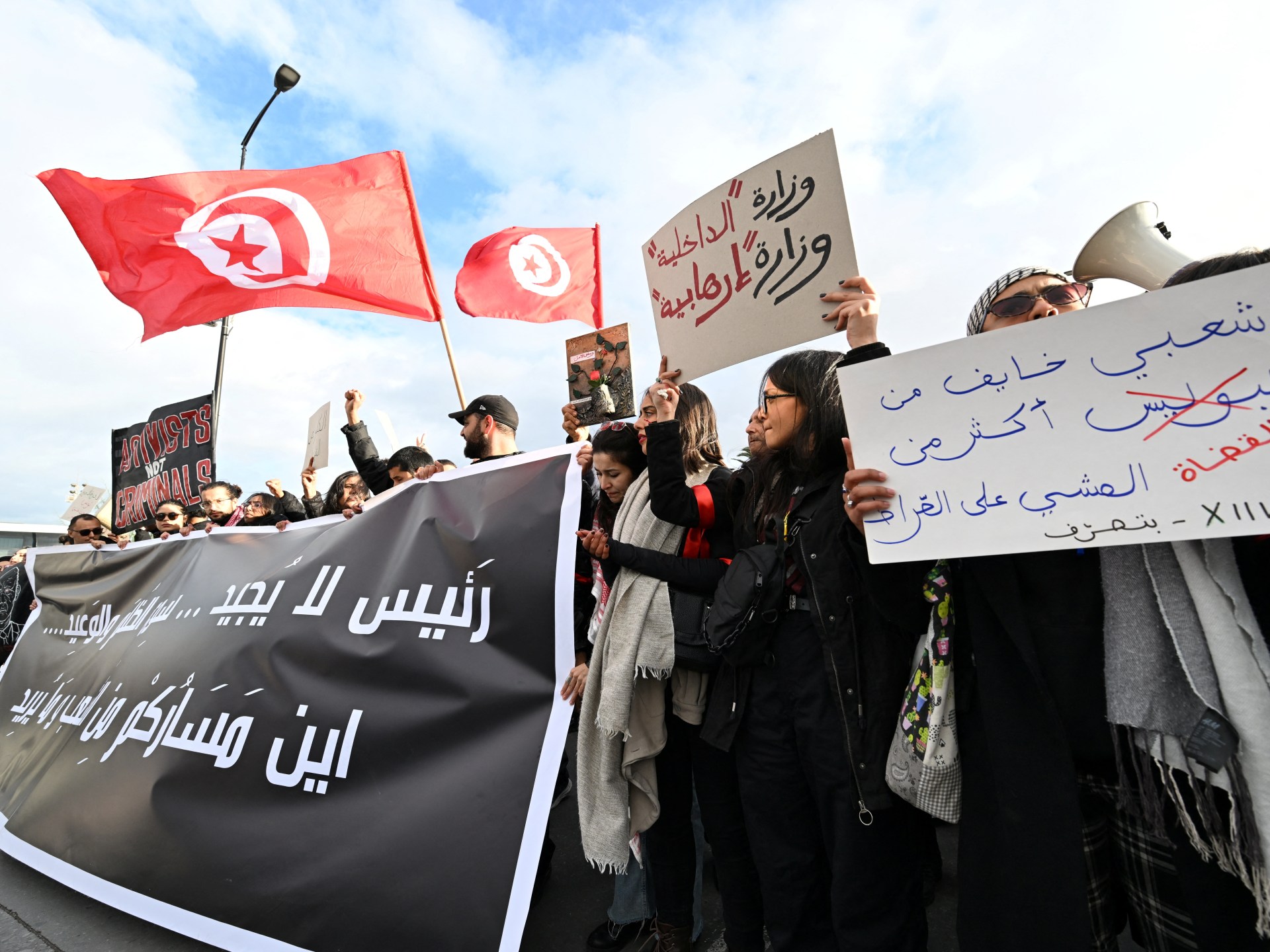
Tunisian authorities have released five leading figures from the Ennahda movement who had been detained for over a year in connection with various cases. The release coincided with protests in the capital city, Tunis, where hundreds demonstrated against the imprisonment of opposition figures and in defense of human rights.
According to Chaima Issa, a prominent figure in the National Salvation Front, the Ennahda leaders were released on Friday. Issa announced the news on her Facebook account, stating, “Good and joyful news yesterday (Friday): the release of Mohamed al-Qalawi, a member of the Ennahda Executive Bureau, along with leaders Mohamed Ali Boukhatem, Tawfiq Ben Ammar, his son Shuaib Ben Ammar, and Lotfi Kamoun.”
In September 2024, Ennahda reported the arrest of several of its leaders, including al-Qalawi and Mohamed Ali Boukhatem, the regional secretary-general of the movement in Ben Arous. Dozens of Ennahda leaders have been detained on various charges, including the party’s leader, Rachid Ghannouchi, former Speaker of Parliament Abdel Karim Harouni, former Prime Minister Ali Laarayedh, former Minister of Justice Noureddine Bhiri, and Secretary-General of the movement, Ajmi Al-Wurimi.
President Kais Saied has accused some of those detained of “conspiring against state security and being behind the crises of goods distribution and rising prices.” The opposition denies these accusations, maintaining they are politically motivated. Saied insists that the judiciary is independent and that he does not interfere in its work. However, the opposition accuses him of using the judiciary to persecute those who oppose the exceptional measures he began imposing on July 25, 2021. These measures included dissolving the Supreme Judicial Council and Parliament, issuing legislation by presidential decree, approving a new constitution through a popular referendum, and holding early legislative elections.
These actions have been described by some political forces as a “coup against the 2014 revolution constitution and a consolidation of absolute individual rule.” Others, who support Saied, see them as a “correction of the course of the 2011 revolution” that ousted President Zine El Abidine Ben Ali.
The releases and ongoing protests highlight the continuing political tensions in Tunisia. The situation remains closely watched both domestically and internationally.