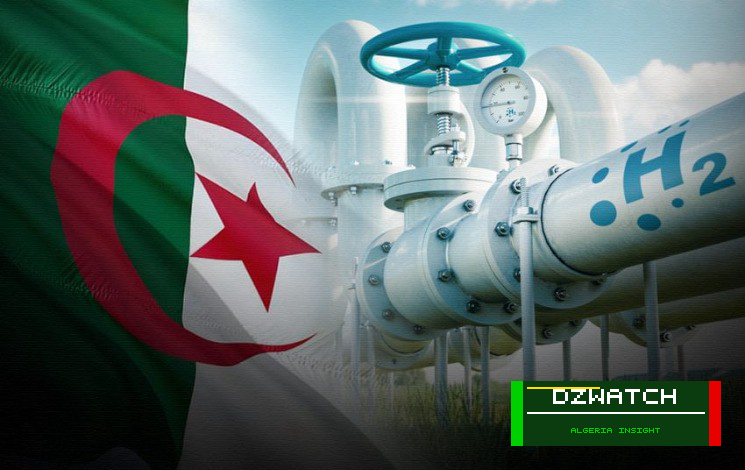
DZWatch reports on a groundbreaking international scientific study that underscores Algeria's exceptional potential in green hydrogen. The research positions the North African nation to assume a pivotal role as both a producer and exporter of this clean fuel to European markets in the coming years, highlighting Algeria's remarkable competitiveness in the sector.
Algeria
The study, titled "Advanced National Atlas and Export Prospects for Green Hydrogen – Algeria Case Study," was published in the prestigious international scientific journal "Applied Energy." It was conducted by a collaborative team of international and Algerian researchers, employing a rigorous analysis of geographical, climatic, technical, and economic data. This comprehensive approach identified optimal production zones, potential cost structures, and the positive environmental impact of green hydrogen development in Algeria.
Algeria's vast natural and logistical capabilities were prominently featured in the study, particularly its immense solar resources and extensive land suitable for renewable energy projects. Furthermore, the nation's existing robust energy infrastructure, including its pipeline networks, can be strategically repurposed and leveraged to support the production and transportation of green hydrogen, enhancing its market readiness.
These inherent strengths are poised to establish Algeria as a major player in the global green hydrogen economy, enabling it to secure a leading position in the low-carbon energy market within the next decades. The study indicates that Algeria possesses the technical capacity to produce and export up to 10 million tons of green hydrogen annually. This volume directly aligns with the European Union's ambitious REPOWEREU plan, which aims to import a similar quantity of renewable hydrogen by 2030 as part of its strategic energy transition.
Regarding production costs, the study estimates that green hydrogen in Algeria could be produced at a competitive rate ranging between 4.6 and 5.2 euros per kilogram. This places Algeria among the most cost-effective global producers, enhancing its appeal to international partners seeking sustainable energy solutions.
Researchers also emphasized the strategic importance of the "SoutH2 Corridor" project. This proposed hydrogen pipeline, connecting Algeria to Europe via Italy, Austria, and Germany, is seen as a critical enabler that will significantly bolster Algeria's standing as a reliable and strategic supplier of green hydrogen to European consumers. From an environmental perspective, the study highlights that relying on solar energy for green hydrogen production will substantially reduce carbon dioxide emissions and decrease natural gas consumption, particularly in regions with high solar productivity. The research further notes that water needs for electrolysis projects can be met through seawater desalination plants, ensuring no impact on the country's freshwater resources.
Related topics: Algeria
DZWatch provides English-language coverage of Algeria-focused developments for international readers.