
North Korea Dismisses Denuclearization as a ‘Daydream’ Amidst Regional Tensions
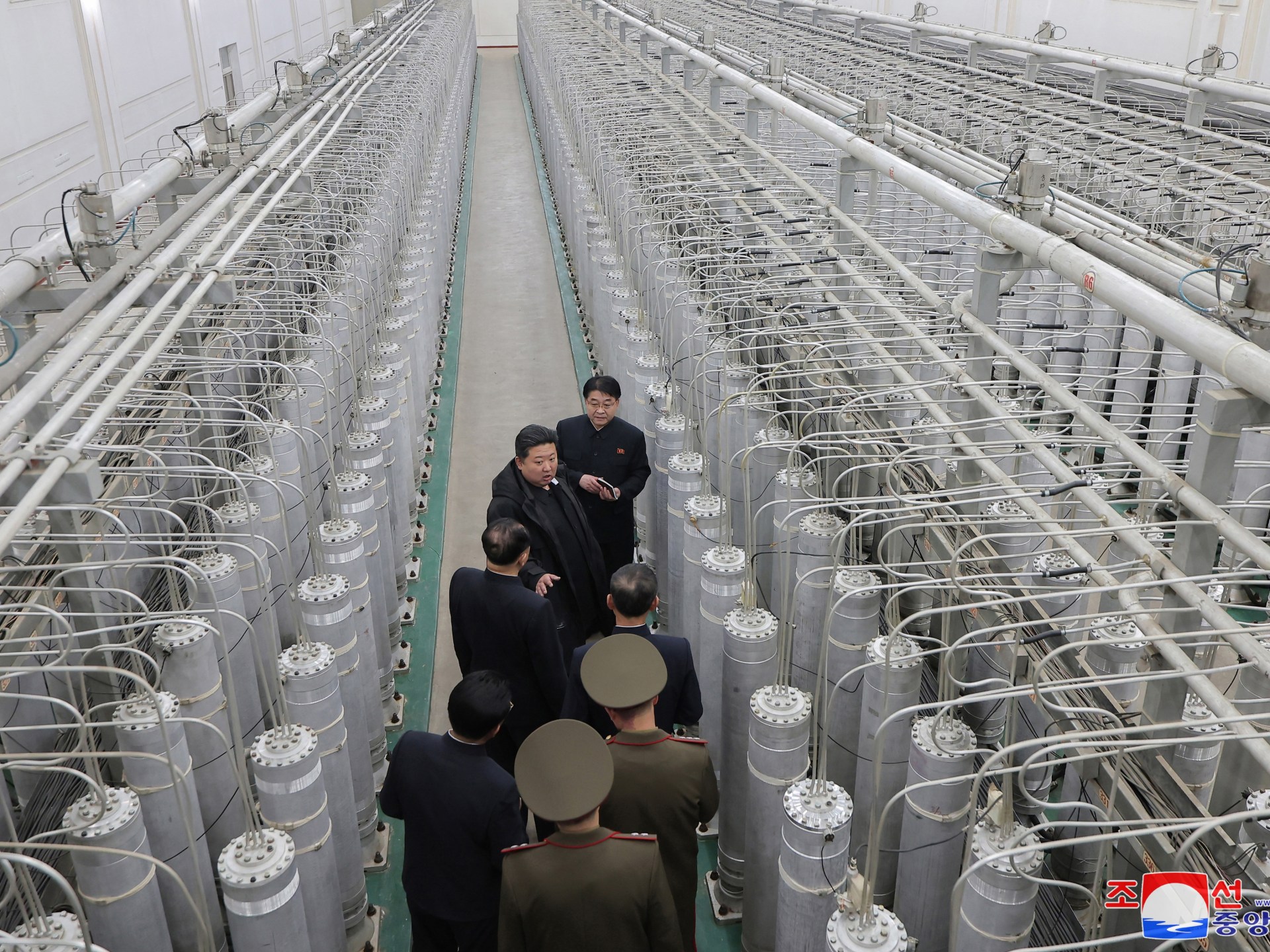
Pyongyang has vehemently rejected the idea of denuclearization on the Korean Peninsula, dismissing it as a mere “daydream,” further escalating tensions in the region. This defiant stance comes as South Korea and China prepare to discuss the issue at a summit in Gyeongju. The North Korean state-run news agency, KCNA, quoted a high-ranking official stating that the pursuit of denuclearization is illogical and ignores the reality of North Korea’s nuclear status.
The summit, scheduled to take place on the sidelines of the Asia-Pacific Economic Cooperation (APEC) forum, will see South Korean President Lee Jae-Myung and Chinese President Xi Jinping address the complex security challenges posed by North Korea’s nuclear ambitions. Seoul had previously announced that the denuclearization of the Korean Peninsula would be a central topic of discussion.
However, North Korea’s response, relayed through Vice Foreign Minister Pak Myong-ho, made it unequivocally clear that Pyongyang views any attempts to dismantle its nuclear arsenal as futile. “We will patiently demonstrate that denuclearization is merely a pipe dream that will never be realized,” Pak stated, according to KCNA.
This latest declaration reinforces North Korea’s unwavering commitment to its nuclear program, a program it insists is essential for its survival and security. Pyongyang has repeatedly asserted its right to be recognized as a nuclear power, a demand that has been consistently rejected by the international community.
The timing of this statement is particularly noteworthy, coinciding with heightened military activity in the region. Last September, South Korea, Japan, and the United States conducted joint naval and aerial exercises, which North Korea condemned as provocative and a direct threat to its security. In response, Pyongyang reiterated its determination to maintain its nuclear arsenal and dismissed Washington’s demands for denuclearization. North Korea has enshrined its status as a nuclear power in its laws, declaring it irreversible.
Kim Jong-un himself has previously articulated North Korea’s rationale for its nuclear program, arguing that it serves as a deterrent against potential aggression, particularly from the United States. He has pointed to the fate of other nations that have relinquished their nuclear weapons, suggesting that such disarmament leaves them vulnerable to external interference and regime change. “The world knows very well what the United States does after making a country abandon its nuclear weapons,” Kim stated last month, emphasizing that his country would not relinquish its arsenal because it is a “matter of life or death.”
For more information about Economie, check our dedicated section.
Kim has also hinted at the possibility of dialogue with the United States, but only under specific conditions. He stated that if the United States abandons its “absurd obsession with our nuclear disarmament, accepts reality, and wants a genuine peaceful coexistence, there is no reason for us not to sit down with them.”
The current impasse highlights the deep-seated mistrust and conflicting perspectives that have plagued negotiations between North Korea and the international community for decades. The United States and its allies have consistently demanded complete, verifiable, and irreversible denuclearization (CVID) as a precondition for sanctions relief and improved relations. North Korea, on the other hand, has sought security guarantees, sanctions relief, and recognition as a nuclear power in exchange for gradual steps towards denuclearization.
The prospects for a breakthrough in the near future appear slim. North Korea continues to develop and test its nuclear weapons and ballistic missiles, defying international sanctions and condemnation. The international community remains divided on how to best address the North Korean threat, with some advocating for continued sanctions and pressure, while others favor dialogue and engagement.
The situation is further complicated by the evolving geopolitical landscape in Northeast Asia. China, North Korea’s closest ally, has called for a peaceful resolution to the nuclear issue and has urged all parties to exercise restraint and engage in dialogue. However, China has also been reluctant to impose harsh sanctions on North Korea, fearing that it could destabilize the region and lead to a humanitarian crisis.
The summit between South Korea and China presents an opportunity to explore new avenues for resolving the North Korean nuclear issue. However, given North Korea’s unwavering stance and the complex geopolitical dynamics at play, a swift and easy solution is unlikely. The challenge lies in finding a way to bridge the gap between the demands of the international community and North Korea’s security concerns, while also addressing the underlying issues of mistrust and historical grievances. The continued development of nuclear capabilities by North Korea presents a clear and present danger to regional stability and the global non-proliferation regime. It requires a concerted and coordinated effort from all stakeholders to de-escalate tensions and find a path towards a peaceful and denuclearized Korean Peninsula. The alternative is a continued spiral of escalation and instability, with potentially catastrophic consequences.