UN Resolution on Western Sahara: An Unsustainable ‘Concoction’ Doomed to Fail, Expert Claims
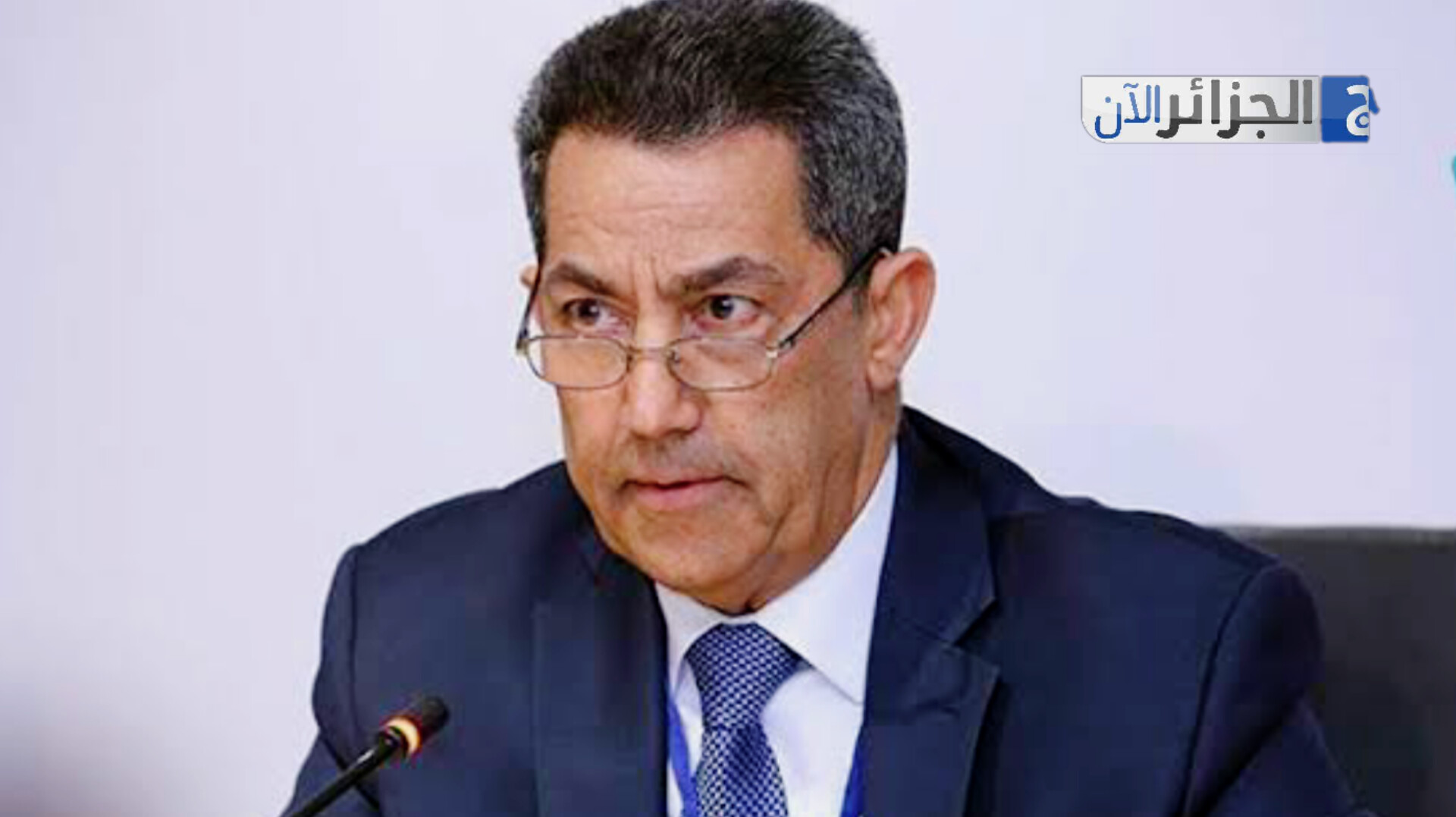
A United Nations Security Council resolution regarding the Western Sahara has been branded an unworkable “concoction” by a leading international expert, raising serious questions about its viability and potential for resolving the long-standing conflict. Dr. Abdelhamid Siyam, a Professor of Political Science at Rutgers University in the United States and a seasoned international affairs expert, argues that the resolution attempts to reconcile irreconcilable differences, rendering its practical application impossible.
In an interview with *Al-Araby* television channel, Dr. Siyam dissected the inherent contradictions within the resolution, highlighting the legal and practical obstacles to its implementation. He pinpointed fundamental inconsistencies that undermine the document’s purported aim of achieving a lasting and equitable solution.
**The Core Contradiction: Negotiation vs. Predetermined Outcome**
According to Dr. Siyam, the resolution’s primary flaw lies in its simultaneous call for a negotiated settlement that satisfies both parties while simultaneously endorsing Morocco’s 2007 autonomy initiative as the foundation for those negotiations. “How can you speak of a mutually agreeable solution when the resolution dictates that it be based on autonomy?” he questioned, emphasizing the inherent bias. This inherent contradiction exposes the resolution’s attempt to be both neutral, advocating for a solution acceptable to all, and partial, favoring a specific outcome. Such an approach, he argues, is logically and legally untenable.
**Self-Determination vs. Moroccan Sovereignty: An Inherent Conflict**
Dr. Siyam further emphasized the explicit references to the right of the Sahrawi people to self-determination, noting that the resolution mentions this principle twice. However, he argued that this acknowledgement clashes directly with the resolution’s welcoming of Morocco’s autonomy plan, which stops short of granting full independence. “You cannot achieve self-determination for the Sahrawi people and Moroccan sovereignty over the Western Sahara at the same time,” he asserted. This fundamental incompatibility transforms the resolution into a “bizarre mix” of contradictory elements, making its implementation an exercise in futility.
**A Step Towards Morocco, But Short of Sovereignty**
Despite its inherent flaws, Dr. Siyam conceded that the resolution represents a subtle shift towards the Moroccan position, acknowledging the autonomy initiative and urging negotiations based upon it. However, he drew attention to a crucial linguistic nuance: the use of the word “may” when referring to the Moroccan proposal as a means to achieve a just solution. He stated, “Note that the resolution used the word ‘may’ when discussing the Moroccan initiative to reach a fair solution. It has taken it and welcomed it, but it has not imposed it, meaning it has not imposed Moroccan sovereignty over the Western Sahara.” The inclusion of “may” suggests that the Moroccan initiative is not the sole or inevitable solution, thus undermining Morocco’s narrative of a decisive victory.
**Negotiation vs. Consultation: A Telling Distinction**
Dr. Siyam highlighted a significant distinction in the resolution’s language, pointing out that the UN Secretary-General’s envoy is tasked with “negotiating with the two parties and consulting with the other parties, meaning Algeria and Mauritania.” This distinction signifies that negotiations are to be conducted with the Polisario Front and Morocco, while consultations are to be held with Algeria and Mauritania. This subtle yet important distinction reaffirms the Polisario Front’s status as a key party in the conflict, challenging Morocco’s attempt to portray it merely as a proxy for Algeria.
**Omission of Polisario Proposals: A Clear Bias**
For more information about Algeria, check our dedicated section.
Dr. Siyam also criticized the resolution for omitting the proposals submitted by the Polisario Front to the Secretary-General, while focusing solely on the Moroccan initiative. This omission, he argued, constitutes a blatant bias and contradicts the principle of negotiations between equals. He posed the question: “How can one speak of a ‘mutually agreeable solution’ when the proposals of one party are completely ignored?” He further added that previous resolutions were more balanced in their treatment of both sides’ proposals, suggesting a concerning shift in the UN’s approach. “This concoction was clearer in previous resolutions when talking about the Moroccan initiative,” he explained.
**A Fundamentally Unrealistic Resolution**
Dr. Siyam concluded his analysis with a resolute assessment: “In the end, the resolution is a bizarre mix that cannot reconcile these contradictions. You cannot achieve self-determination for the Sahrawi people and Moroccan sovereignty over the Western Sahara at the same time. In short, the Security Council resolution is completely unrealistic.” He believes the resolution’s internal inconsistencies make it practically impossible to implement effectively.
**The Five Fatal Flaws:**
Based on Dr. Siyam’s analysis, the core contradictions within the resolution can be summarized as follows:
1. **Negotiation with a Predefined Framework:** The resolution calls for a negotiated solution but simultaneously dictates that the negotiations must be based on the Moroccan autonomy initiative.
2. **Self-Determination vs. Autonomy:** The resolution acknowledges the right to self-determination but endorses an autonomy plan that excludes the possibility of independence.
3. **Equality vs. Exclusion:** The resolution speaks of negotiations between equal parties but excludes the Polisario Front’s proposals, focusing solely on the Moroccan initiative.
4. **Conditional Endorsement:** The resolution welcomes the Moroccan initiative as a basis for negotiations but uses the word “may,” indicating that it is not the only possible solution.
5. **Negotiations vs. Consultations:** The resolution differentiates between negotiations (with the Polisario Front and Morocco) and consultations (with Algeria and Mauritania), contradicting efforts to marginalize the Polisario Front’s role.
**Why Implementation is Impossible:**
According to Dr. Siyam’s analysis, the resolution is unworkable due to:
1. **Internal Contradictions:** The inherent inconsistencies make it impossible to reconcile the conflicting objectives.
2. **Legal Inconsistency:** The attempt to combine self-determination (which includes the option of independence) with Moroccan sovereignty is legally unsound.
3. **Lack of Impartiality:** The bias towards the Moroccan position undermines the credibility of the resolution as a basis for a fair and lasting solution.
The analysis provided by Dr. Siyam raises serious doubts about the UN Security Council’s approach to the Western Sahara conflict. The resolution’s inherent contradictions and biases may not only fail to resolve the dispute but could potentially exacerbate tensions and further prolong the suffering of the Sahrawi people. DZWatch will continue to monitor the situation closely and provide in-depth coverage of developments as they unfold.