Russia Voices Concerns Over Western Sahara Resolution, Citing ‘Politicization’ and Unfair Process
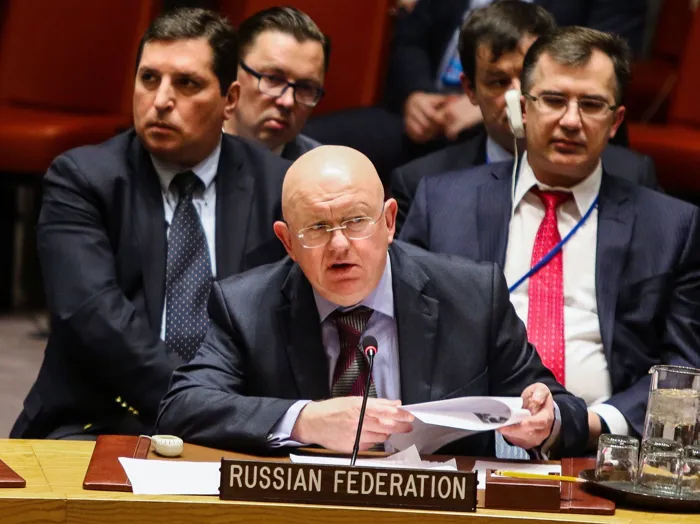
Moscow has officially expressed its reservations regarding the recent United Nations Security Council resolution extending the mandate of the United Nations Mission for the Referendum in Western Sahara (MINURSO), abstaining from the vote and criticizing what it perceives as a “politicized” and “unbalanced” approach to the handling of the Western Sahara issue. Russia’s stance highlights the complexities surrounding the long-standing dispute and signals a potential divergence in international perspectives on its resolution.
According to a statement released by Vasily Nebenzya, the Permanent Representative of Russia to the United Nations, Moscow found itself unable to support the resolution due to its perceived bias. Nebenzya accused certain unnamed parties of using the Security Council as a tool to advance their own national agendas, alluding to what he termed the file’s “unofficial sponsors.”
Nebenzya specifically criticized the process by which the resolution was passed, arguing that it deviated from established Security Council practices that emphasize consensus-building and the consideration of all member states’ positions. He expressed surprise that, for the second consecutive year, the United States had avoided discussing the Western Sahara texts within the full Council framework. This lack of comprehensive dialogue, according to the Russian diplomat, prompted one delegation to request a presentation of the project to the entire Security Council, which Nebenzya interpreted as evidence of “weak management of the file and its transformation into an improvised and politicized action.”
Russia views the new resolution as a departure from the original UN framework for resolving the Western Sahara conflict, a framework that Moscow believes remains valid and should not be subject to revision or amendment. Despite these significant concerns, Russia chose not to veto the resolution, prioritizing the opportunity to provide the political process with renewed impetus. However, Nebenzya cautioned against what he described as a “cowboy impulse” on the part of certain nations, warning that such an approach could backfire and reignite a conflict that has remained dormant for decades.
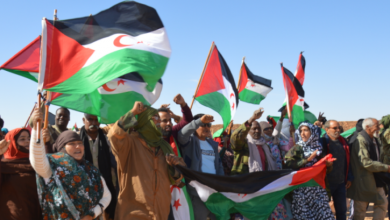
Russia remains hopeful that Staffan de Mistura, the Personal Envoy of the Secretary-General for Western Sahara, will succeed in creating the conditions necessary for the resumption of negotiations and the achievement of a mutually acceptable solution. This solution, according to Russia, must guarantee the Sahrawi people’s inalienable right to self-determination.
In closing, Nebenzya reaffirmed Russia’s commitment to international legitimacy, emphasizing that any resolution of the Western Sahara dispute must align with the principles of the UN Charter and previous Security Council resolutions. He asserted that there is no acceptable path outside of this framework.
**The Context of the Western Sahara Dispute**
The Western Sahara dispute is a decades-old conflict rooted in the decolonization of the territory by Spain in 1975. Morocco claims sovereignty over the Western Sahara, while the Polisario Front, backed by Algeria, seeks independence for the Sahrawi people. The Polisario Front fought a guerrilla war against Morocco until a ceasefire agreement was signed in 1991, with the promise of a referendum on self-determination. However, the referendum has never been held due to disagreements over voter eligibility.
For more information about Algeria, check our dedicated section.
MINURSO was established in 1991 to monitor the ceasefire and organize the referendum. However, its mandate has been repeatedly extended without the referendum taking place. The Security Council resolution in question extends MINURSO’s mandate for another year.
**Implications for Algeria**
Algeria has long been a staunch supporter of the Polisario Front and the Sahrawi people’s right to self-determination. Russia’s criticism of the Security Council resolution and its call for a return to the original UN framework will likely be welcomed by Algeria, as it aligns with Algeria’s long-held position. However, the abstention from the vote, rather than a veto, suggests a nuanced approach from Moscow, balancing its relationship with Algeria with broader geopolitical considerations.
The comments from Russia regarding the ‘politicization’ of the issue and the influence of ‘unofficial sponsors’ could be interpreted as veiled criticism of countries like France, which have historically been seen as supportive of Morocco’s position. This adds another layer of complexity to the already intricate dynamics of the Western Sahara conflict.
**Future Prospects**
The Western Sahara dispute remains a significant source of regional instability in North Africa. Russia’s statement underscores the challenges in finding a mutually acceptable solution. The success of Staffan de Mistura’s mediation efforts will be crucial in determining the future of the conflict. However, given the deeply entrenched positions of the parties involved, a breakthrough remains elusive. The international community, including key players like Russia, will need to play a constructive role in fostering dialogue and compromise to achieve a lasting and peaceful resolution to this protracted conflict.
DZWatch will continue to monitor developments in the Western Sahara and provide updates on this important issue.