Polisario Front Rejects Negotiations Without Guarantee of Self-Determination for Western Sahara
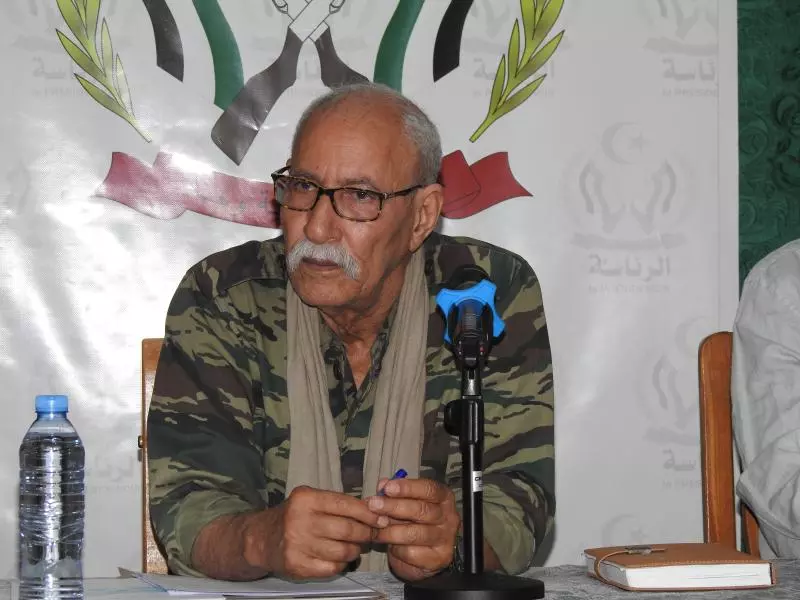
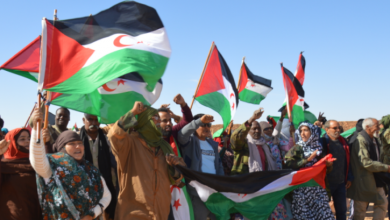
Algiers – The leader of the Polisario Front, Brahim Ghali, has declared that the organization will not participate in any negotiations concerning Western Sahara that do not explicitly guarantee the right to self-determination for the Sahrawi people. Ghali reiterated the Polisario Front’s commitment to a peaceful and just resolution based on international law and relevant UN resolutions. He issued the statement during a speech commemorating the 71st anniversary of the Algerian Revolution.
Ghali emphasized the Polisario Front’s willingness to engage constructively with UN efforts to find a lasting solution to the decades-long conflict. However, he cautioned against unilateral approaches, stating that they would only exacerbate tensions and further complicate the situation in the region. He stressed that any negotiation must recognize the inalienable right of the Sahrawi people to determine their own future. This firm stance underscores the continued impasse in the Western Sahara dispute, despite ongoing international efforts to broker a peaceful resolution.
Referencing the latest United Nations Security Council resolution on Western Sahara, Ghali highlighted its specific mention of the Sahrawi people and the Polisario Front, as well as its reaffirmation of the principle of self-determination. He noted that the Security Council maintained all its previous resolutions regarding the conflict and expressed its readiness to support any proposals from both parties aimed at achieving a fair and lasting solution. He interpreted the extension of the mandate of the United Nations Mission for the Referendum in Western Sahara (MINURSO) as a testament to the international community’s commitment to facilitating a long-awaited referendum on the territory’s future.
Ghali asserted that the Sahrawi people and their liberation army are the decisive element in resolving the conflict. He called for vigilance against what he described as “plots by the Moroccan regime,” which he accused of attempting to leverage its relationships with influential parties within the Security Council to impose “devious solutions.” He characterized these alleged maneuvers as the “last cards” of the Moroccan regime following its normalization of relations with Israel, and urged the Sahrawi people to confront them with steadfastness and unity.
Ghali also criticized a recent speech by the King of Morocco, describing it as “weak and misleading.” He accused the Moroccan regime of employing the same deceptive tactics it used in 1975 during the International Court of Justice’s advisory opinion on Western Sahara. He argued that the King’s speech was crafted before the Security Council resolution was issued and only selectively quoted a small portion of it, while ignoring other points that did not support Morocco’s claims. Ghali further alleged that Rabat is attempting to deflect from its internal problems through official propaganda.
On the occasion of the 71st anniversary of the Algerian Revolution, Ghali extended his congratulations to the Algerian people, praising Algeria’s unwavering support for the Sahrawi cause and its commitment to the right of peoples to self-determination. This expression of solidarity reflects the deep ties between the Polisario Front and Algeria, which has historically been a strong advocate for Sahrawi independence.
For more information about Algeria, check our dedicated section.
The meeting also included a comprehensive review of the recent UN resolution, the Polisario Front’s position on it, and the statements and correspondence sent to the Security Council regarding the Front’s willingness to cooperate with efforts to reach a just and sustainable political solution to the conflict in Western Sahara. This detailed assessment demonstrates the Polisario Front’s active engagement with the international community and its commitment to pursuing a peaceful resolution through diplomatic channels, albeit one that unequivocally upholds the right to self-determination.
The Western Sahara conflict is a long-standing dispute rooted in the decolonization of the territory by Spain in 1975. Morocco claims Western Sahara as its own, while the Polisario Front, backed by Algeria, seeks independence for the Sahrawi people and the establishment of an independent Sahrawi Arab Democratic Republic (SADR). The UN has been working to resolve the conflict for decades, primarily through MINURSO, which was established in 1991 to monitor a ceasefire and organize a referendum on self-determination. However, the referendum has been repeatedly postponed due to disagreements over voter eligibility.
The recent appointment of a new UN Personal Envoy for Western Sahara has raised hopes for renewed diplomatic efforts. However, deep divisions remain between Morocco and the Polisario Front, particularly regarding the issue of self-determination. Morocco has proposed autonomy for Western Sahara under its sovereignty, while the Polisario Front insists on a referendum with independence as an option. Ghali’s latest statement reaffirms the Polisario Front’s unwavering commitment to this principle, suggesting that any future negotiations will face significant challenges.
The situation in Western Sahara remains a source of instability in the region, with ongoing tensions and sporadic clashes between Moroccan forces and the Polisario Front. The international community continues to call for a peaceful and lasting resolution that respects the rights and aspirations of the Sahrawi people. The role of Algeria, as a key supporter of the Polisario Front, is crucial in shaping the dynamics of the conflict. Ghali’s recognition of Algeria’s support highlights the close alliance between the two, further complicating any potential resolution that excludes Sahrawi self-determination. The future of Western Sahara hinges on the ability of the parties involved to overcome their differences and find a mutually acceptable solution that addresses the legitimate concerns of all stakeholders.
The international community will closely watch the developments in the coming months, as the UN envoy seeks to revive the peace process and bridge the gap between Morocco and the Polisario Front. The Polisario Front’s firm stance on self-determination, as articulated by Ghali, will undoubtedly be a key factor in shaping the future of the negotiations and the ultimate resolution of the Western Sahara conflict.