UN Security Council Resolution Faces Legal Hurdles on Western Sahara
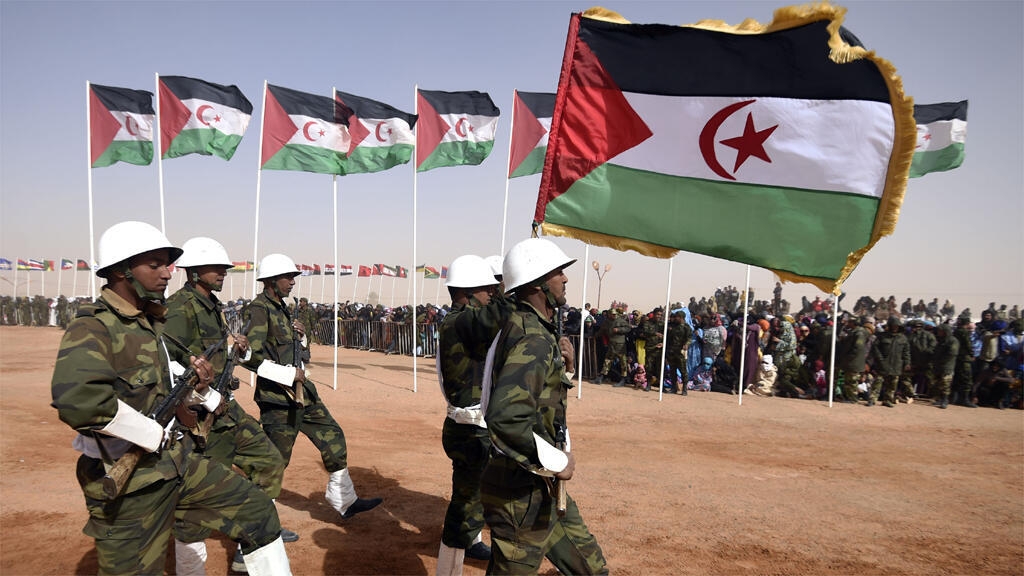
Algiers – A recent United Nations Security Council resolution concerning the Western Sahara has encountered significant obstacles related to international law and the will of the Sahrawi people. While some have portrayed the resolution as a victory, its implementation faces considerable legal, political, and practical challenges.
The vote on the resolution revealed a clear division within the international community. Eleven nations, led by the United States and including France, the United Kingdom, Slovenia, South Korea, Denmark, Greece, Panama, Guyana, Somalia, and Sierra Leone, voted in favor. However, major powers such as Russia, China, and Pakistan abstained. Algeria chose not to participate in the vote, citing concerns that the Council was exceeding its authority.
Beyond the vote tally, a deeper reality emerges: the absence of international consensus, the fragility of the coalition supporting the resolution, and the weakness of its legal foundation. International law experts argue that the Security Council, despite its power, operates within defined legal boundaries. It lacks the authority to impose a political solution on a people undergoing decolonization.
The Western Sahara, classified as a non-self-governing territory since 1963, remains subject to a clear international legal framework: the Sahrawi people alone have the right to determine their political future. The Security Council’s role is limited to supporting the political process and monitoring the ceasefire through MINURSO, without imposing specific solutions. Efforts to impose autonomy as a final resolution violate the principle of self-determination enshrined in UN Resolution 1514, which condemns the subjection of any people to foreign domination as a denial of human rights and a contradiction of the UN Charter.
The principle of self-determination remains a cornerstone of international law. Any resolution ignoring this fundamental right is destined to face resistance and ultimately prove unenforceable. The path forward requires genuine dialogue and respect for the Sahrawi people’s right to choose their own destiny.