Syria, Lebanon Discuss Detainees, Missing Persons, and Border Issues
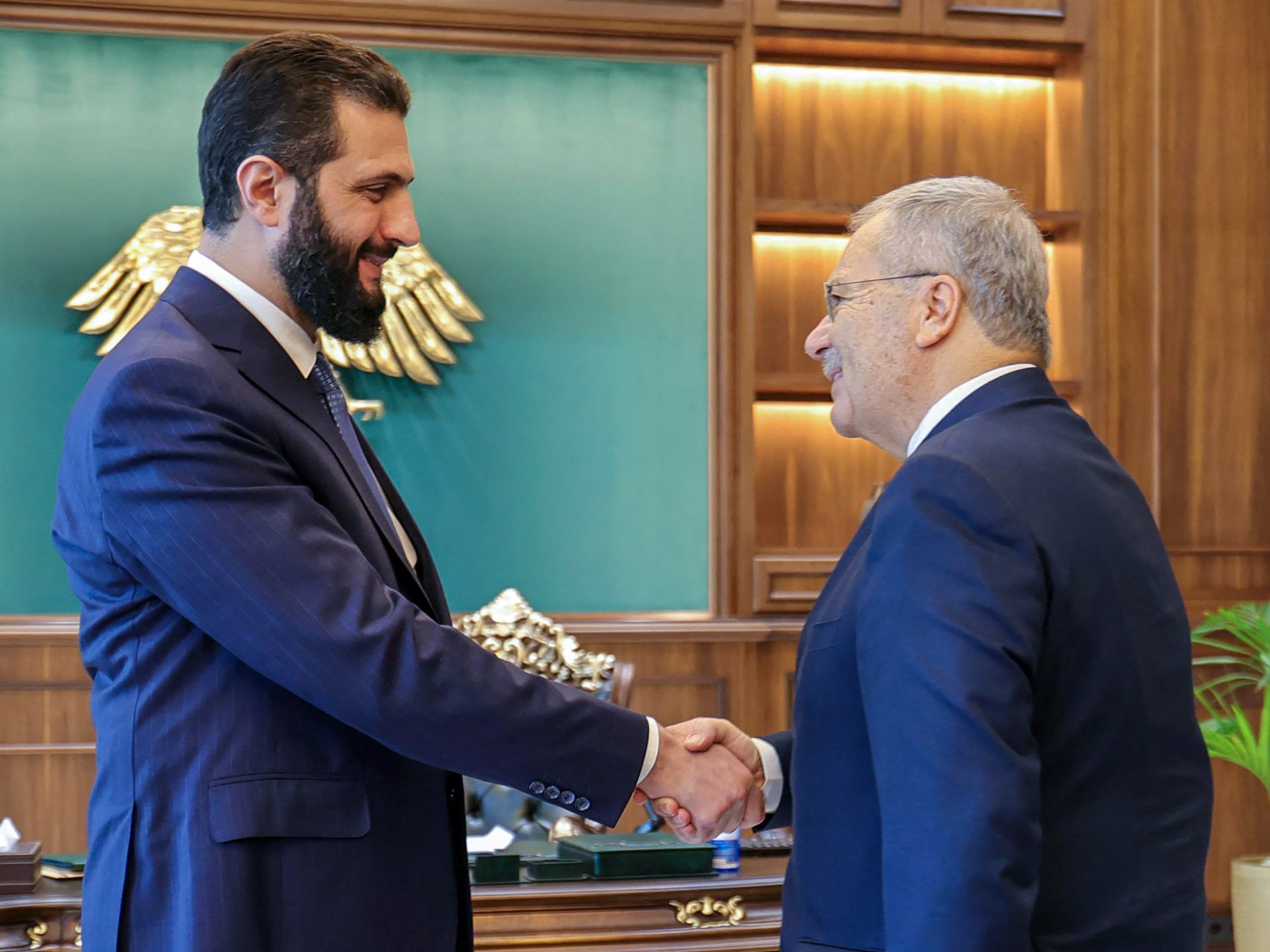
Damascus – Syrian President Ahmed al-Sharee received Lebanese Deputy Prime Minister Tariq Mitri in Damascus today, Thursday, to discuss several key issues, including the files of Syrian detainees in Lebanon, Lebanese missing persons in Syria, and border demarcation.
According to reports, the meeting focused on strengthening bilateral relations between Lebanon and Syria, aiming to serve the mutual interests of both countries and enhance stability and cooperation across various sectors.
Mitri also held meetings with senior Syrian officials, including the Ministers of Foreign Affairs and Justice, where they addressed shared concerns, primarily the cases of Syrian detainees and Lebanese missing persons. The matter of border demarcation was also a central point of discussion.
During the meetings, officials emphasized their commitment to finding just and equitable solutions to these complex issues, ensuring the rights of all parties involved and fostering judicial cooperation between the two nations.
Both sides underscored the importance of continued coordination and development of relations in the political, security, judicial, and economic spheres. This collaborative approach aims to unlock new avenues for constructive cooperation between Lebanon and Syria.
In recent months, Lebanon and Syria have intensified diplomatic coordination on critical issues, including the missing persons file and the delineation of land borders, alongside efforts to bolster economic cooperation.
This visit follows a meeting in April between Lebanese Prime Minister Nawaf Salam and President al-Sharee in Damascus, marking the first visit by a Lebanese official since al-Sharee assumed office. Discussions during that visit also touched upon the issue of Syrian detainees in Lebanon.
The Lebanese-Syrian border has been a recurring source of contention due to smuggling activities. Furthermore, the situation of Syrian detainees in Lebanese prisons remains a sensitive matter between the two countries. The issue of border demarcation is also a long-standing point of contention.