Presidential Prize Elevates Arabic Language Creativity
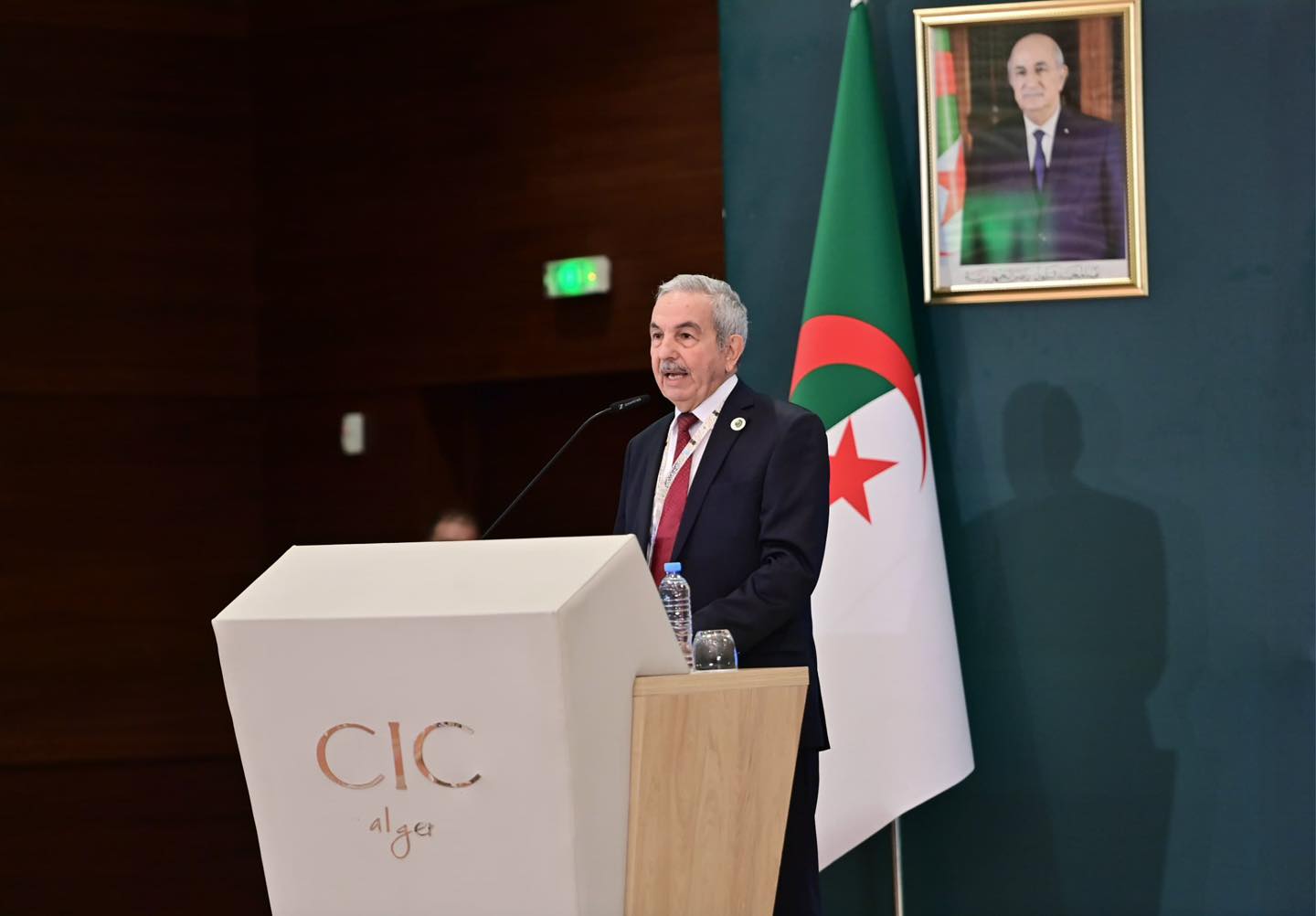
The President of the Higher Council of the Arabic Language, Mr. Saleh Belaid, has emphasized the significant role of the President of the Republic’s Prize for Literature and the Arabic Language in fostering creativity, encouraging scientific research, and serving the Arabic language. He described its establishment as a qualitative gain for national culture.
During the ceremony held in Algiers to award the first edition of the prize, under the patronage of the Prime Minister, Mr. Sifi Grib, Mr. Belaid lauded the high regard that the President of the Republic, Mr. Abdelmadjid Tebboune, holds for the Arabic language. He reiterated that the creation of this prize is “a qualitative gain for national culture,” reflecting the prominent position the Arabic language occupies in state policies.
He noted that the President of the Republic’s Prize for Literature and the Arabic Language was established by presidential decree dated December 23, 2024. He highlighted that the first edition coincided with the celebration of the International Day of the Arabic Language, themed by UNESCO as “Innovative Horizons for the Arabic Language: Policies and Practices Shaping a Linguistic Future.”
The Council President revealed that 225 works were submitted for this edition, with 215 meeting the competition requirements. He affirmed that all works underwent “a meticulous evaluation through a smart platform and under the supervision of a specialized scientific committee that adopted three levels of evaluation.”
He also pointed out that the winning works were printed swiftly and are currently available on the Council’s official website.
Mr. Belaid commended the efforts of the scientific committee that contributed to the success of this initiative, inviting researchers and creators to participate in the second edition of the prize for 2026, for which applications will be open starting today via the Council’s website.
In a related context, the Council President addressed the reality and challenges facing the Arabic language in light of technological transformations, globalization, and linguistic conflicts. He renewed the Council’s commitment to serving the Arabic language and developing mechanisms for its scientific and cognitive use, while also acknowledging the state’s role in supporting the Arabic language and linguistic openness.
The Higher Council of the Arabic Language recently honored the President of the Republic for his efforts in promoting the Arabic language.