
New Zealand Whale Strandings Spark Debate: What Went Wrong?
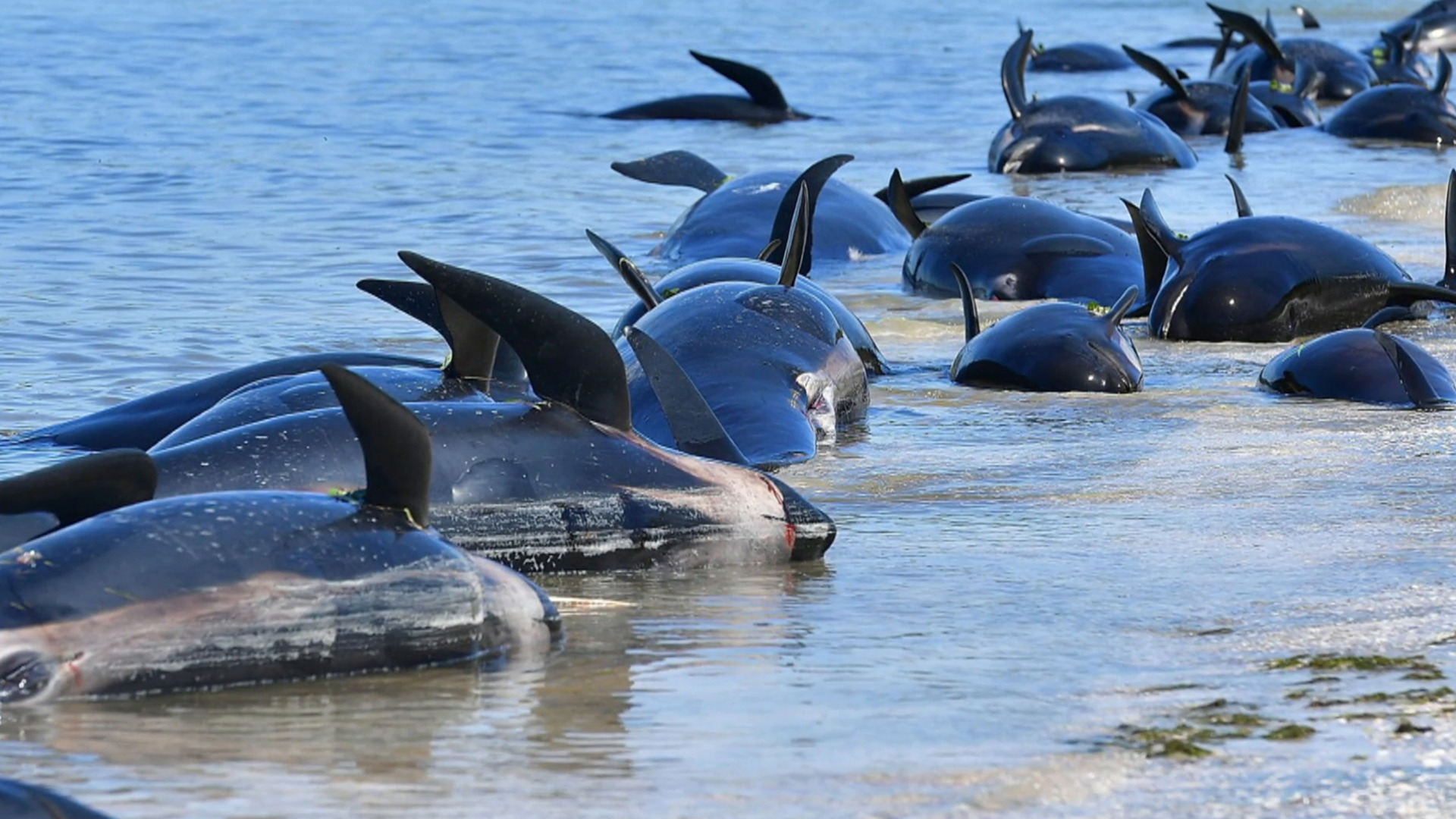
A recent mass stranding of whales on New Zealand shores has ignited a heated debate online, raising critical questions about the underlying causes of these increasingly frequent events and the potential role of human activity in endangering these marine mammals.
The incident involved a pod of whales becoming trapped in shallow waters near the coast, veering off their natural migratory routes with the changing tide. Tragically, six out of the fifteen whales perished, prompting an urgent response from rescue teams and dedicated volunteers.
Specialized teams worked tirelessly to revive the stranded whales and keep them alive until the tide returned. Their efforts included continuously spraying the whales with water to prevent dehydration and covering them with damp cloths in a desperate attempt to save the remaining members of the pod.
Whales navigate vast oceans in groups, often led by a dominant individual. They rely on a sophisticated natural system known as echolocation, a biological form of sonar, to identify locations, detect obstacles, and locate food sources. This system involves emitting sound pulses that travel through the water and bounce off the seabed, objects, or marine life, returning to the whale as an echo. The whale’s brain then analyzes these echoes, creating a three-dimensional map of its surroundings.
However, this intricate system can be disrupted in shallow waters or areas with sloping sandy seabeds, such as those found along certain New Zealand coastlines. In these environments, sound waves may not reflect clearly, potentially contributing to whale strandings.
The incident has triggered a wave of online commentary. Some suggest that sonar devices used by marine vessels interfere with whale navigation, causing them to become disoriented and beach themselves. Others highlight the impact of increased marine traffic and the noise pollution generated by ships and boats, arguing that whales are particularly sensitive to these disturbances. Still others place the blame squarely on human activity, citing marine pollution as a primary driver of whale strandings. They argue that plastic waste and other pollutants contaminate the oceans, ultimately leading to these tragic events.
The investigation into the precise cause of this latest stranding is ongoing.