EU Welcomes Rollback of US Tariff Threats
Brussels – The European Union has expressed a cautious welcome following the apparent reversal of tariff threats by the United States. The development follows a period of heightened tension, sparked by earlier suggestions of new tariffs on several European nations.
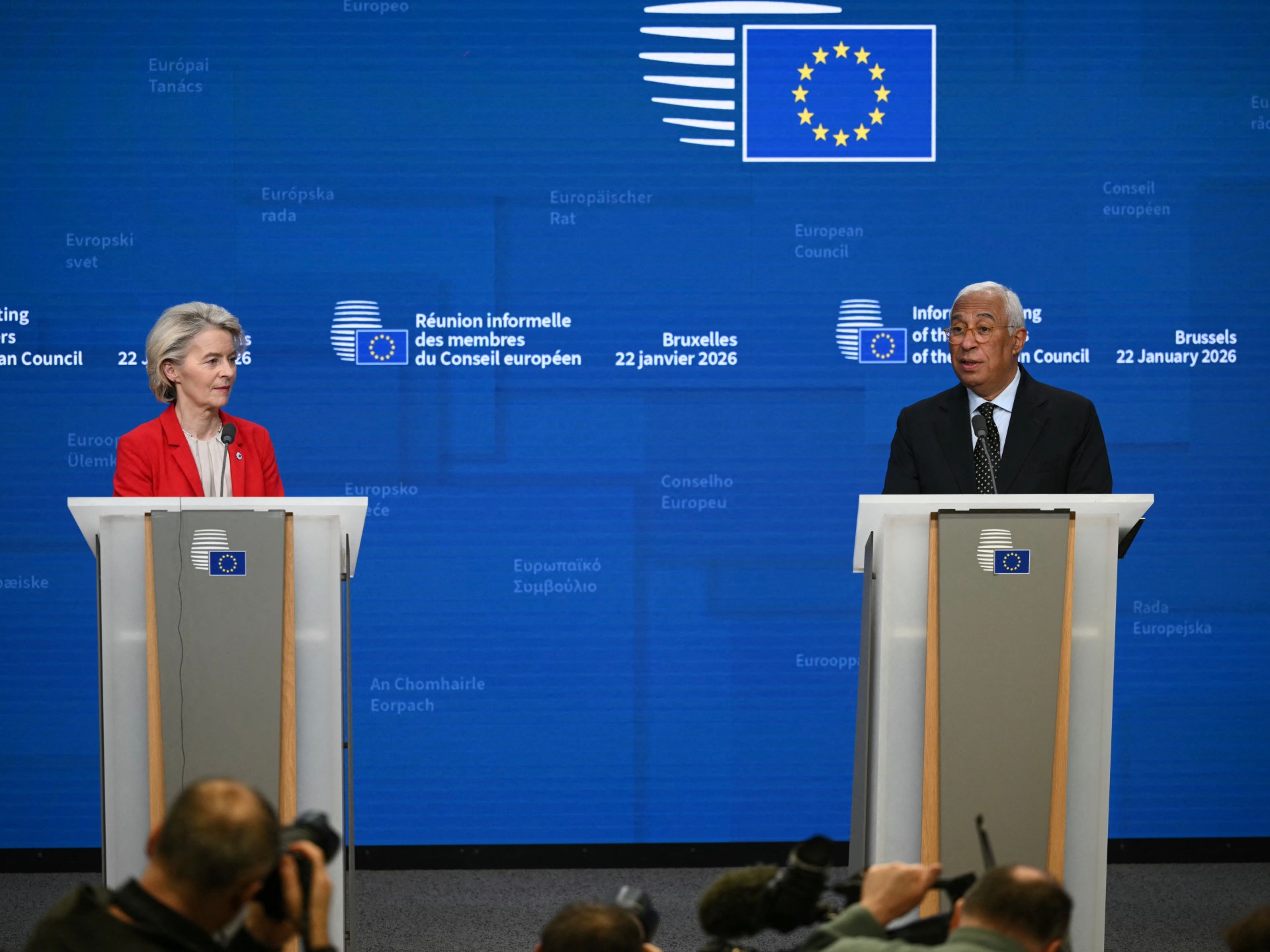
European Council President Antonio Costa affirmed the EU’s commitment to defending its interests and sovereignty against external pressures. Speaking at a press conference after an emergency summit of EU leaders in Brussels, Costa stated that the EU possesses the “capacity and tools” necessary to respond to any coercion.
The summit, convened to address the future of EU-US relations, was prompted by the US administration’s previous hints at imposing tariffs on European countries. Concerns were also raised by earlier suggestions regarding the acquisition of Greenland.
In a move seen as a significant shift, the US seemingly walked back threats of additional tariffs on eight European nations and downplayed the possibility of pursuing a forceful acquisition of Greenland. Furthermore, suggestions of a potential understanding to resolve the Arctic security situation, possibly brokered by NATO Secretary-General Mark Rutte, have also emerged.
While welcoming this “positive” development, EU leaders emphasized the importance of upholding the existing trade agreement between the two blocs. Costa stressed that imposing additional tariffs would contradict the agreement and called for a focus on its implementation to ensure stable transatlantic economic relations.
“Relations between partners and allies must be managed in a friendly spirit based on respect,” Costa stated, reiterating the EU’s commitment to defending its interests and protecting its member states, citizens, and businesses from any form of coercion. He added that the EU possesses the necessary strength and tools and will utilize them if necessary.
European Commission President Ursula von der Leyen suggested that the EU had successfully resisted US demands through a “firm, non-escalatory, and, most importantly, united position.” She also called for strengthening the EU’s economic power, diversifying supply chains, and reducing reliance on the United States, emphasizing the need to achieve greater strategic autonomy.