Algeria’s Water Security Triumph: Uninterrupted Eid Supply Thanks to Desalination Efforts

Algeria successfully navigated the challenges of maintaining a consistent water supply during the recent Eid al-Adha festivities, a stark contrast to previous years often marked by anxieties over water scarcity. Across most regions, taps flowed normally throughout the three-day holiday, eliminating the need for households to pre-fill containers or monitor pressure drops – a significant relief for families observing the sacrificial rituals and subsequent cleaning needs.
Algeria water security
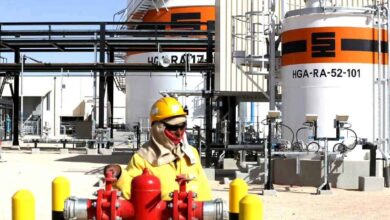
This stability is largely attributable to strategic national efforts, bolstered by improved dam levels following recent rainfall. While eastern dams report robust filling rates near 58% and western regions exceed 40%, central areas show approximately 20%. Critically, newly commissioned desalination plants in key cities like Oran, Tipasa, Boumerdès, Bejaïa, and El Tarf have been instrumental in transforming the water landscape. These facilities deliver substantial additional volumes of potable water, reducing reliance on rain-dependent dam reserves, which are often vulnerable to drought.
Experts underscore that major water transfer projects, the utilization of non-conventional water resources, and desalination are now the foundational pillars of Algeria's hydric security. The government's ambitious desalination program has already elevated this resource's contribution from 20% to 42% of Algeria's total water consumption. Furthermore, additional desalination plants are currently under construction across several wilayas, including Tlemcen, Mostaganem, Tizi Ouzou, Chlef, Jijel, and Skikda.
Currently, 16 wilayas are supplied by 19 stations and various monobloc units. Projections indicate that the share of desalination in the national water supply is set to reach 60% by 2030, with an annual production capacity of 2 billion cubic meters, as the national program extends to 35 wilayas. This progressive evolution reflects a transformation of the national water model, vital in a context where climate change renders water a progressively strategic resource.
Effective water management extends beyond infrastructure, encompassing the vital rehabilitation of water awareness through information, training, and education. Integrated water programs, which include soil and forest protection alongside watershed management, are crucial. Simultaneous actions are being pursued, ranging from resource mobilization and water conservation to erosion control and flood prevention. Innovative approaches like cogeneration (combining desalination and agriculture) are also being explored, particularly for coastal areas, to redirect dam waters inland and to the High Plateaus, providing significant support for agriculture. Additionally, the reuse of treated wastewater could conserve nearly 0.9 billion cubic meters of water, while modern irrigation techniques like drip irrigation offer 10-20% savings.
Related topics: Algeria water supply, desalination plants, Eid al-Adha, water management, Algerian infrastructure, hydric security
DZWatch provides English-language coverage of Algeria-focused developments for international readers.