President Tebboune’s Arson Death Penalty Plan Backed

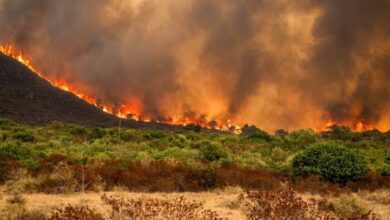
Legal and political experts have expressed strong support for President Abdelmadjid Tebboune's decision to amend Algeria's Penal Code to reinstate the death penalty for individuals convicted of deliberate arson. This initiative follows deadly wildfires that recently affected various regions across the country, prompting intensified efforts by authorities to establish responsibility. President Tebboune, during a high-level meeting at the Presidency, directed the Minister of Justice to introduce the amendment before September 15. The proposed framework specifies that capital punishment would apply to those found responsible for intentionally setting fires, subject to the exhaustion of all available legal remedies and a clear establishment of criminal intent.
Dr. Mounir Gattal, a lecturer at the University of Algiers 1 and a lawyer accredited to the Supreme Court, commended the President’s decisions, highlighting their role in protecting citizens, property, and the environment while strengthening the State’s capacity to address serious threats. Gattal noted that while existing Penal Code articles and Law No. 23-21 on forest resource protection already provide for penalties up to life imprisonment, the proposed reform would specifically introduce the death penalty for deliberate acts where criminal intent is proven. He emphasized that the application of such capital punishment would rigorously adhere to due process and the exhaustion of all appeal avenues.
Political scientists Mohamed Salah Djemal and Ouadie Makhlouf also underscored the significance of the decision. Djemal described the move as a crucial security signal, asserting that the reinstatement of capital punishment reflects a more robust State response to deliberate fires, which can inflict consequences far beyond environmental damage, including deaths, displacement, and significant economic losses, thereby escalating the issue to a national-security dimension. Makhlouf similarly highlighted the extensive human and material costs associated with deliberate fires, arguing that the scale of damage warrants the strongest penalties as a deterrent against future offenses and to prevent recurrence. Both experts view the amendment as an integral part of a comprehensive State response aimed at safeguarding citizens, infrastructure, and vital economic assets through tougher criminal provisions and coordinated action.