Sudan: Drinking Water Scarce Amid Conflict, Displacement
Amidst ongoing conflict that has devastated infrastructure, access to clean drinking water in Sudan has become critically scarce. Displaced populations in war-torn cities and overcrowded camps are struggling to find this essential resource, adding another layer to the country’s escalating humanitarian crisis.
The city of Al-Ubayyid, the capital of North Kordofan State, exemplifies this crisis. It hosts nearly one million displaced people who have fled fighting in other regions. The city is grappling with a severe water shortage, estimated at 50%, following the destruction of its primary water sources during clashes.
Local sources indicate that the water authority is attempting to mitigate the shortage by drilling more boreholes within the city, currently producing approximately 3,000 cubic meters daily. However, high salinity levels render much of this water in need of further treatment. The influx of displaced people from other parts of Kordofan has drastically reduced the per capita water share, placing immense strain on existing resources and creating a complex crisis encompassing health and environmental risks.
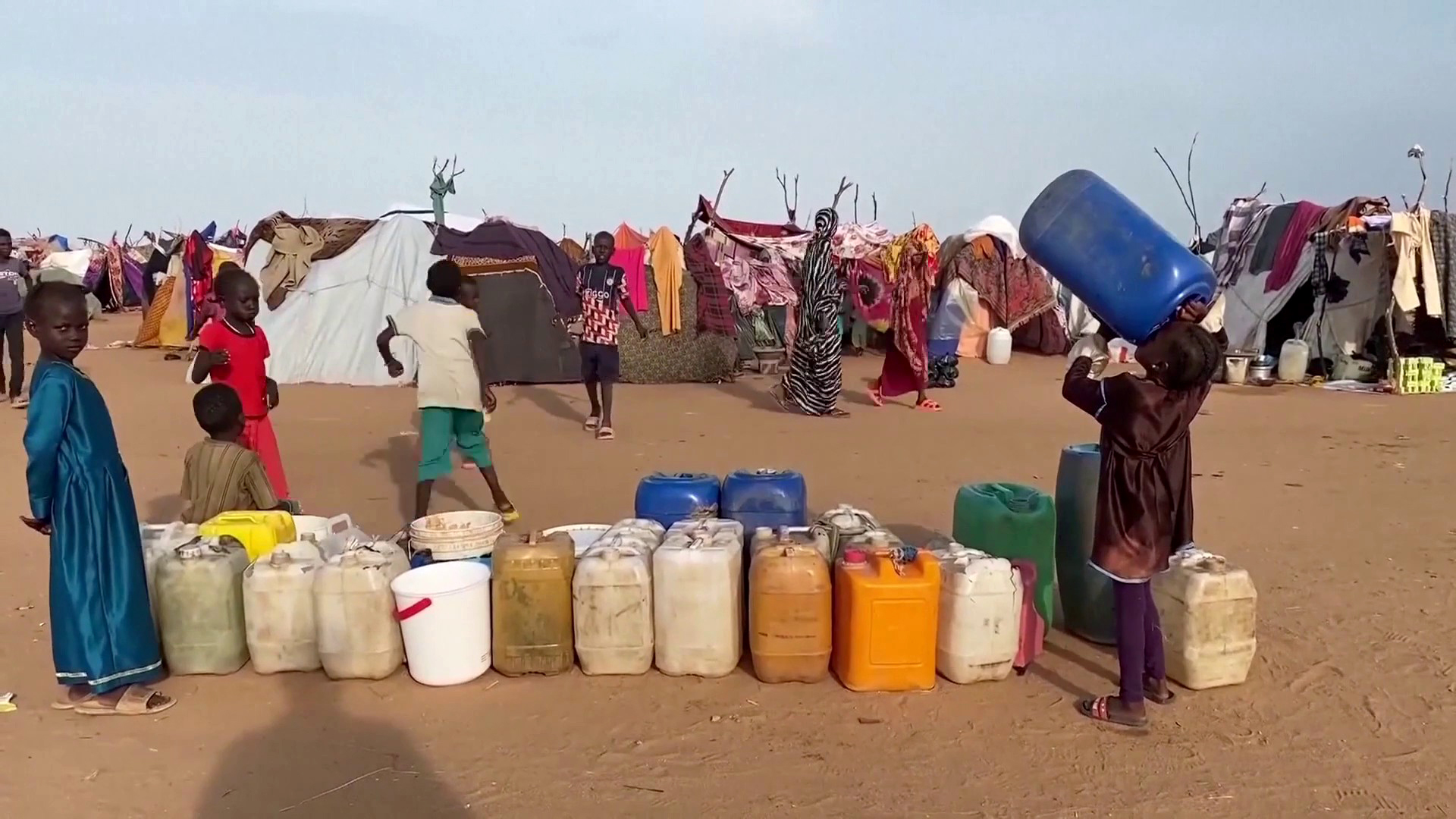
The situation is similarly dire in the Tina refugee camp on the Chadian border, where Sudanese refugees face acute shortages of potable water. Families are forced to queue for hours to obtain limited quantities that fail to meet their daily needs. Refugees report struggling with distant and contaminated water sources, compounded by the erratic delivery of water tankers by aid organizations. These tankers are insufficient to serve the camp’s large population, transforming water into a source of daily tension.
DZWatch has learned that Al-Ubayyid has lost half of its water sources due to destruction, prompting local authorities to implement emergency measures, such as drilling new pumps, which only cover a fraction of the actual need. Water extracted from some of these sources has high salinity, rendering it unfit for drinking. Displaced people congregate around any source of freshwater, highlighting the depth of the humanitarian crisis.
The suffering is further compounded by the lack of adequate sanitation and hygiene facilities, increasing the risk of waterborne diseases. The situation demands urgent and sustained international intervention to provide safe drinking water and prevent further deterioration of the humanitarian situation.
DZWatch will continue to monitor the situation closely.