Africa: A Battleground for Influence and Control?
As global geopolitical shifts accelerate, Africa is once again at the forefront of international attention. The continent is not only a rich source of resources and promising markets, but also an open arena for major powers to compete militarily, economically, and strategically. Amidst the proliferation of foreign military bases, the influx of investments, and attempts to diversify international partnerships, a fundamental question remains: Does Africa possess the power to protect its independent decision-making, or is it still captive to old forms of dependence with new tools?
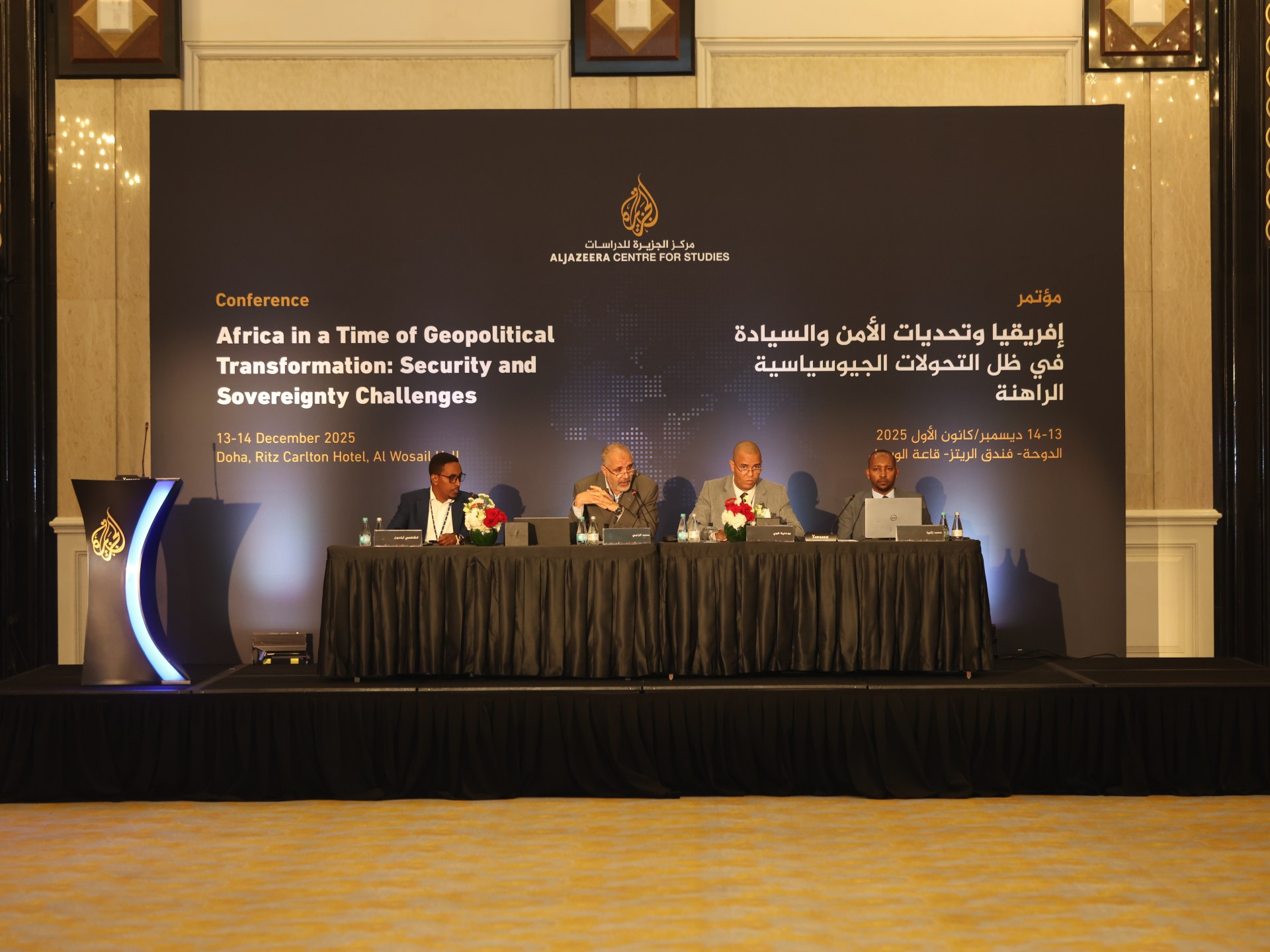
Experts discussed these issues during a session titled “The Sovereignty of African States in the Face of External Interference.” The discussion, held on the sidelines of a conference on Africa and the challenges of security and sovereignty in light of geopolitical transformations, offered diverse perspectives on the reality of foreign military presence, the dimensions of international competition, and the future of investment in the continent. The debates reflected the complexities of the African landscape and its structural challenges.
One speaker, Al-Shafi Abduon, a researcher specializing in Horn of Africa affairs, stated that the foreign military presence in Africa has direct and indirect impacts on the independence of African decision-making, both at the security and political levels. He explained that these bases often restrict the freedom of host countries to formulate their defense policies, as part of their national security becomes linked to the agendas of external powers.
Abduon added that the impact of the foreign military presence is not limited to the security dimension but extends politically through exerting pressure on decision-makers. This limits the independence of African positions on regional and international issues, turning the continent into an open arena for competition among major powers. He pointed out that the presence of foreign military bases, or even their withdrawal, does not necessarily mean a deterioration in relations between countries, but may open the door for reshaping relationships.