Kosovo Holds Elections to Break Year-Long Political Stalemate
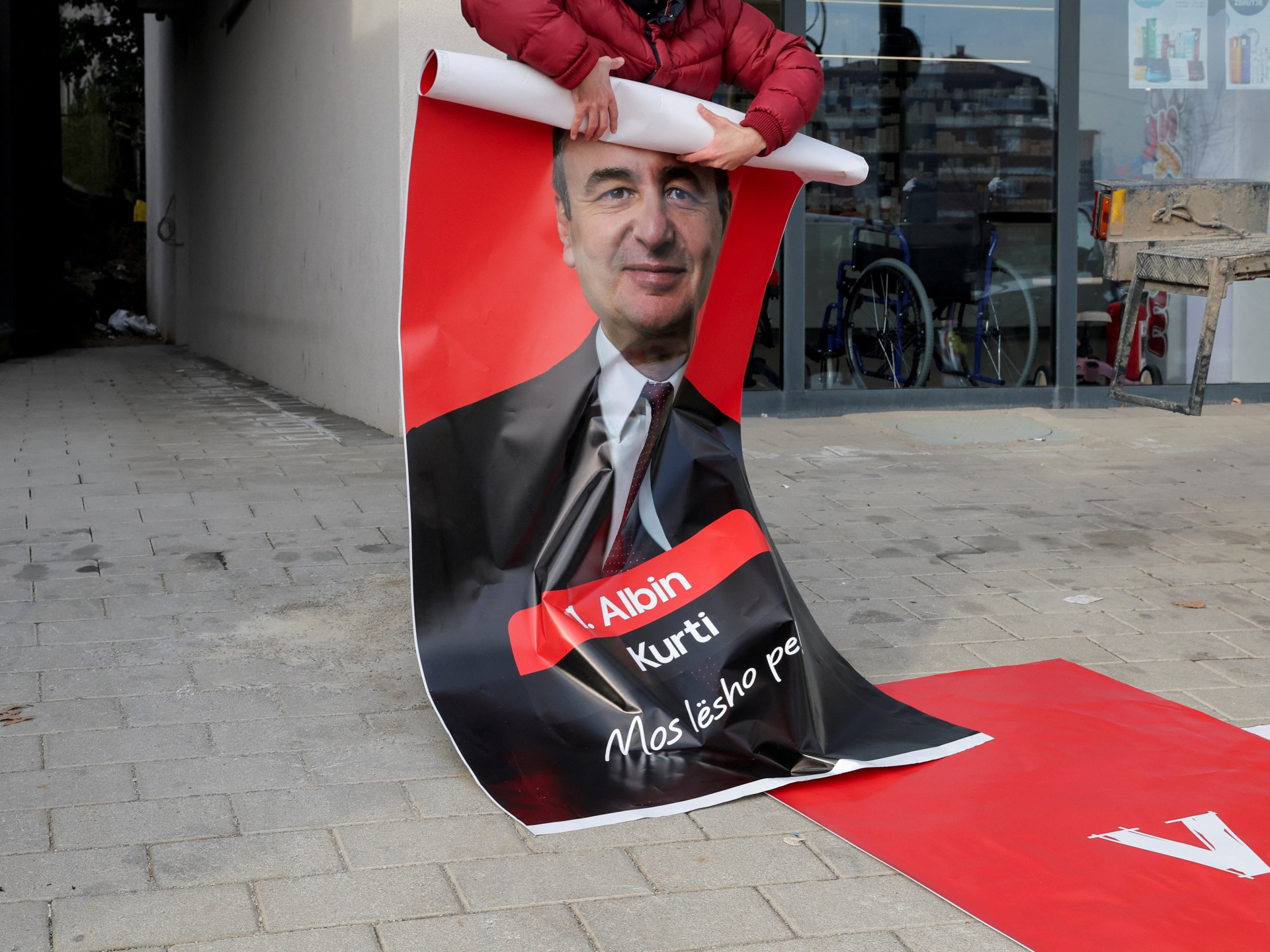
Kosovo is holding parliamentary elections today, Sunday, as Prime Minister Albin Kurti’s party seeks a majority to end a year-long political stalemate. This impasse has paralyzed the parliament and delayed crucial international funding.
These are the second elections this year for Europe’s youngest nation. Kurti’s Vetëvendosje (Self-Determination) party failed to secure a majority in February, leading to months of fruitless coalition negotiations. This prompted President Vjosa Osmani to dissolve parliament in November and call for early elections.
Failure to form a government and reactivate parliament would prolong the crisis at a critical time. Lawmakers must elect a new president in April and ratify loan agreements worth €1 billion ($1.2 billion) from the European Union and the World Bank, which are set to expire in the coming months.
Opposition parties in Kosovo have refused to govern with Kurti, criticizing his handling of relations with Western allies and his approach to the ethnically divided north of Kosovo, where a Serbian minority resides. Kurti, in turn, blames the opposition for the deadlock.
In an effort to win over voters, Kurti has pledged an extra month’s salary per year for public sector workers, €1 billion annually in capital investment, and the creation of a new prosecution unit to combat organized crime. Opposition parties have also focused on improving living standards.
Polling stations opened at 7:00 AM (06:00 GMT) and will close at 7:00 PM. Opinion polls are not published in Kosovo, making the outcome uncertain.
Disappointment Among Voters
Several voters have expressed their disappointment with the political situation. “There won’t be great joy if Kurti wins, and there won’t be great joy if the opposition wins,” said Edi Krasniqi, a doctor. “This country needs radical changes, and I don’t see that change coming.”
Kosovo declared its independence from Serbia in 2008, backed by the United States, including a NATO bombing campaign in 1999.