
Somalia’s Unity a Red Line: Arab and Islamic States Reject Threats to Sovereignty
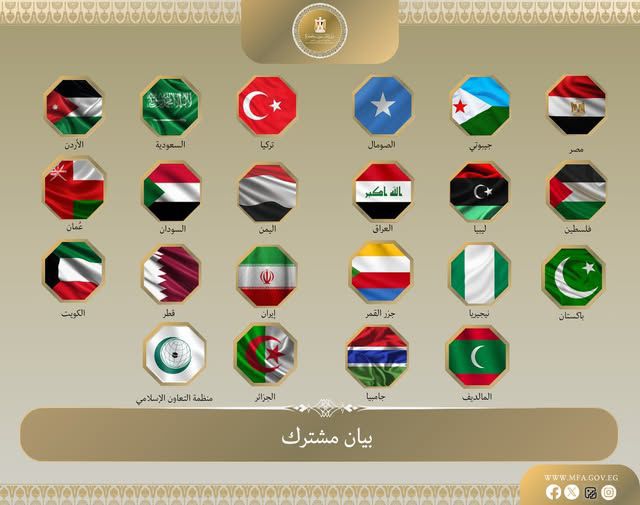
Foreign ministers from numerous Arab and Islamic nations have issued a strong joint statement affirming the inviolability of the Federal Republic of Somalia’s unity, territorial integrity, and full sovereignty. The statement, released under the auspices of the Hashemite Kingdom of Jordan, warns against the grave consequences of any attempts to dismantle the Somali state or undermine its regional unity.
This firm stance comes in direct response to Israel’s December 26th announcement recognizing the self-proclaimed “Somaliland” region. The move has been widely condemned as unprecedented and a direct threat to peace and security in the Horn of Africa and the Red Sea region. Furthermore, it carries negative repercussions for international peace and security, representing a clear violation of international law and the United Nations Charter.
The foreign ministers of Jordan, Egypt, Algeria, Comoros, Djibouti, Gambia, Iran, Iraq, Kuwait, Libya, Maldives, Nigeria, Oman, Pakistan, Palestine, Qatar, Saudi Arabia, Somalia, Sudan, Turkey, Yemen, along with the Organization of Islamic Cooperation, expressed their categorical rejection of the Israeli announcement. They emphasized that recognizing the independence of parts of sovereign states sets a dangerous precedent that threatens the international order based on respect for state sovereignty and territorial integrity.
The statement strongly condemns Israel’s action as a blatant violation of the UN Charter, which explicitly affirms the preservation of state sovereignty and territorial integrity. It reiterates full support for the Federal Republic of Somalia and rejects any measures that would undermine its unity or compromise its sovereignty. The ministers reaffirmed their unwavering support for Somalia’s stability.
In a related context, the assembled nations unequivocally rejected any attempts to link this action to plans to displace the Palestinian people from their land. They affirmed that such plans are unacceptable in both form and substance and are contrary to the principles of international law and international legitimacy. The international community must stand firm against any actions that destabilize the region.
Notably absent from the joint statement were Morocco, the United Arab Emirates, and Bahrain. This absence reflects these normalized nations’ continued reluctance to join unified Arab positions condemning the Israeli entity’s transgressions, whether related to the war on Gaza or repeated attacks on neighboring Arab countries. This suggests that, under the normalization agreements, these countries are avoiding criticizing Israeli policies, regardless of their severity, even when they threaten the unity of an Arab League member state and support moves detrimental to its sovereignty.