Algeria’s Diplomatic Surge: Tebboune’s Vision Drives Global Engagement and Advocacy

Under the directive of President Abdelmadjid Tebboune, Algeria's diplomatic corps has been exceptionally active across regional and international fronts, fostering robust engagement and projecting a positive image of the nation.
Algeria diplomacy international engagement
Minister of State, Minister of Foreign Affairs, National Community Abroad, and African Affairs, Ahmed Attaf, recently participated in Seoul in the Africa-Republic of Korea Partnership Ministerial Meeting. During the event, he underscored Algeria's steadfast commitment to enhancing its strategic partnership with South Korea, celebrating two decades since its inception. Attaf emphasized that Algeria views this bilateral relationship as a vital catalyst for the broader Africa-Korea partnership. He highlighted significant projects, such as the establishment of the African Center for Information and Communication Technology and Advanced Technologies, which transcend bilateral scope to achieve continental impact.
Algeria's engagement extends to actively contributing to the diversification and expansion of the Africa-Korea partnership. Minister Attaf expressed Algeria's satisfaction and ambition regarding the progress made since the 2024 summit, commending the tangible advancements in implementing agreed-upon orientations and commitments. He stressed the ambition to further strengthen the partnership's dimensions and capitalize on its promising prospects for mutual benefit.
Attaf outlined three key aspects of Algeria's perspective: first, satisfaction with the convergence between Africa-Korea partnership goals and the priorities of the continental Agenda 2063; second, appreciation for South Korea's pragmatic approach in supporting African cooperation mechanisms while respecting African ownership; and third, a strong ambition for the Afro-Korean partnership to facilitate Africa's integration into global technological revolutions, including AI, digital technologies, robotics, nanotechnologies, and renewable energy. He stressed the imperative for Africa to avoid marginalization in these advancements, drawing parallels to historical industrial and information revolutions.
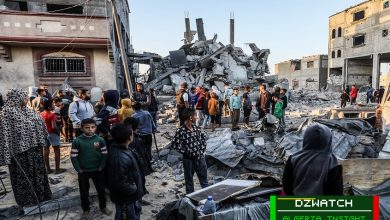
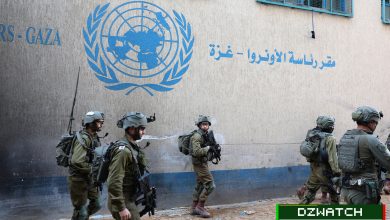
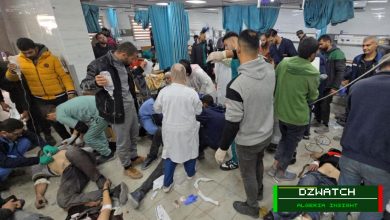
In line with President Tebboune's directives, Algeria has been vigorously championing just causes in Africa and the Arab world, alongside efforts to resolve international conflicts. Algeria has successfully convened numerous emergency meetings concerning Palestine, Sudan, Yemen, Lebanon, Libya, Syria, the Democratic Republic of Congo, Haiti, and Colombia. Notably, its diplomatic initiatives have facilitated discussions on critical issues such as the ceasefire in Gaza, challenges faced by UNRWA, and the plight of children in the Palestinian enclave, providing much-needed hope and relief.
Algeria's diplomatic efforts have also yielded significant results concerning Libya, facilitating an agreement for the Libyan Investment Authority to reinvest frozen assets and requiring the Sanctions Committee to inform Libyan authorities about matters concerning these assets. Furthermore, Algeria has successfully advocated for the importance of supporting political processes in Syria, Yemen, Sudan, and Lebanon within the UN Security Council, advocating for a new era free from foreign interference.
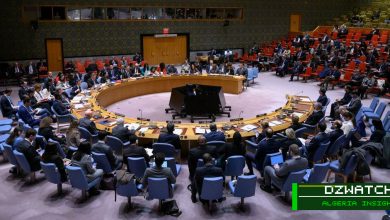
Demonstrating its influential role, Algeria has initiated key meetings addressing critical challenges in Africa and the Arab world, including counter-terrorism efforts, strengthening UN-Arab League cooperation, and reforming the international system. Algeria's expertise in counter-terrorism was highlighted at a high-level UN Security Council meeting it chaired, where its comprehensive approach, addressing both the manifestations and root causes of terrorism alongside development and security aspects, received unanimous praise from African ministers.
Discussions on enhancing UN-Arab League cooperation, also presided over by Minister Attaf, emphasized the urgency of bolstering joint diplomatic action for regional peace, security, and prosperity. The meetings highlighted the negative repercussions of excluding these issues from regional peace equations and stressed the complementary nature of the international system and multilateralism.
Furthermore, Algeria has been a staunch advocate for the Sahrawi people's right to self-determination and independence. Despite concerted efforts to undermine this cause, Algeria has remained steadfast in its support, leveraging its position as a non-permanent member of the UN Security Council to keep the issue in international focus. Crucially, Algeria influenced amendments to UN Security Council Resolution 2797 concerning MINURSO, reaffirming the Sahrawi right to self-determination and ensuring a more balanced text that aligns with international law, countering attempts to liquidate the issue.
Minister Attaf clarified that the Security Council has not adopted Moroccan theses on the Western Sahara, emphasizing that the dossier remains under the purview of the UN. He noted that the adopted resolution preserved the fundamental elements for a solution, underscoring Algeria's unwavering commitment to defending just causes, particularly Palestine and Western Sahara, on the international stage.
Related topics: Algeria diplomacy, Ahmed Attaf, Africa Korea partnership, UN Security Council, Western Sahara, counter-terrorism Africa
DZWatch provides English-language coverage of Algeria-focused developments for international readers.