
















Algerian Constitutional Court Member Takes Part in High-Level Study Visit to Germany
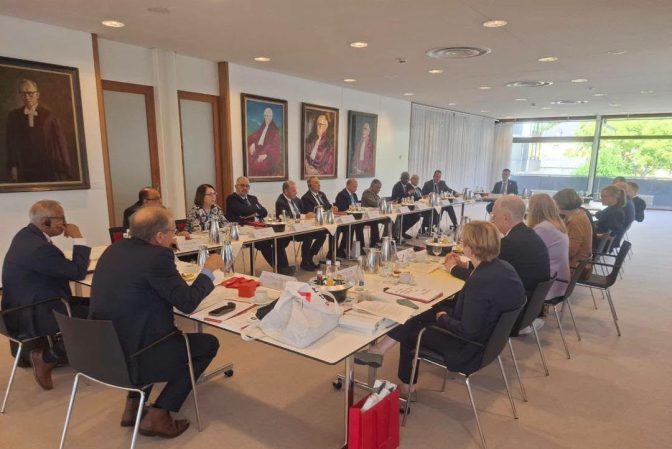
Werdia Nait Kaci, a member of Algeria’s Constitutional Court, is taking part in a high-level study visit organized in the Federal Republic of Germany for presidents and members of constitutional courts and councils from the Middle East and North Africa region, according to a statement issued on Monday by the Constitutional Court.
The visit, which will continue until next Saturday, falls within the framework of strengthening cooperation between constitutional courts and councils. It also aims to encourage the exchange of expertise and comparative experiences in the field of constitutional justice.
According to the same source, this initiative is intended to promote institutional dialogue and improve constitutional judicial practices. It also seeks to reinforce the principles of constitutional supremacy, the rule of law, and the protection of rights and freedoms.
The program includes several high-level activities designed to deepen dialogue and exchange experience with key actors in the field of constitutional justice. These activities include visits to the German Federal Constitutional Court and the European Court of Human Rights in Strasbourg, France.
The agenda also provides for meetings with officials from the German federal government, members of the German Parliament, the Bundestag, judges of the Federal Constitutional Court, and representatives of the Constitutional Court of the State of Berlin.
In addition, the program includes discussions with a group of academics, legal experts, and representatives of judges’ and lawyers’ associations. These meetings are expected to strengthen cooperation, encourage the sharing of experiences, and consolidate frameworks for institutional partnership.
Through this participation, Algeria’s Constitutional Court seeks to further develop its cooperation with regional and international constitutional institutions. The visit also reflects the importance given to comparative constitutional experiences as a means of improving judicial performance and supporting the protection of constitutional principles.