Algeria Projects Air Power to Counter Niger Destabilization
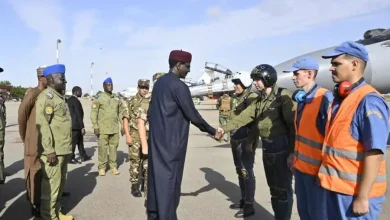
The Algerian Air Force deployed Su-30MKA fighter aircraft to Niger at the request of Niger's military authorities. This operation, involving at least four fighters, an Il-78 tanker, and an Il-76 transport, was explicitly aimed at countering attempts to destabilize Niger and strengthening strategic military cooperation. This action followed a failed coup attempt in Niger, with the governments of Niger, Burkina Faso, and Mali alleging Western attempts to reimpose influence through political destabilisation, coup attempts, and support for insurgencies.
The Su-30MKA is a heavyweight twin-engine fighter forming the backbone of the Algerian Air Force's fixed-wing combat fleet. Developed as a twin-seat derivative of the Su-27 Flanker, it features next-generation avionics, extended range, and enhanced versatility. The MKA variant integrates advanced technologies, including the N011M electronically scanned array radar and thrust-vectoring nozzles, which were initially developed for cancelled Su-35 and Su-37 fighters. With over 70 Su-30MKA fighters in service, Algeria maintains one of the world's largest fleets of heavyweight fighters, possessing a longer range and more powerful radar than any Western fighter type, crucial for defending Africa’s vast airspace.
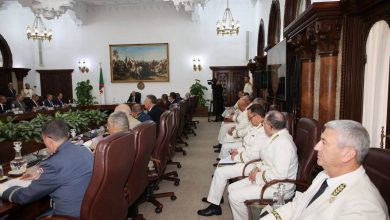
This deployment by the Algerian Defence Ministry, under the direction of President Abdelmadjid Tebboune and General Saïd Chengriha, signals Algeria's readiness to actively defend its immediate security environment. It concretizes a revised constitutional provision allowing the Algerian National Popular Army to participate in military operations beyond national borders, demonstrating both capacity and willingness to intervene when a neighboring state's stability is threatened. Algeria's proactive stance serves as a clear deterrent, marking a strategic shift in its approach to regional security and establishing a firm "red line" against further destabilization efforts in its vicinity. Aerial warfare capabilities have been heavily prioritised since the NATO war effort against neighboring Libya in 2011 made deterring possible Western attacks critical, with the Western threat seen to remain high.