National AI Strategy Projects Enter Operational Phase

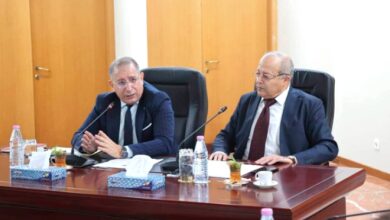
Algeria has officially commenced major projects for the implementation of its National Artificial Intelligence Strategy, marking a definitive shift into an operational phase. This strategic progression follows several key preparatory meetings since May, focusing on refining the necessary resources and expertise for AI development. Chaired by the Minister of Higher Education and Scientific Research, Kamel Baddari, a recent multisectoral meeting examined planned actions, financial needs, and the work of specialized commissions, with priorities including the development of sovereign government AI models, strengthening computing capabilities, and enhancing national expertise.
Significant steps are being taken in digital infrastructure and research. The commission dedicated to data and infrastructure has identified 17 infrastructure-related and 14 data-related operations planned for 2026. This includes leveraging existing servers and graphic processing units while assessing future equipment needs for AI applications. Furthermore, a proposal for a grouping of public and private economic enterprises aims to bolster national technological and economic integration. The updated decree for the creation of a National Research Center for Artificial Intelligence and Data has been approved, advancing its legal establishment. In the realm of large language models, four models are under development, with two reportedly completed, including a prototype chatbot designed for Algerian tax legislation and a model to assist students with personalized academic pathways.
A central focus of the strategy is the cultivation of national talent, with a goal to train 50,000 specialists by 2030. The continuous training commission has outlined 85 operations to develop skills across various sectors, while the doctoral commission presented 24 theoretical and applied AI training axes, aiming to address critical sectoral challenges. The competitive examination for these doctoral programs is anticipated for November 2026. On the financial front, multiple mechanisms are under consideration, including public funding, a potential national fund, banking and international financing, private sector and diaspora contributions, and economic revenues from AI applications. International cooperation frameworks have also been identified, with priorities set to align with national objectives. Since May, the strategy has progressively clarified structures, projects, and needs, demonstrating a consistent advancement from governmental review to concrete implementation efforts.