Trump Grants Hungary One-Year Sanctions Waiver on Russian Oil Amidst European Tensions
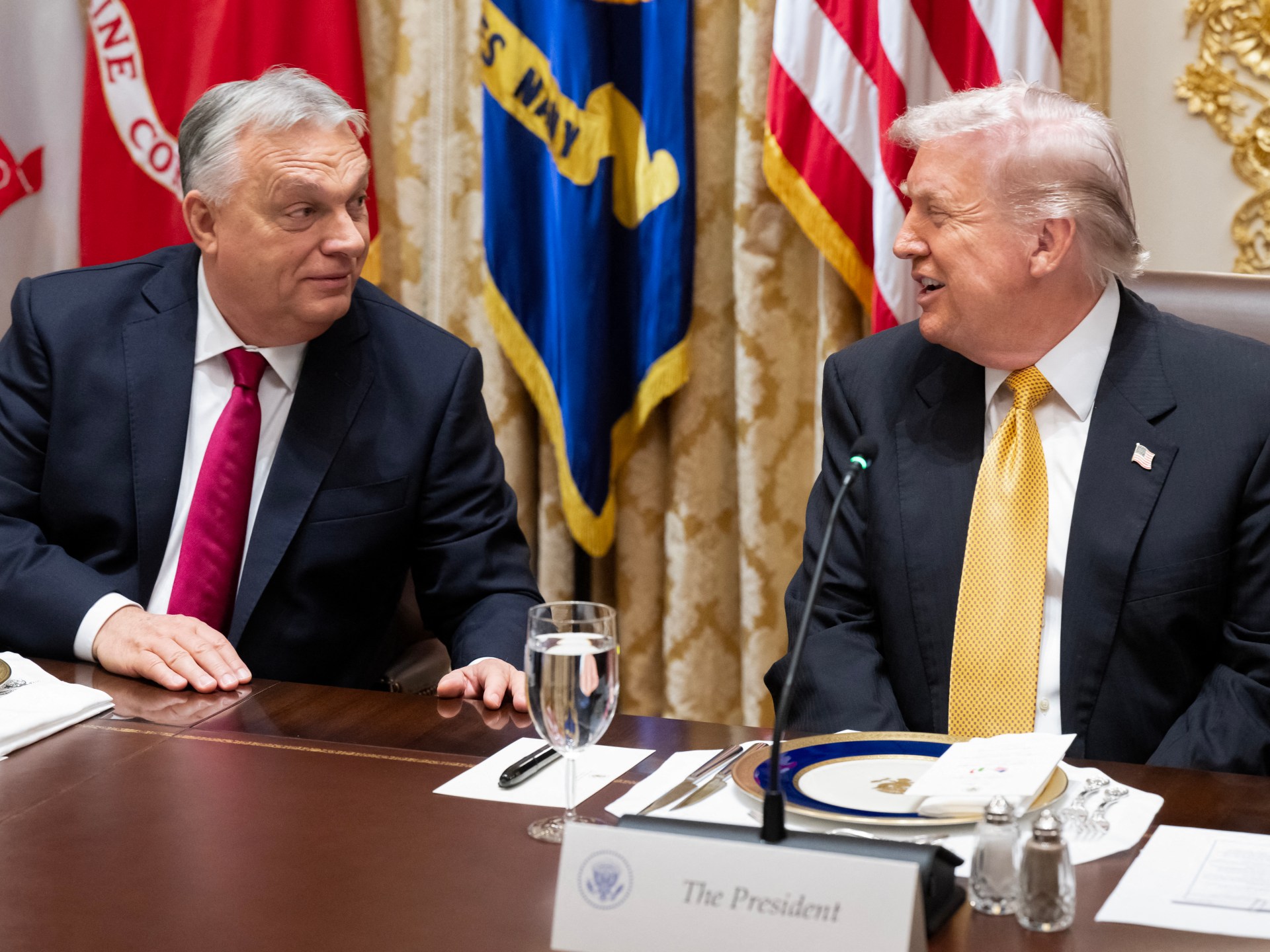
Washington D.C. – In a move that is already sending ripples across the European Union and drawing criticism from within his own political circles, U.S. President Donald Trump has granted Hungary a one-year exemption from sanctions related to the purchase of Russian oil and gas. The decision, announced following a meeting with Hungarian Prime Minister Viktor Orbán at the White House on Friday, allows Hungary to continue importing Russian energy supplies without facing the penalties imposed on other nations seeking to undermine Russia’s war efforts in Ukraine.
While President Trump has consistently urged other European countries to cease their reliance on Russian oil, arguing that it directly funds Vladimir Putin’s military aggression, Orbán strategically utilized his first White House visit since Trump’s return to office to secure preferential treatment for his nation. Hungary’s dependence on Russian energy has been a long-standing point of contention, particularly since the onset of the Russia-Ukraine war in 2022, straining relations with some of its allies within the EU and NATO.
Just last month, the Trump administration implemented sanctions targeting Russian oil giants Lukoil and Rosneft, with the explicit threat of extending those sanctions to entities in countries that continue to purchase oil from these companies. This created a precarious situation for Hungary, which relies heavily on Russian pipelines for its energy needs.
During their bilateral meeting, Prime Minister Orbán reportedly emphasized the critical importance of Russian oil to Hungary’s economy and energy security. He articulated the potential “devastating consequences” that a disruption in Russian oil and gas supplies would have on the Hungarian people and the nation’s overall economic stability. Orbán’s argument seemingly resonated with President Trump, who, in remarks to reporters following the meeting, justified the exemption by highlighting Hungary’s unique geographical constraints.
“Hungary is a landlocked country,” President Trump stated. “They don’t have access to the sea. They are dependent on pipelines and Russian oil and gas. It’s a different situation.” He then contrasted Hungary’s situation with that of other European nations, implicitly criticizing their continued dependence on Russian energy despite having alternative options.
The White House official, speaking on background, also revealed that Hungary has pledged to purchase $600 million worth of Liquefied Natural Gas (LNG) from the United States. This commitment is likely aimed at diversifying Hungary’s energy sources and reducing its long-term reliance on Russia, although the immediate impact remains to be seen.
The decision to grant Hungary this exemption has sparked considerable debate and criticism. Opponents argue that it undermines the united front that the U.S. and its allies are attempting to present against Russia’s aggression in Ukraine. They contend that such exemptions create loopholes that weaken the effectiveness of sanctions and send a mixed message to both Russia and other nations considering circumventing sanctions.
“This is a dangerous precedent,” said a spokesperson for a leading transatlantic policy think tank. “It allows Orbán to play both sides, maintaining close ties with Moscow while simultaneously benefiting from preferential treatment from Washington. It also creates resentment among other EU members who are making significant sacrifices to reduce their dependence on Russian energy.”
For more information about Economie, check our dedicated section.
Indeed, Hungary has maintained a complex relationship with both Moscow and Washington. Prime Minister Orbán has often clashed with the rest of the EU over its approach to Russia, frequently resisting efforts to impose stricter sanctions and maintaining open channels of communication with the Kremlin. This stance has led to accusations that Hungary is acting as a Trojan horse for Russian interests within the EU.
Conversely, Orbán has also cultivated a close relationship with conservative political figures in the United States, including President Trump. He has been praised by some in the U.S. for his strong stance on border security and his socially conservative policies.
The timing of this exemption is also noteworthy. It comes at a time when the U.S. is actively seeking to strengthen its alliances in Europe and counter Russian influence. Some analysts suggest that the decision may be a strategic move to maintain influence within Hungary and prevent the country from drifting further into Russia’s orbit. Others believe it is simply a reflection of President Trump’s personal relationship with Prime Minister Orbán.
Looking ahead, the European Union is likely to express its concerns about the implications of this exemption. While the U.S. is not bound by EU sanctions policies, the decision could create friction and undermine the bloc’s efforts to present a unified front against Russia.
The waiver, lasting one year, will be closely monitored by international observers. The level to which Hungary will continue its dependence on Russia, and whether they will take tangible steps to diversify their energy resources, will be closely scrutinized. The decision by Trump could also embolden other nations reliant on Russian energy to seek similar exemptions, further complicating the global effort to isolate Russia economically. For DZWatch, the implications of this decision on the Algerian oil and gas market are also important to consider. A weakened European front against Russian energy could further depress global oil prices, impacting Algeria’s revenue streams. It also highlights the complex geopolitical landscape Algeria must navigate as it seeks to secure its economic interests while maintaining its own independent foreign policy.
Furthermore, Orbán had previously offered to host a summit in Budapest between Trump and Putin, a meeting that was ultimately cancelled by the U.S. president in October amidst mounting pressure and the imposition of initial sanctions on Moscow. That cancellation, and the imposition of those initial sanctions, marked a turning point in Trump’s relationship with Russia, at least temporarily. The current granting of the oil sanction exception to Hungary thus represents a significant shift in the US approach. It remains to be seen if this is an isolated incident or the start of a wider reassessment of US foreign policy towards Russia under the Trump administration. The coming months will be critical in determining the long-term consequences of this controversial decision.