UN Chief Guterres Proposes Major Budget Cuts, Job Losses
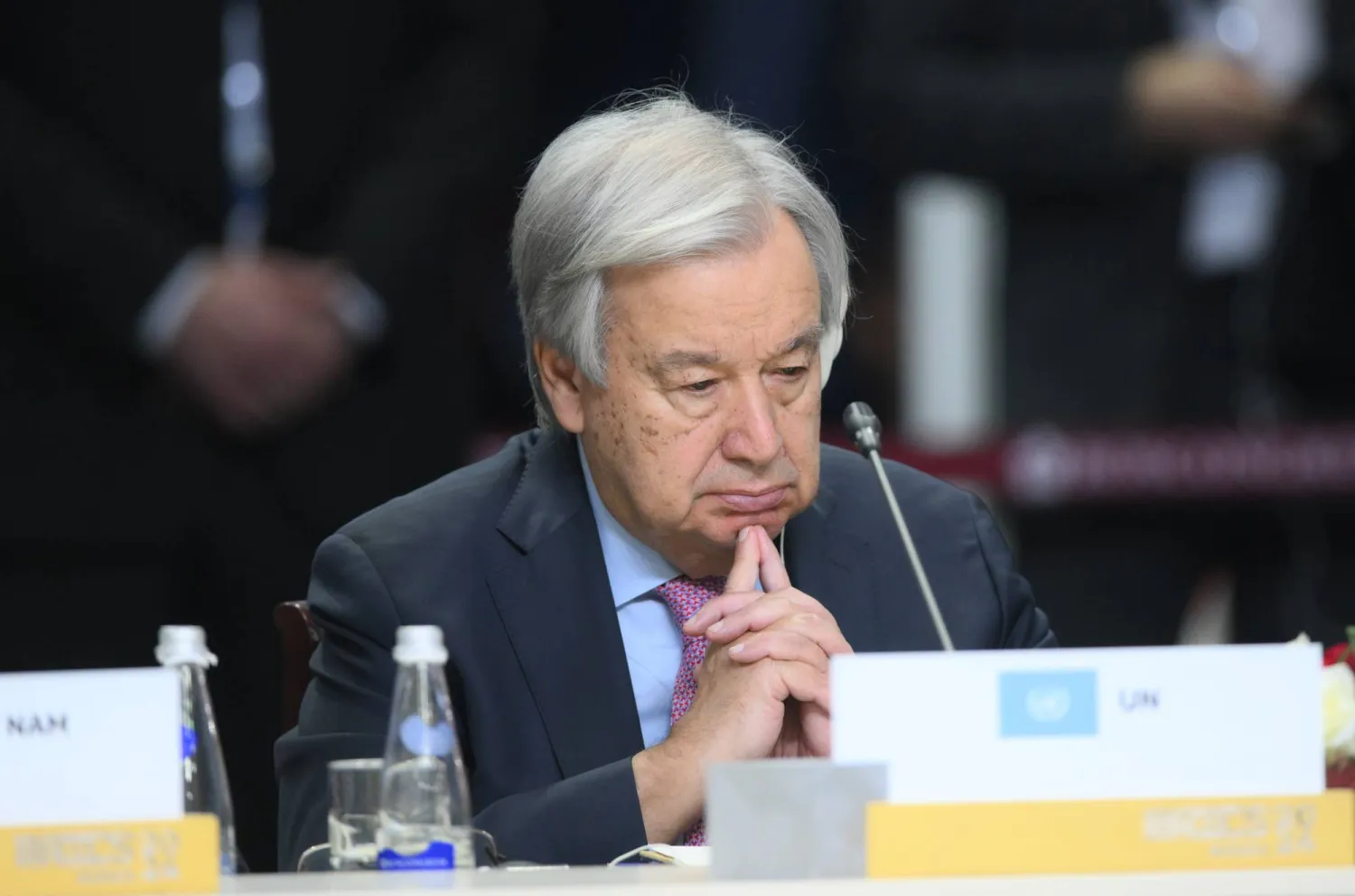
United Nations Secretary-General Antonio Guterres formally proposed significant cuts to the organization’s core budget for the upcoming year, citing a precarious financial situation. The proposed budget reduction amounts to $577 million, coupled with the elimination of over 18 percent of the UN’s workforce.
Addressing the General Assembly’s budget committee, comprised of 193 member states, Guterres revealed the alarming state of the UN’s finances. “We ended 2024 with arrears of $760 million, of which $709 million remains outstanding from that year. We have also not received $877 million in assessments for 2025, bringing the total arrears to $1.586 billion,” he stated.
The Secretary-General emphasized that the UN is facing its weakest cash flow situation in years, with outstanding dues nearing $1.6 billion. This chronic delay in payments from member states is severely hindering the organization’s ability to function effectively.
“Liquidity remains fragile, and this challenge will persist regardless of the final approved budget,” Guterres warned, highlighting both the proposed budget reduction and the “unacceptable volume of arrears” owed by member states. He noted that only 145 out of 193 member states have fully paid their contributions for 2025.
Under the revised proposal, the UN’s regular budget for 2026 would be $3.238 billion, a substantial decrease of $577 million – or 15.1% – compared to 2025. This reduction would necessitate the elimination of approximately 2,681 positions, representing an 18.8% reduction in staff. Special political missions would also face cuts exceeding 21% compared to 2025 levels, largely attributed to mission closures and streamlined staffing structures.
The UN plans to consolidate its payroll processing into a single global team distributed across three work centers and establish shared administrative hubs, starting in New York and Bangkok. The Secretariat is also reviewing functions that can be relocated to lower-cost locations.
Final approval of the budget cuts will require endorsement by the full General Assembly later this month. The proposed measures reflect the UN’s effort to adapt to a challenging financial landscape and ensure its continued operation amidst persistent funding shortfalls.