UAE’s National Team: Engineered Victory or Artificial Identity?
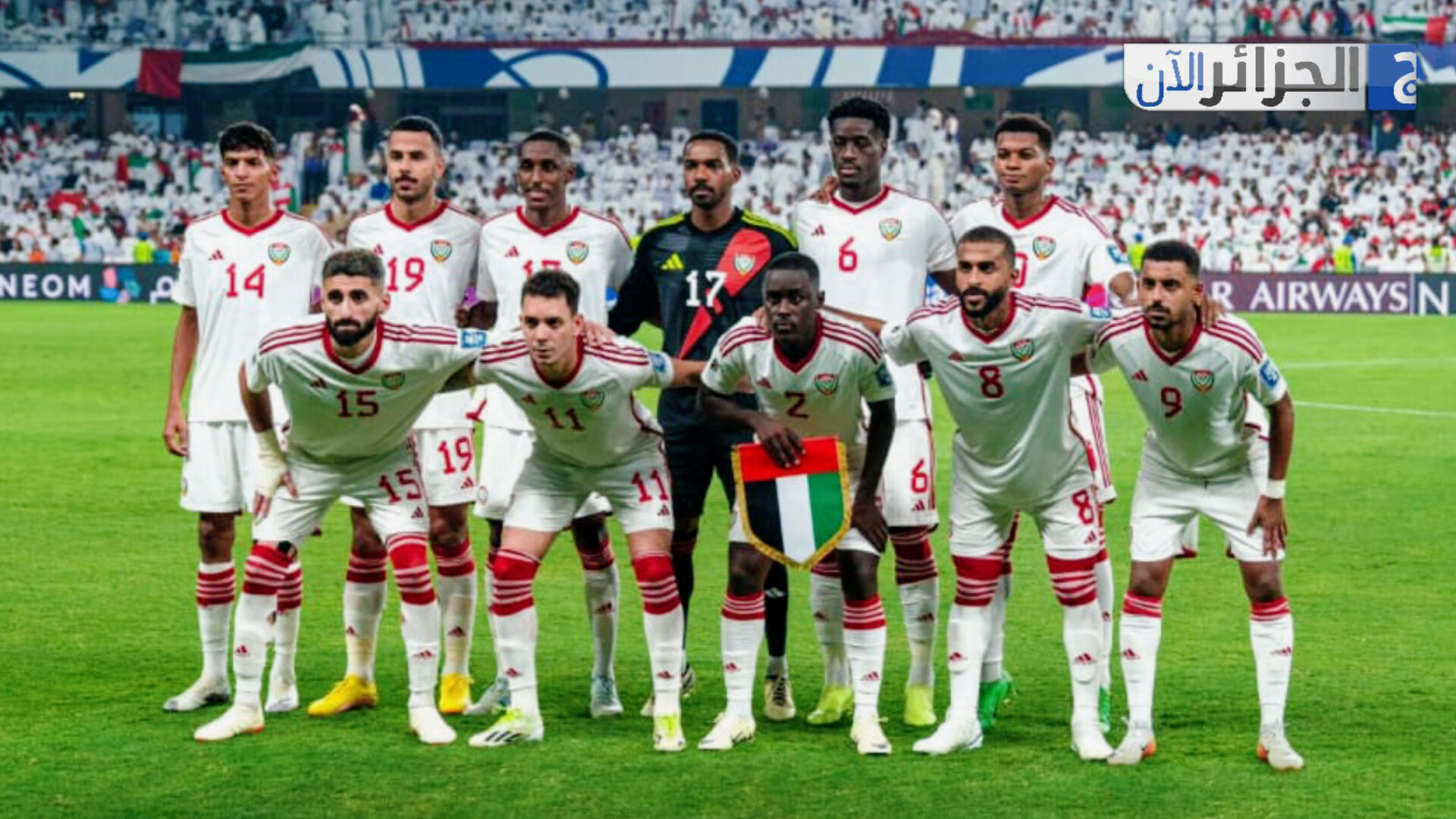
The Algerian national team, Les Fennecs, suffered a painful defeat against the United Arab Emirates in the quarter-finals of the 2025 Arab Cup after a penalty shootout. However, a closer look reveals that Algeria wasn’t truly facing an Emirati national team in the traditional sense, but rather a squad that is ‘Emirati’ in name only.
A staggering 14 out of the 23 players in the UAE squad are of foreign origin, meaning that genuine Emirati citizens constituted a minority within their own national team. This raises questions about the authenticity and long-term sustainability of this approach.
A Systematic Naturalization Project Since 2018
In May 2018, the UAE authorities decided to address the perceived weakness of their domestic football scene through a shortcut: importing players instead of developing them organically. The Cabinet issued a decree, euphemistically titled ‘Resident Player,’ aimed at attracting foreign players from various countries worldwide at a young age.
The plan is simple: acquire young talents from Brazil, Africa, and Europe for relatively low fees, grant them citizenship, and wait five years until they become eligible to represent the ‘White’ team according to FIFA regulations. The result is a team lacking a genuine national identity, but undeniably effective on the field.
Circumventing FIFA Regulations
The UAE capitalized on FIFA’s requirement of five years of residency before representing a national team, a rule originally intended to prevent ‘fast-track sports naturalization.’ However, the Emiratis found a workaround: recruiting players aged 16-18, ensuring they are ready for the national team upon reaching 21-23 years old.
The UAE has expanded its project, transforming its national team into a mosaic of nationalities linked to the country only by passport and salary. This approach raises ethical questions about the true spirit of international football competition. Is it a legitimate strategy or a form of sporting colonization?
A Defense Spanning from Portugal to Tunisia
In the back line, Algeria faced a Portuguese player (Ruben Canedo), a Tunisian (Alaa Zohair), an Ivorian (Kwame Akido), and a Serbian professional (Sasa Ivkovic). None of them were born or raised in the UAE, but rather arrived ready-made from academies in Porto, Monastir, and elsewhere.
Midfielders from Morocco, Argentina, and Ghana
The midfield, which overwhelmed the Algerian players, included Moroccan Issam Fayez, Argentinian Nicolas Jimenez, and Ghanaian Richard Akonnor, who scored the decisive penalty. These players were developed in their home countries before moving to the UAE to obtain citizenship and lucrative salaries. This raises concerns about the impact on the development of local Emirati talent.