US Bolsters Caribbean Presence, Forges Military Pacts
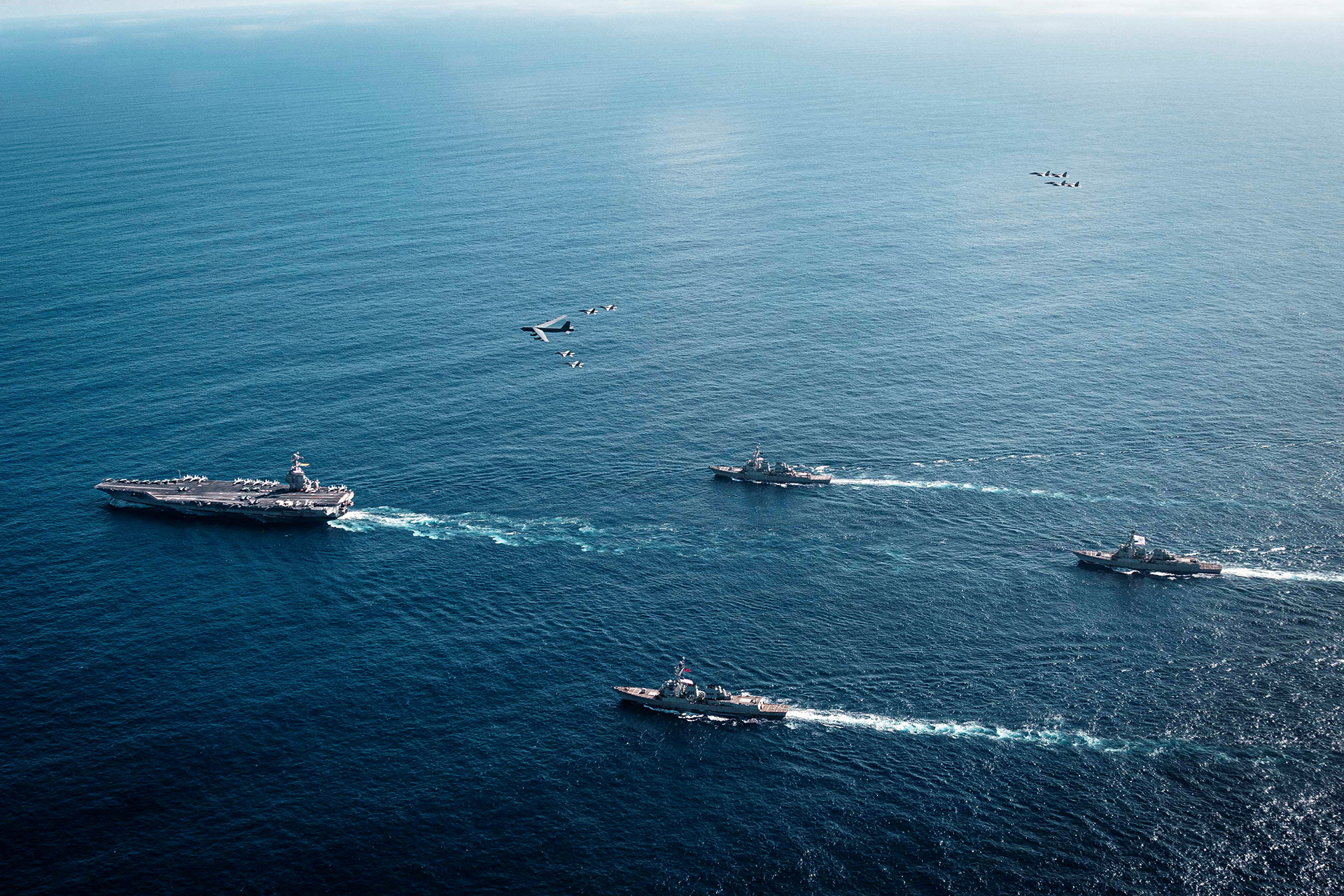
Washington is expanding its military footprint in the Caribbean, securing agreements with Trinidad and Tobago and Paraguay amidst rising regional tensions. These moves come as the US increases its naval presence in the area, raising concerns from neighboring Venezuela.
The government of Trinidad and Tobago has announced that it will permit US military aircraft to utilize its airports for logistical purposes in the coming weeks. According to a statement from the Ministry of Foreign Affairs, this agreement is strictly limited to refueling and troop transport operations. The ministry emphasized that the airports will be available for operations targeting criminal activity and will not be used to target any specific nation.
Meanwhile, Washington and Paraguay have signed an agreement allowing the US military to deploy forces on Paraguayan soil. This agreement, according to the US State Department, reflects a commitment to close coordination with Paraguay on regional security matters and strengthens a long-standing partnership. The State Department added that this agreement further solidifies the enduring partnership between the two nations.
These developments follow a period of heightened US military activity in the Caribbean, particularly against the backdrop of ongoing tensions with Venezuela. Venezuela has accused Trinidad and Tobago of collaborating with the United States in the interception and detention of an oil tanker off its coast. Vice President Delcy Rodriguez, who also serves as Minister of Petroleum, condemned the action as a “dangerous violation of international law and a clear disregard for the principles of free navigation and trade.” She also alleged that the Prime Minister of Trinidad and Tobago, Kamla Persad-Bissessar, has demonstrated “hostility towards Venezuela” since assuming office.
The situation along the Colombian-Venezuelan border remains tense, with increased speculation about potential escalation in the region. Security measures are being ramped up on the Colombian side to prepare for a potential influx of refugees fleeing Venezuela should the situation deteriorate further.