Lebanon’s Weapons Control Plan Faces Critical Test
Beirut is holding its breath as the initial phase of Lebanon’s ambitious plan to control weapons and stabilize the security situation south of the Litani River nears its deadline. This crucial initiative, however, faces a complex field and political test amid ongoing Israeli airstrikes.
Reports indicate that the timeframe for this initial phase, brokered by American mediators, was designed as a realistic framework to assess progress on the ground, paving the way for subsequent stages or adjustments based on the achieved results. The Lebanese government had tasked its army with developing an implementation plan to control weapons by the end of 2025, a move seen as part of Lebanon’s international commitments to manage security in the south.
Following a Paris meeting dedicated to evaluating developments south of the Litani, the possibility of extending the initial phase’s deadline emerged. Participants acknowledged that the existing mechanism had not ensured full implementation of the plan and had failed to halt all Israeli airstrikes on the region.
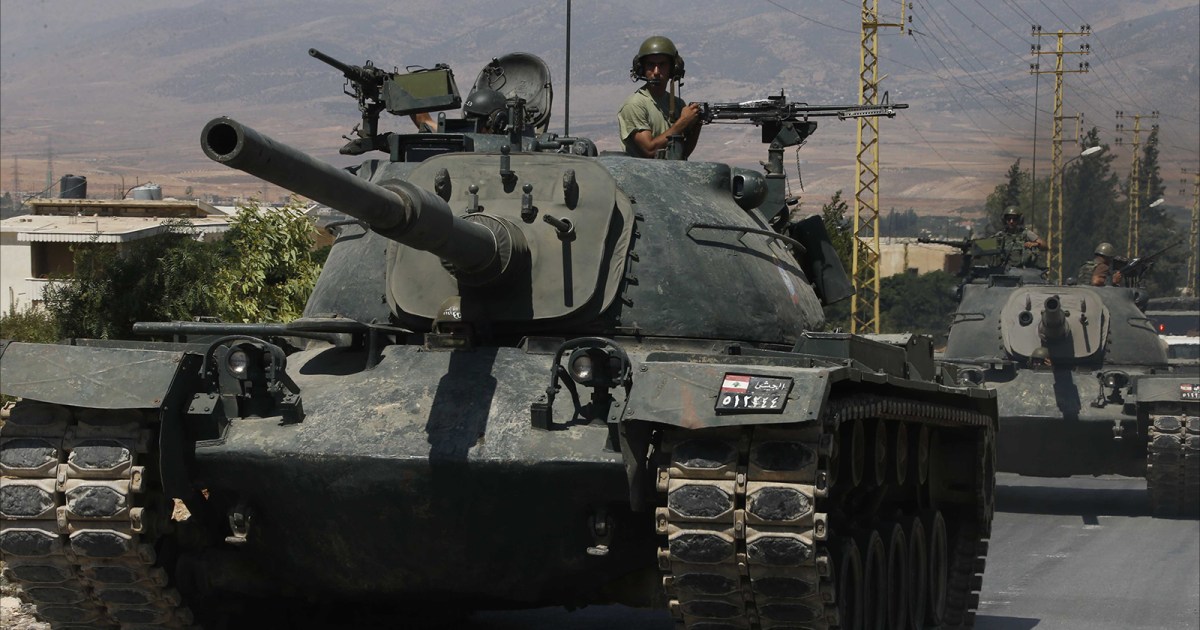
What has been achieved on the ground? The Lebanese government asserts that it has strengthened the army’s presence south of the Litani, particularly in border villages and sensitive contact points. It also claims to have enhanced field coordination with UNIFIL forces to minimize direct friction and manage tensions. Lebanese authorities maintain that they have successfully reduced visible military displays in several areas, considering this a gradual step in a long and complex process requiring time and broader political and security guarantees.
Conversely, Israel maintains that the “threat remains”, describing its ongoing airstrikes as “legitimate preventative measures.” Tel Aviv argues that Hezbollah’s military infrastructure south of the Litani has not been effectively dismantled. Israel insists that the expanded Lebanese military deployment does not prevent Hezbollah elements from repositioning or transporting weapons, a justification it uses to continue its aerial operations, which have recently extended beyond the border plan’s scope to reach deeper into southern Lebanon.
Caught between conflicting accusations, the Lebanese government finds itself in a precarious position. It must balance international pressure to disarm non-state actors with the reality of a volatile security environment and ongoing Israeli military activity. The success of the weapons control plan, and the stability of southern Lebanon, hangs in the balance.