Algeria Signs Contracts for Three Seawater Desalination Plants
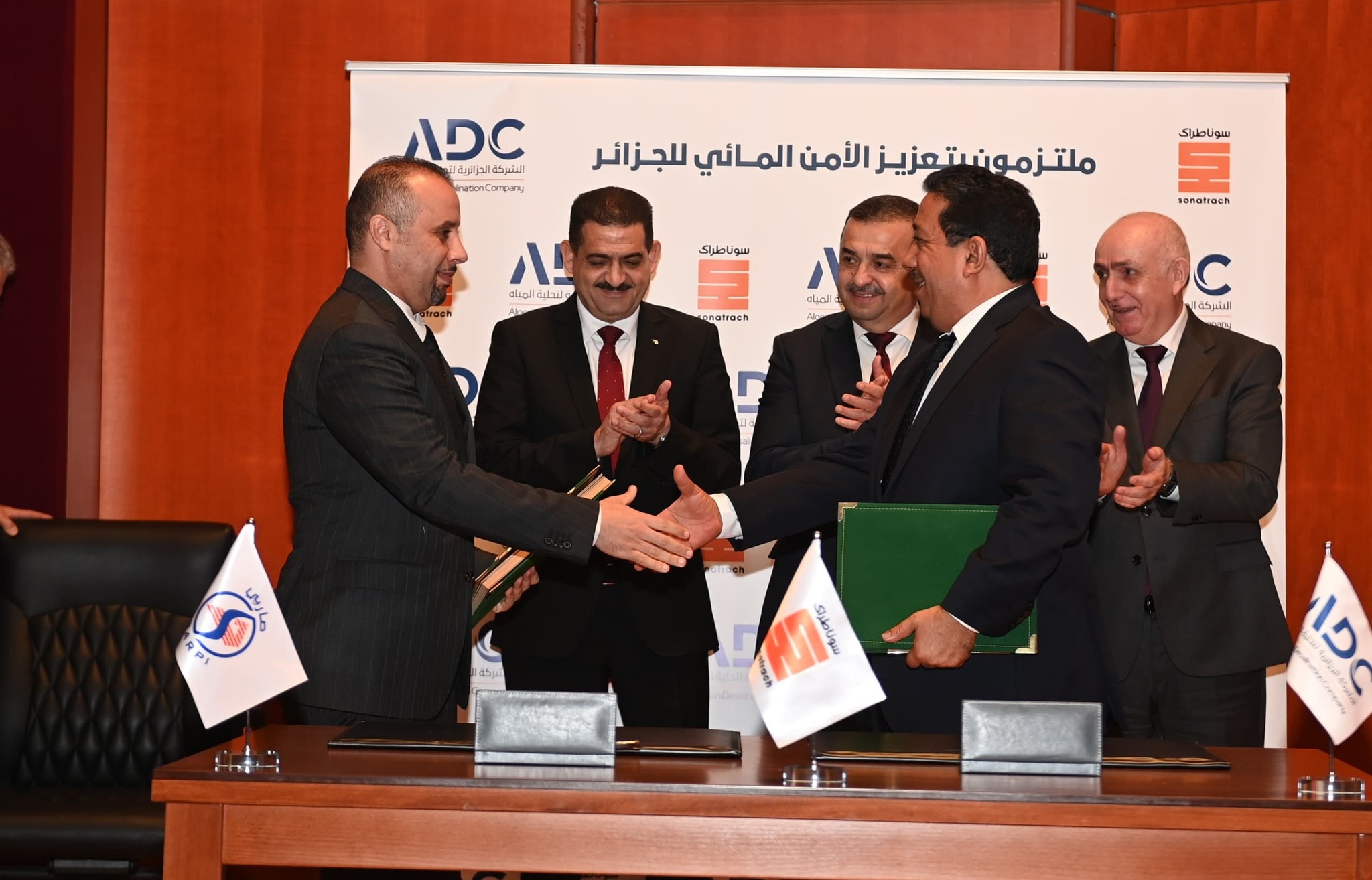
Algiers, December 29, 2025 – Contracts for the construction of three new seawater desalination plants were signed today in Algiers, marking a significant step towards enhancing Algeria’s water security. The signing ceremony, held at the headquarters of Sonatrach, was overseen by the Minister of State, Minister of Hydrocarbons and Mines, Mohamed Arkab.
The projects, located in the provinces of Tlemcen, Chlef, and Mostaganem, are part of a larger national program aimed at bolstering the country’s water production capacity. A memorandum of understanding was also signed between the Algerian Water Desalination Company (ADC), a subsidiary of Sonatrach, and the Algerian Water Company (ADE).
The ceremony was attended by the Minister of Water Resources, Taha Derbal, the CEO of Sonatrach, Noureddine Daoudi, the CEO of ADC, Lahcen Bada, and the Director General of ADE, along with other senior officials and representatives from national construction companies.
These strategic projects fall under the second supplementary national program approved by the President, which includes the construction of six major seawater desalination plants. Each plant will have a production capacity of 300,000 cubic meters per day, contributing to a national target of 5.6 million cubic meters per day of desalinated water by 2030.
The contracts cover the Ain Adjroud plant in Marsa Ben M’hidi (Tlemcen), the Dhahra plant in El Marsa (Chlef), and the Sidi Ledjal plant in El Khadra (Mostaganem). The projects will be executed under an Engineering, Procurement, and Construction (EPC) framework, ensuring adherence to timelines and technical standards.
ADC, as a subsidiary of Sonatrach, will supervise the implementation of these projects. Leading national companies have been entrusted with the construction: KouGC will build the Tlemcen plant, ENGCB will construct the Chlef plant, and SAPTA will undertake the Mostaganem plant. The completion timeframe for each project is set at 22 months.
These desalination plants are expected to significantly enhance sustainable water security, improve public water services, create numerous direct and indirect jobs, and support training programs, knowledge transfer, and the development of national expertise in seawater desalination, aligning with the national vision for sustainable development. This initiative represents a crucial step towards a more water-secure future for Algeria.