Scottish Court Hears Challenge to Palestine Action Ban
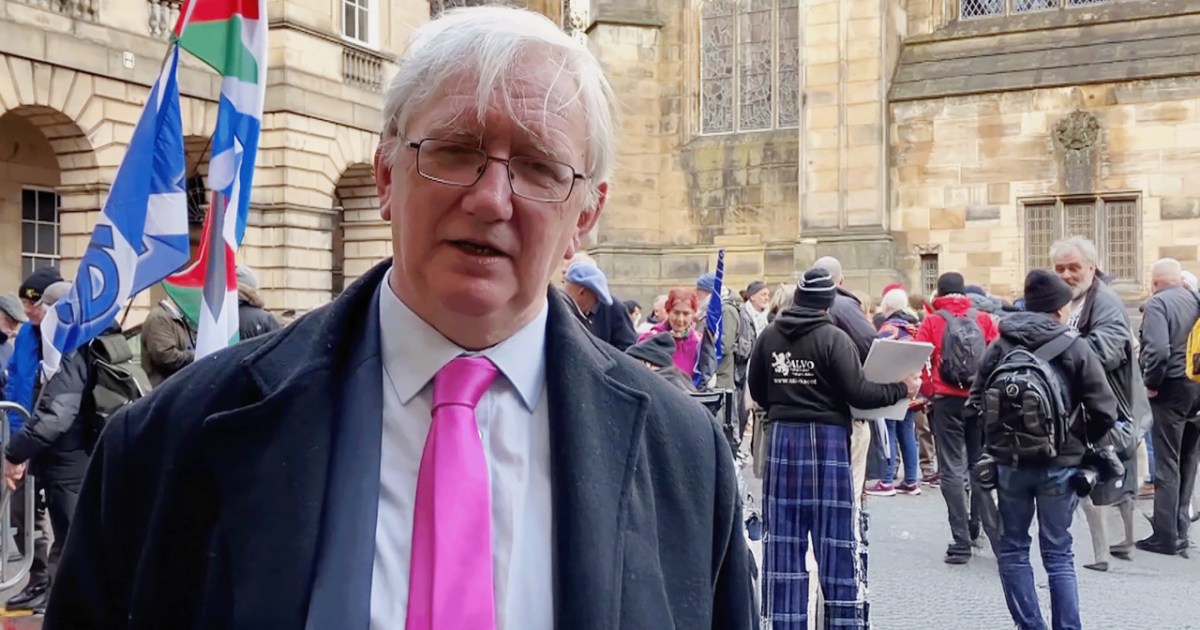
A legal challenge has been mounted in Scottish courts against the British government’s decision to proscribe the group Palestine Action. Former British diplomat, Greg Murray, has initiated the legal action, arguing that the ban is unlawful and disproportionate, potentially leading to the unjust labeling of individuals as terrorists.
Murray contends that the core of the legal challenge aims to overturn the legality of the proscription. He stated that the British government initially attempted to prevent the case from being heard, putting forward two main arguments. First, they questioned Murray’s legal standing to bring the case, arguing he is not an official member of Palestine Action. Second, they claimed Scottish courts lack jurisdiction, asserting the matter is already being considered by courts in England.
Regarding the legal standing issue, Murray noted that Huda Ammouri, the founder of Palestine Action, provided a statement to the court affirming Murray’s involvement with the group since its inception. Ammouri described him as a close colleague, collaborator, friend, and trusted advisor, who offered advice, support, and assistance. Murray believes the judge appeared receptive to this testimony, acknowledging his close involvement with the group, suggesting this aspect of the case may be decided in favor of the plaintiff.
On the matter of jurisdiction, Murray explained that the British government argued the case was already before English courts, negating the need for Scottish intervention. In response, Murray’s legal team argued that Scottish citizens are being arrested and charged with terrorism-related offenses simply for expressing support for Palestine or Palestine Action. These measures, they argue, are wholly disproportionate and constitute a violation of their human rights.
Murray emphasized that if these actions occur within Scotland and involve Scottish citizens, Scottish courts must have jurisdiction, rather than deferring to proceedings in England. He added that the judge seemed sympathetic to this argument as well. Murray expressed considerable optimism about the outcome of the proceedings. The case raises important questions about freedom of expression and the proportionality of counter-terrorism measures in the UK.