Western Sahara and the Question of Self-Determination: Law, Representation, and International Responsibility
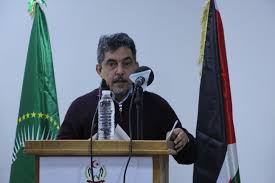
February 5, 2026The fourth edition of the Arab International Conference in Solidarity with the Sahrawi People, held under the theme “Challenges and Prospects,” concluded on Thursday with a clear and urgent message: the battle for Western Sahara is no longer confined to diplomatic corridors or legal chambers—it is also a battle for visibility, narrative, and truth across the Arab and global media landscape.The closing session was attended by the President of the Sahrawi Arab Democratic Republic and Secretary-General of the Polisario Front, Mr. Brahim Ghali, alongside members of the National Secretariat, the government, the National and Consultative Councils, senior officials from national institutions, and delegations from several Arab countries. Their presence reflected a growing regional awareness that the Sahrawi question remains one of the last unresolved cases of decolonization on the African continent.A central intervention during the closing proceedings was delivered by Mr. Abbi Bouchraya El Bachir, Special Adviser to the President on Natural Resources and related legal affairs. His address offered a detailed account of the legal struggle waged by the Sahrawi people, particularly before European courts, highlighting a decisive turning point in international jurisprudence.Mr. El Bachir traced the legal trajectory from the initial rulings to the appeals filed by the Council and the European Commission against decisions invalidating trade agreements between the European Union and Morocco insofar as they applied to Western Sahara. These appeals were ultimately rejected. On October 4, 2024, final and non-appealable judgments were issued, affirming principles that international law has long upheld but too often ignored in practice.The rulings confirmed that the Polisario Front is the sole legitimate and legally recognized representative of the Sahrawi people, endowed with full legal personality. They annulled EU-Morocco agreements affecting Western Sahara without the consent of its people, compelled the clear labeling of products originating from the occupied territory, and decisively separated Sahrawi resources from Moroccan sovereignty claims. These judgments did not create new law; they enforced existing law that had been politically sidelined for decades.The conference’s final communiqué emphasized that legal victories, however significant, must be accompanied by intensified popular diplomacy and strategic engagement with new media platforms. In an age where narratives often shape policy before facts do, the Sahrawi cause must be articulated clearly, persistently, and credibly to Arab and international audiences alike.Participants stressed the necessity of revitalizing Arab solidarity with the Sahrawi people—not as a symbolic gesture, but as a principled stance rooted in anti-colonial history, international legality, and collective responsibility. The struggle of Western Sahara, they affirmed, is inseparable from the broader Arab and African commitment to justice, sovereignty, and the right of peoples to determine their own future.The conference brought together politicians, researchers, activists, and media professionals from Algeria, Egypt, Tunisia, Mauritania, Palestine, and Oman, underscoring the transnational dimension of the issue. Their discussions converged on a shared conclusion: silence and ambiguity only serve the continuation of occupation.Western Sahara is not a territorial dispute; it is a question of decolonization delayed. The law is clear, the representative is recognized, and the will of the Sahrawi people has never wavered. What remains is the moral and political courage of the international community—especially within the Arab world—to align action with principle.History has already rendered its judgment. It is now up to states, institutions, and media to ensure that justice is no longer postponed under the weight of expediency.