President Tebboune: We Face External Pressures Threatening Continental Security
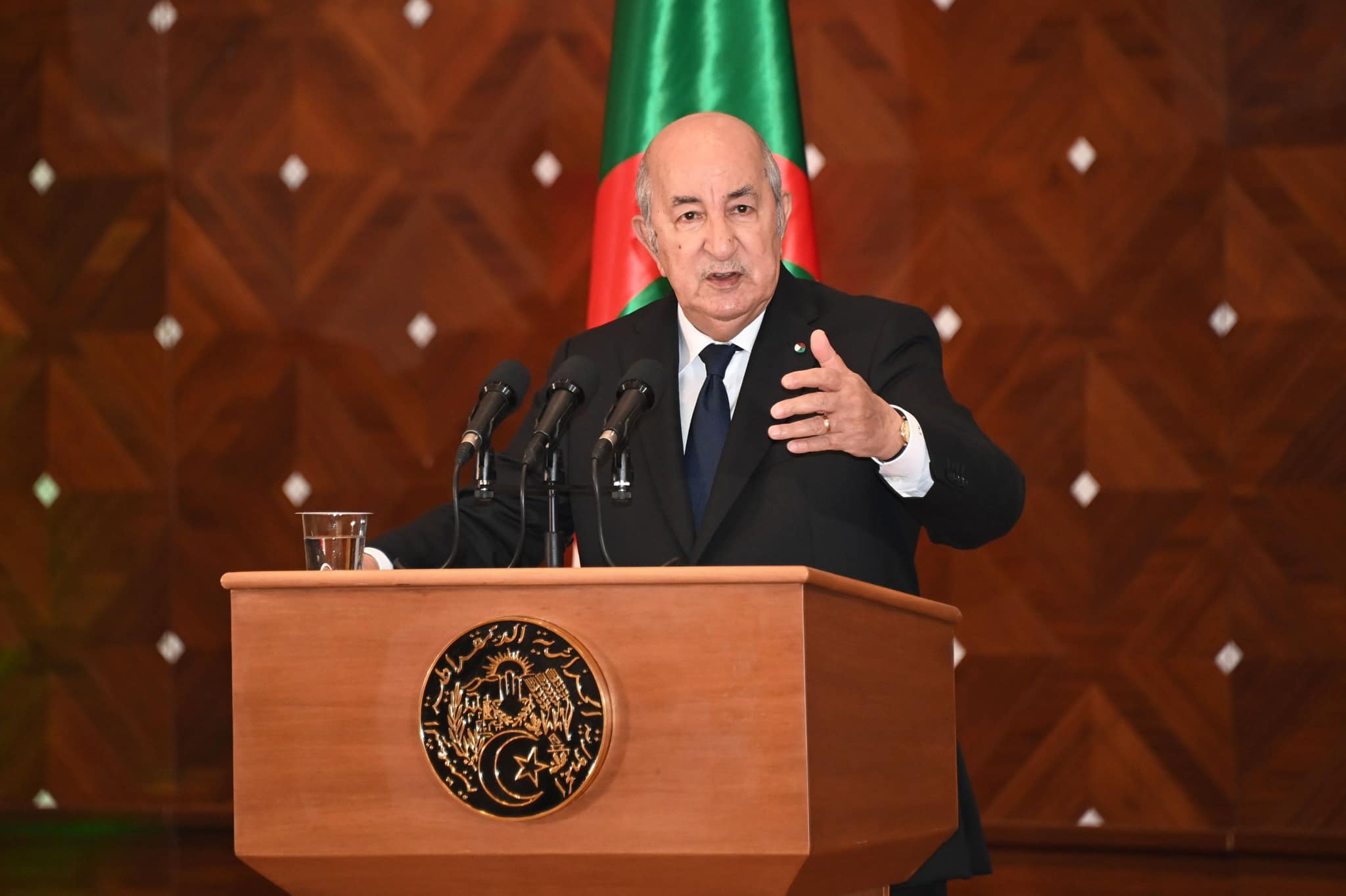
President Abdelmadjid Tebboune delivered a speech on Friday to the participants of the meeting of the Committee of African Heads of State and Government on Climate Change. The speech, delivered on his behalf by Prime Minister Saifi Gharib, expressed sincere thanks and appreciation to Dr. William Samuel Ruto, President of the Republic of Kenya, for the invitation to convene this important meeting.
The President also extended his gratitude to Mahmoud Ali Youssef, Chairperson of the African Union Commission, for his tireless efforts in serving continental causes. He further conveyed congratulations to Ethiopian Prime Minister Abiy Ahmed on his country hosting the thirty-second session of the Union Conference, wishing them success and affirming full support.
The speech highlighted that the negative impacts of climate change have become a real obstacle to development, particularly in Africa, which faces a shortage of necessary funding for climate adaptation amid rising global inflation and unbearable debt levels in many countries. This reality has become a driver for fueling conflicts, expanding poverty, and increasing inequalities, especially in the least developed countries.
The President noted a stark paradox: Africa, which has historically contributed only a small fraction of global carbon emissions, suffers the most from the consequences of climate change while receiving the least climate funding for investment in adaptation and resilience projects. He added that the continent faces pressures to sacrifice its food and energy security to bear the burdens of countries that strictly evade their historical responsibilities under the pretext of strategic priorities.
The address also pointed to unilateral trade measures that lack scientific evidence for their effectiveness in combating climate change, while studies confirm their devastating economic and financial effects on the capacities of developing countries to fund their development policies. The President stated it is unacceptable to be burdened with the consequences of protectionist tendencies of external parties who evade their clear responsibilities.
He referred to attempts during the recent session of the Conference of the Parties (COP30) to rewrite the principles of the Paris Agreement as evidence of a dangerous path that some developed countries are attempting to push developing economies toward. He emphasized that effective fulfillment of climate pledges depends on achieving true climate justice that embodies the principles of equity and common but differentiated responsibilities, with developed countries leading global efforts by reducing emissions and providing necessary financial and technological support to developing countries, especially in Africa.
The speech stressed that achieving a just energy transition and increasing resilience to climate shocks requires more flexible and appropriate financing mechanisms capable of bridging the resource gap and keeping pace with enormous financial burdens, while taking into account sustainable development requirements and the historical responsibility of advanced economies for current climate degradation.
Algeria emphasized the importance of maintaining the cohesion of the African group during upcoming international negotiations and seeking a just transition that benefits all African countries. The President called for moving away from individual approaches, asserting that a unified position is the best way to defend common interests, build ambitious international and regional partnerships, increase funding, and facilitate technology transfer.
In this context, the approach must consider national circumstances and the varying capacities of countries, especially in light of the significant decline in international funding. The President noted that it has become necessary to follow a path that responds effectively to needs and encourages regional and continental initiatives and South-South cooperation.
As a contribution to this continental effort, Algeria has worked to launch an initiative to establish an African civilian force for disaster response to ensure an immediate and effective response and provide necessary support to affected countries. Algeria also seeks to create synergy and bilateral and regional cooperation in energy and water resource management, including the energy connection project with Sahel countries and the initiative to expand and rehabilitate the Green Dam, which includes reclaiming 4.7 million hectares and rehabilitating 500,000 hectares.
The speech concluded by stating that the continent has long been an inexhaustible source of wealth, yet its people were deprived of its benefits for decades due to colonial policies. It is now time for Africa to occupy its rightful place in a multilateral international system that seeks climate justice and guarantees the right to development. Algeria expressed its full readiness to contribute all its capabilities toward achieving this goal.
Reference: link