Launch of “30 Quintals” Production Plan and Creation of an Agricultural Television Channel
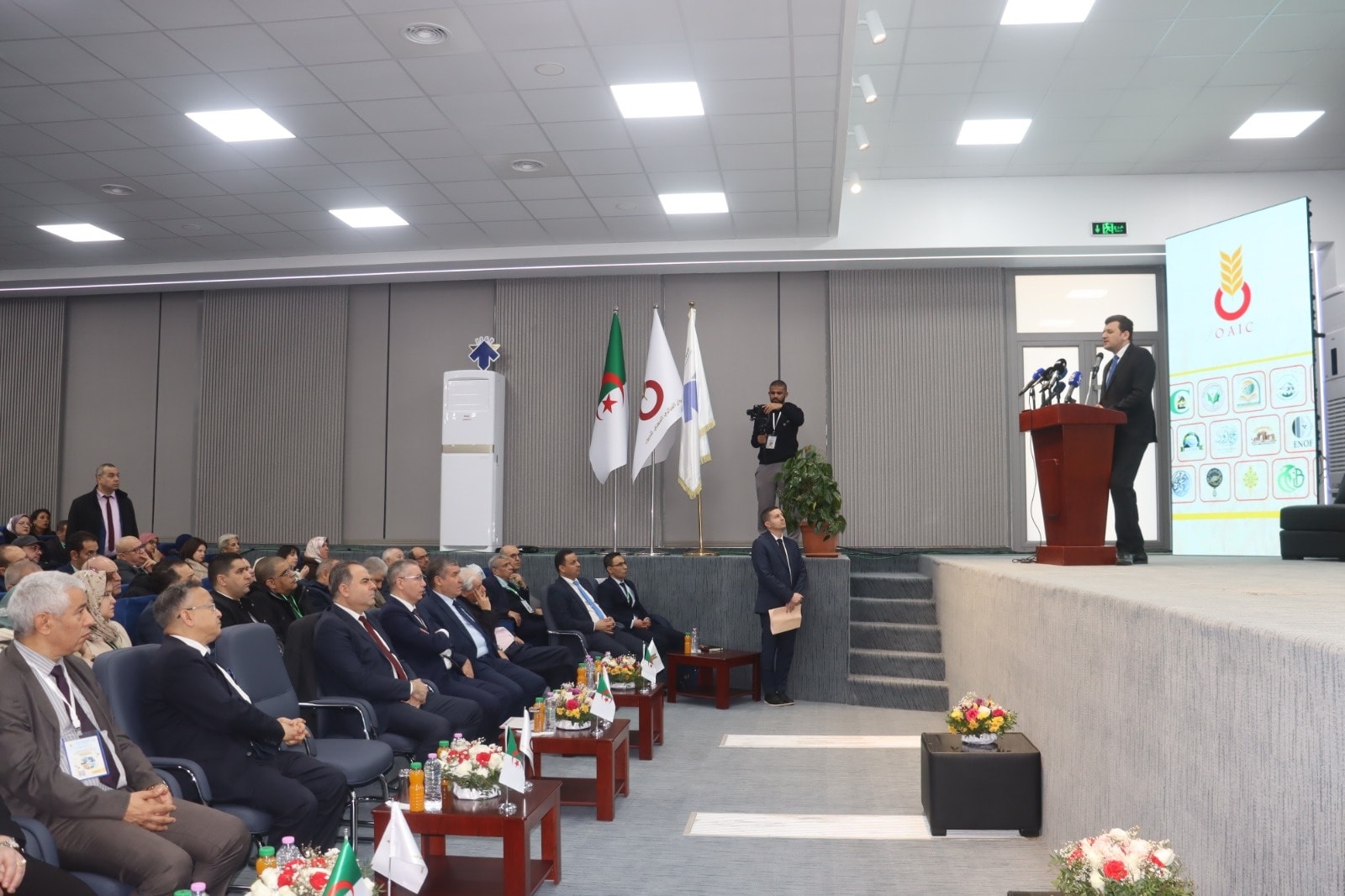
The Minister of Agriculture, Rural Development, and Fisheries, Yacine Walid, alongside the Minister of Higher Education and Scientific Research, Kamel Baddari, inaugurated a study day on Tuesday dedicated to integrating scientific research into the development of the grain and pulse sectors. The meeting, organized by the Interprofessional Cereals Office, saw broad participation from experts and researchers to outline the upcoming “agricultural revolution.”
In a firm speech, Minister Yacine Walid emphasized that the current strategic objective is to move beyond the cycle of low productivity, which has not exceeded 15 quintals per hectare for several decades, and reach a minimum of 30 quintals. The Minister explained that this challenge can only be met through “strong bridges” with universities to utilize scientific research results in developing the sector and achieving food security.
To achieve this goal, the Ministry of Agriculture revealed an ambitious action plan based on several technical and scientific pillars. These include introducing new seed varieties resistant to drought and water scarcity, generalizing soil analysis, and adapting fertilizers. The plan also involves reviving the “crop rotation” system by incorporating legumes, modernizing irrigation to expand irrigated areas to 500,000 hectares, establishing cooperatives for renting advanced equipment—following the President’s decision—and expanding insurance coverage to include drought and heat risks.
In a first-of-its-kind move, the Minister announced the intention to establish a specialized television channel for agricultural activities to support technical guidance for farmers. He also revealed the creation of innovative financing mechanisms, including “venture capital” and micro-loans, to inject new life into agricultural investment and direct support exclusively to genuine producers.
This approach primarily aims to protect the national genetic heritage by activating the “Gene Bank,” which will serve as the nerve center for developing national strains and ensuring their sustainability in the face of climate change.
Reference: link