Technical conditions available for the realization of the Trans-Saharan gas pipeline
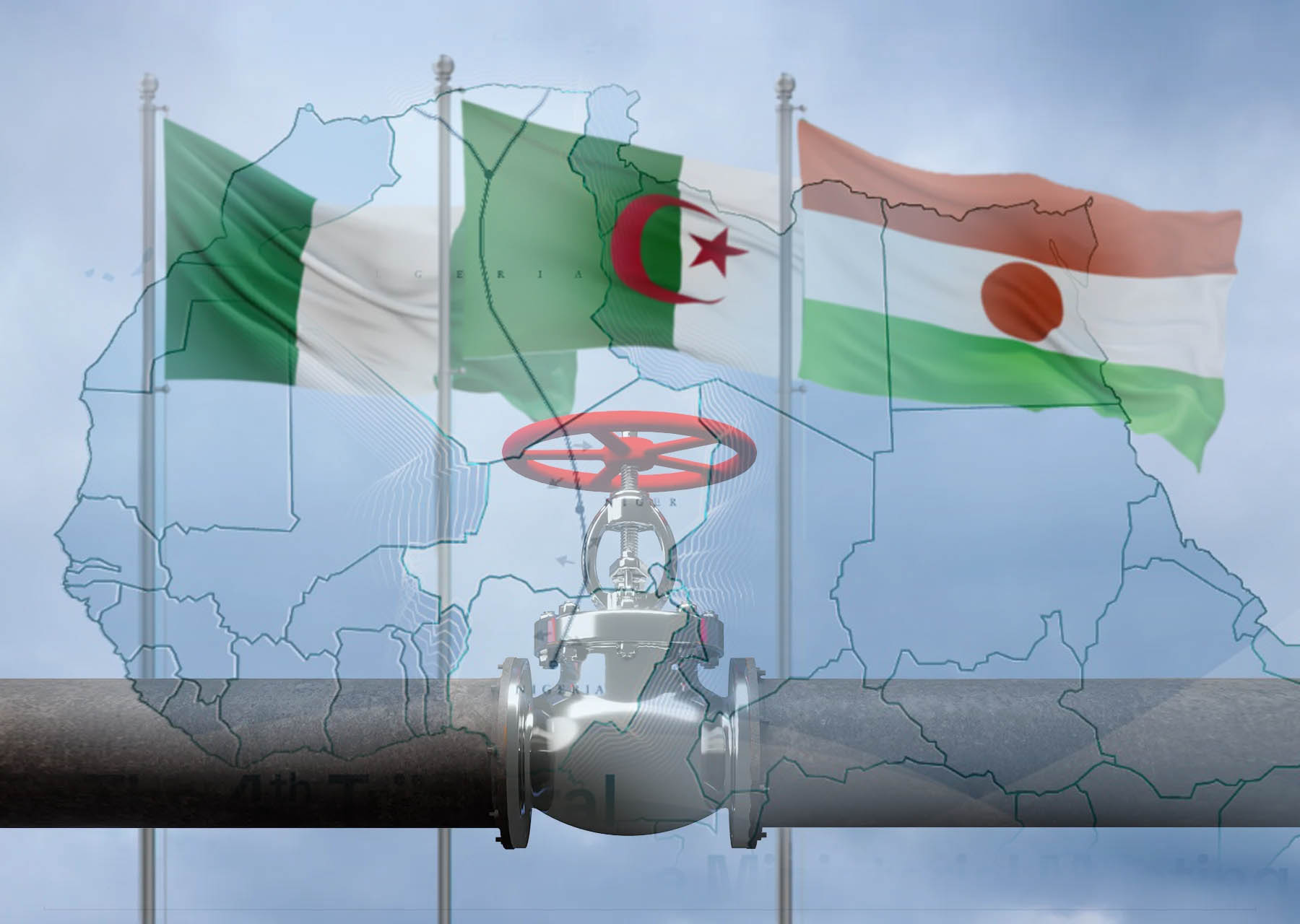
Geoff D. Porter, an American expert and Managing Director of North Africa Risk Consulting, highlighted the “strategic” dimension of the Trans-Saharan Gas Pipeline project, which will soon begin implementation. He emphasized its positive impact on the involved countries and the availability of favorable technical conditions for its realization. Porter explained in a recent analytical note that “the Trans-Saharan Gas Pipeline project is not impossible; it is technically feasible. Compared to other gas pipeline projects in the region and the world, it is not that complex. It is a relatively short onshore gas pipeline that crosses two regions before connecting to existing export facilities.”
This analysis follows the decision made by President Abdelmadjid Tebboune during the recent visit of Niger’s President, General Abdourahamane Tiani, to Algeria. Tebboune ordered the national hydrocarbon company, Sonatrach, to begin project works after the end of Ramadan. This pipeline will connect gas facilities in Nigeria to Algerian distribution networks toward Europe, passing through Niger. This will allow for increased gas supplies to Europe via existing pipelines, namely Medgaz (linking Algeria and Spain) and Transmed (linking Algeria and Italy).
The pipeline is 4,130 km long and will connect Nigeria’s gas facilities to Algerian facilities, with a nominal capacity estimated at 30 billion cubic meters per year. It will benefit the three countries it crosses. Addressing the technical aspects of the project, the American expert provided several arguments supporting its implementation, responding to critics who promote what he called “largely false claims.”
Professor Porter noted that the Trans-Saharan Gas Pipeline will not be placed on the surface of the sand but will be buried underground, with only the compression stations being visible. He pointed to the security efficiency options included in the project. The expert also highlighted Algeria’s experience in counter-terrorism, particularly in the Sahel region, noting the pivotal role of Sonatrach, which has achieved significant development and has become, as he said, “a hybrid company that also operates internationally.”
He concluded by emphasizing that “the company undoubtedly possesses the necessary human resources to implement this project optimally, in addition to the financial capabilities.”
Reference: link