Nearly 49,000 Migrants Enter Ceuta as Spain Steps Up Emergency Response
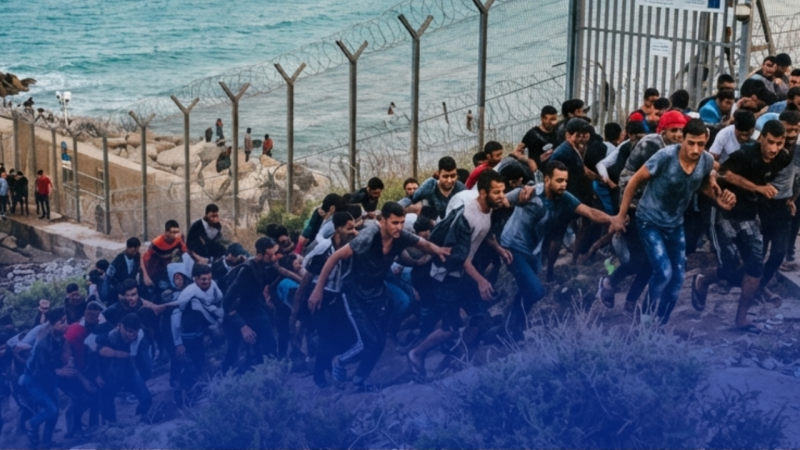
Spanish authorities estimated that approximately 49,000 migrants crossed from Morocco into the Spanish autonomous city of Ceuta within 24 hours, marking one of the largest irregular border crossings ever recorded in the territory.
The unprecedented influx prompted Spanish Prime Minister Pedro Sánchez and Interior Minister Fernando Grande-Marlaska to travel to Ceuta for emergency meetings with security forces and local officials. Spain also deployed additional military and police personnel to support border-control operations and restore order.
Migrants entered the city by land and sea, with many attempting to swim around the coastal border barriers. Spanish and Moroccan authorities subsequently reinforced the frontier, and the scale of crossings appeared to decline after tighter controls were introduced.
The crisis has resulted in multiple fatalities. At least 19 bodies had been recovered from the water by Friday, although later media reports suggested that the death toll could be higher as search operations continued.
The mass arrivals also triggered political concern elsewhere in Europe. Italian Foreign Minister Antonio Tajani expressed support for suspending Spain’s participation in the Schengen free-movement area, arguing that uncontrolled irregular migration could pose broader security risks. Any such action would require a European-level process and could affect travel and cross-border activity.
Sánchez described the mass crossing as a violation of Spain’s territorial integrity and blamed human-smuggling networks for exploiting vulnerable migrants. He also linked the rise in arrivals by sea to a recent Spanish court ruling restricting immediate returns of migrants intercepted after entering through maritime routes.
Spain said it would work with Morocco to identify and return migrants who do not qualify for international protection, while ensuring that repatriation measures comply with Spanish and European law.
The crisis has renewed debate over migration management, border security, humanitarian protection, and cooperation between Spain, Morocco, and the European Union.