

Ceuta Migration Crisis Rekindles Debate Over Morocco’s Border Policy and Regional Tensions
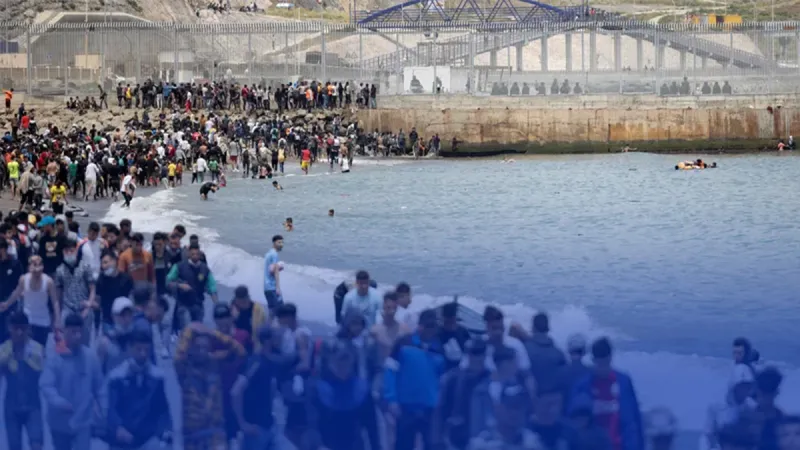
The recent surge of hundreds of migrants, including minors, swimming toward the Spanish enclave of Ceuta has reignited political debate over Morocco’s management of migration and its broader implications for regional diplomacy.
Some political analysts argue that the latest developments extend beyond the social and economic factors that often drive irregular migration. They contend that the timing of the crossings coincides with renewed diplomatic engagement between Spain and Algeria, as well as recent political and legal developments in Spain concerning Western Sahara, prompting renewed scrutiny of Rabat’s border policies.
According to this perspective, Morocco has repeatedly been accused by critics of relaxing border controls during periods of diplomatic tension with Spain or the European Union. They argue that migration has, at times, become intertwined with broader political disputes, placing additional pressure on Spanish authorities and European institutions.
The debate has intensified following Spanish Prime Minister Pedro Sánchez’s recent visit to Algeria, where the two countries reaffirmed cooperation in energy, trade, and strategic affairs. Observers who support this interpretation believe the renewed Madrid-Algiers partnership represents a shift in regional dynamics after years of strained relations.
Attention has also focused on legislative initiatives in Spain concerning the possible granting of Spanish nationality to certain Sahrawis born in the territory before 1975. Supporters of the proposal describe it as a legal and historical measure, while critics argue that it could carry broader political implications for the Western Sahara dispute.
Analysts advancing this viewpoint suggest that these diplomatic and legislative developments have increased tensions between Madrid and Rabat, contributing to renewed pressure along the Ceuta border.
The migration crisis has also renewed discussions about the humanitarian consequences of irregular migration, the role of human-smuggling networks, and the challenges of balancing border security with the protection of vulnerable migrants.
Spanish authorities continue to strengthen security measures in Ceuta while working with regional partners to manage the situation. Meanwhile, the latest events have once again highlighted how migration, regional diplomacy, and the unresolved Western Sahara issue remain closely interconnected in the western Mediterranean, where political developments often have immediate consequences for border management and bilateral relations.




One Comment