

AU Peace and Security Council Opens Session on Education in Conflict Zones Under Algeria’s Chairmanship
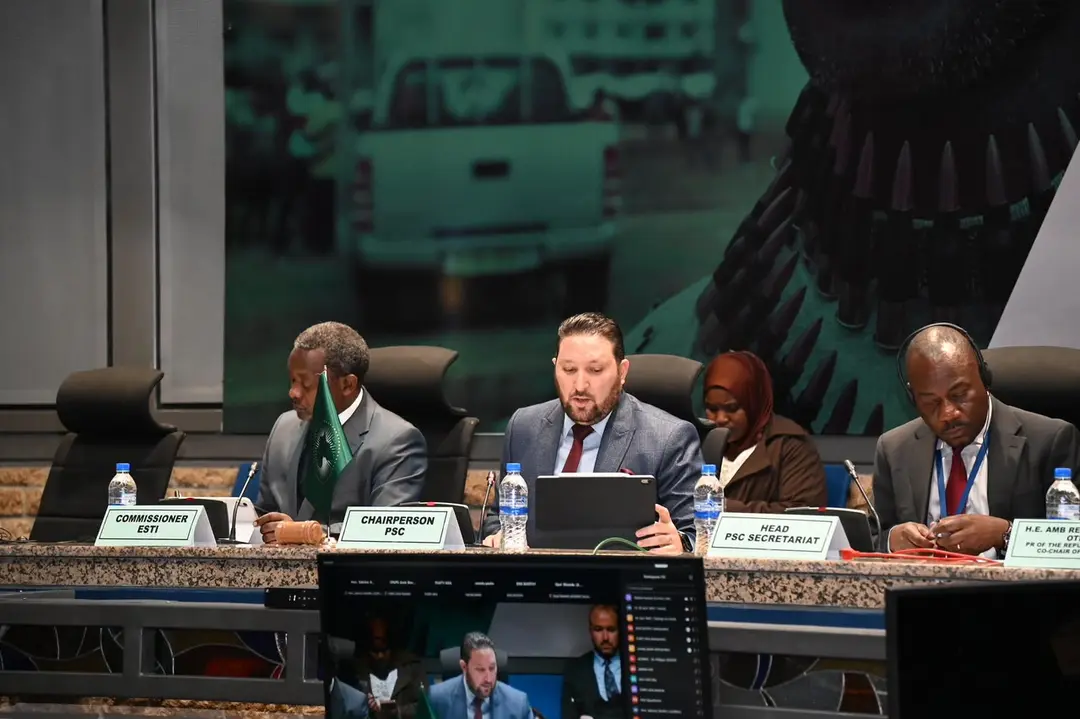
The African Union Peace and Security Council began its work for the month of August on Monday with a public session dedicated to the theme “Education in Situations of Armed Conflict,” held at the AU headquarters in Addis Ababa. The meeting was chaired by Mohamed Khaled, Algeria’s Ambassador and Permanent Representative to the African Union, in his capacity as the Council’s president for the month.
The session comes amid growing challenges facing education systems in conflict-affected regions across Africa, where millions of children are deprived of their fundamental right to education and exposed to risks such as recruitment, exploitation, violence, and displacement—factors that undermine peacebuilding and sustainable development efforts.
In his opening remarks, Khaled stressed that the choice of this topic reflects a shift in priorities, noting that education is no longer solely a development issue but a central component of peace and security in Africa. He highlighted that millions of African children continue to be denied access to education due to conflicts and humanitarian crises, threatening both their future and the continent’s stability.
He added that the session aims to evaluate the implementation of previous Council decisions adopted in 2024 and 2025, while strengthening coordination among AU institutions to ensure the protection and continuity of education during crises.
Khaled also welcomed the development of a monitoring framework for implementing Council decisions and praised the African Union Commission’s efforts to mobilize resources. He announced new funding worth $8.8 million to support education in conflict-affected areas across 19 member states, alongside initiatives to equip school clinics in vulnerable regions.
The session featured high-level interventions from AU commissioners, child rights experts, and representatives of international partners, including UNICEF. Speakers highlighted the increasing attacks on schools, the use of educational facilities for military purposes, and the rising number of displaced children as major concerns requiring a coordinated African response.
Participants emphasized the need to strengthen the implementation of the Safe Schools Declaration, integrate education into humanitarian and conflict prevention strategies, expand access to flexible learning, and enhance psychosocial support for affected children.
The meeting concluded with a closed session to review and adopt the final communiqué, which includes practical recommendations to improve the protection and continuity of education in conflict zones and enhance coordination among AU bodies, member states, and partners.
Closing the session, Ambassador Khaled reaffirmed Algeria’s commitment to advancing African efforts to protect children affected by armed conflicts and ensure their access to safe, inclusive, and quality education, stressing that education remains a cornerstone for conflict prevention and sustainable peace across the continent.

2 Comments