EU, Algeria Launch Two-Year Organic Agriculture Project
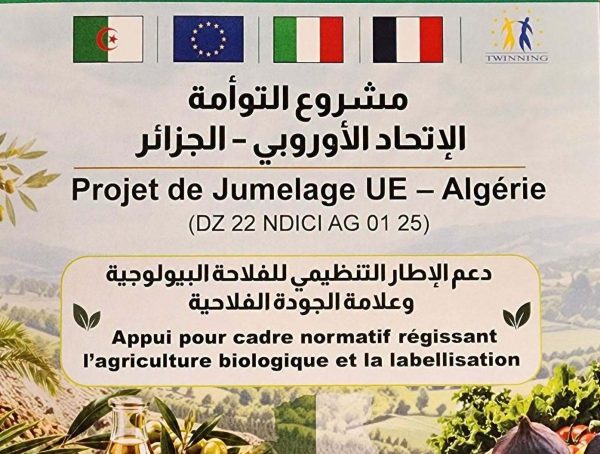
Algeria has initiated a strategic twinning project with the European Union, focusing on organic agriculture to elevate its production to international standards. This two-year initiative, backed by €1 million in EU funding, seeks to comprehensively structure the national organic sector, modernize its regulatory framework, and enhance the Agricultural Quality Label to open new export opportunities. This collaboration represents a significant step for the Algerian agricultural sector as it pursues excellence and increased competitiveness within global markets.
The institutional twinning project officially began with a seminar held at the National Chamber of Agriculture, bringing together various stakeholders. Its core objective is to provide advanced technical support to Algerian state structures to modernize the labeling system and refine the legal framework governing organic agriculture, ensuring full alignment with European standards and international best practices. The project underscores the economic imperative of valorizing organic agricultural products to facilitate their placement in demanding global markets, while also ensuring impeccable traceability for local consumers.
The project's roadmap is structured around five key axes. These include consolidating a clearly defined legal and institutional framework, establishing a robust system for labeling, control, and certification, and offering on-the-ground support to agricultural professionals transitioning to certification requirements. Additionally, the initiative supports the finalization of five pilot specifications for targeted agricultural sectors and assists the Ministry of Agriculture in deploying modern communication tools to raise public and professional awareness regarding the benefits of organic agriculture and the importance of the Quality Label.
This extensive initiative is built on close technical cooperation and the sharing of expertise between Algerian, Italian, and French public administrations, alongside a broad national ecosystem that includes technical institutes, the network of Agricultural Chambers, and the producers themselves. The inaugural meeting, which marked the official launch of this deepened partnership, was led by the Ministry of Agriculture, Rural Development, and Fisheries, with active initiation from the National Chamber of Agriculture, and saw significant institutional and professional attendance.