Franco-Algerian Artist Ouassila Arras Featured at Lyon Biennale
Franco-Algerian artist Ouassila Arras is among the featured talents at the 18th Biennale de Lyon, which runs from September 19 to December 13, 2026. Born in France in 1993, Arras dedicates her artistic practice to exploring the intricate connections between memory, transmission, and heritage. Her work vividly embodies her Arabic name, Ouassila, which signifies 'that which connects,' serving as a powerful metaphor for the ties between the Mediterranean's two shores, her French birthplace and Algerian origins, and bridging different generations to convey narratives often left unspoken.
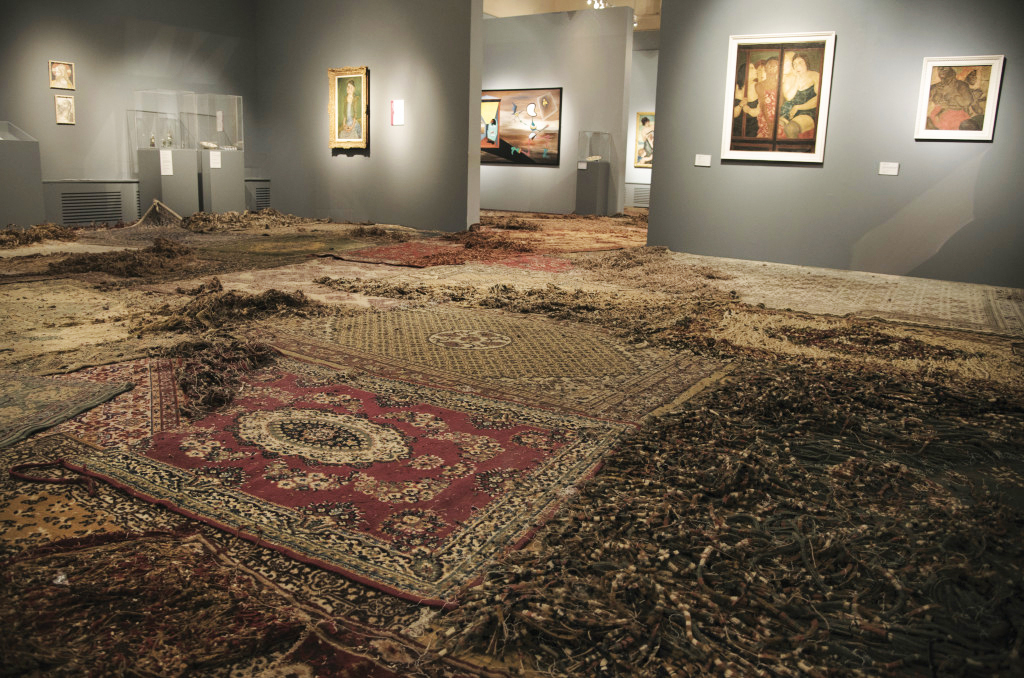
Arras uniquely integrates construction materials such as concrete blocks, walls, and plasterboard into her art, often collaborating with demolition companies. She combines these raw elements with textiles and organic substances like henna, which she re-contextualizes from its traditional cosmetic use into a building material. A significant turning point in her artistic journey came during a visit to Algeria with her mother, where they explored former weaving workshops in Tlemcen. This experience inspired her installation, 'Photos de famille,' created by unweaving collected carpets, an artwork that earned her the Prix Prisme at the Musée des Beaux-Arts de Reims in 2018.
For over a decade, Arras has conducted intimate interviews with 'Chibanis,' North African immigrant workers in France, collecting their testimonies on their arduous work and life experiences. Through her art, she seeks to give voice to a generation that often remained silent, materializing their experiences to highlight the importance of expression. Her installations have been exhibited in various major European institutions, including the Institut des Cultures d’Islam in Paris and Künstlerhaus Bethanien in Berlin. Arras expresses a profound aspiration to one day showcase her work in Algeria, viewing it as a crucial step to complete her artistic journey and continue weaving the fabric of collective memory.