Syrian President Al-Share’ Threatens Graft Probe Over Officials’ Lavish Cars: A Sign of Change?
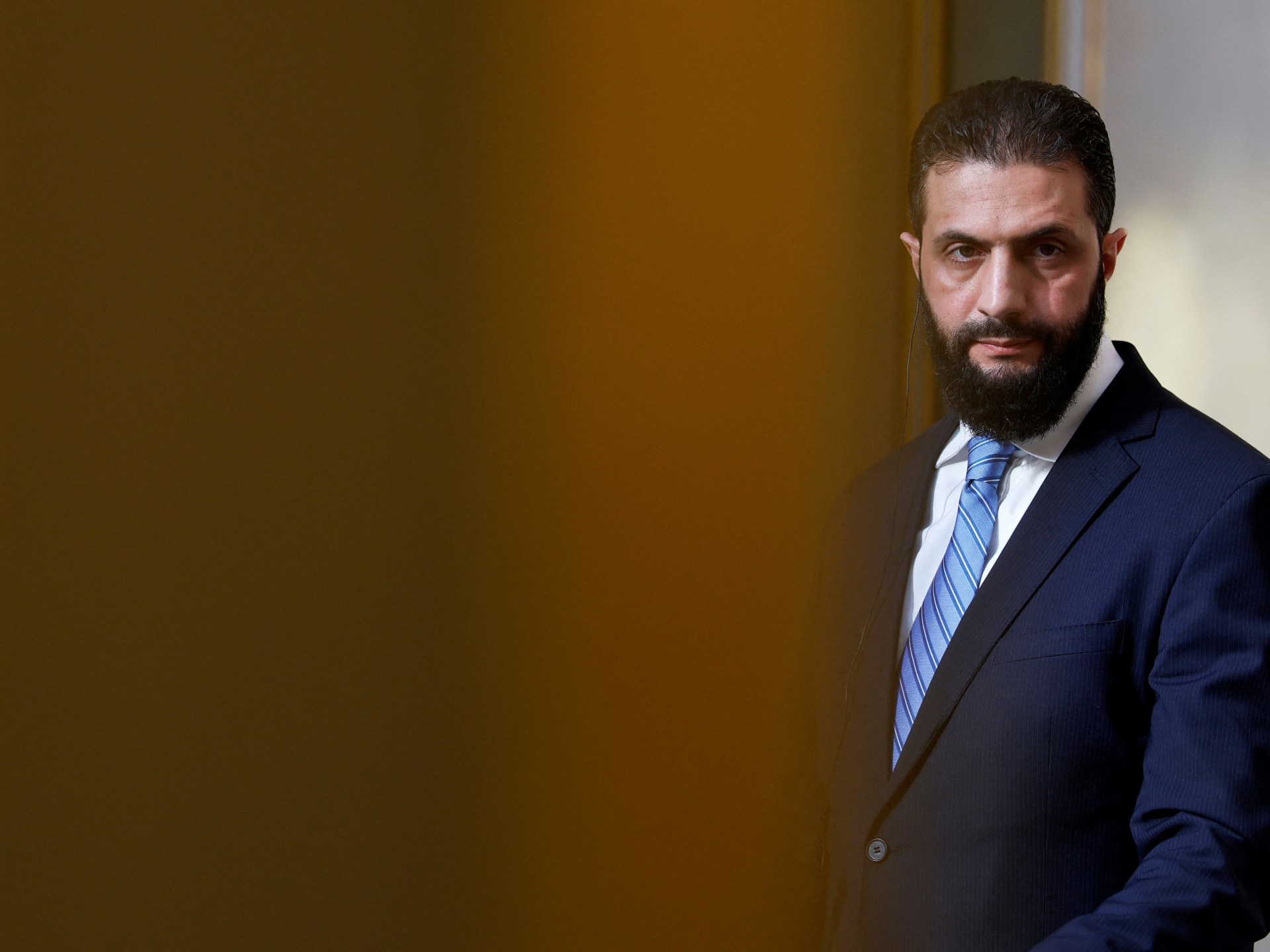
Damascus – Syrian President Ahmed al-Share’ has reportedly launched a thinly veiled assault on corruption within state ranks, threatening investigations into officials flaunting extravagant wealth. The move, which comes amidst ongoing political and economic challenges, has sparked both optimism and skepticism regarding the commitment to genuine reform.
According to a Reuters report, al-Share’ confronted government employees and business leaders attending a meeting held at a former opposition stronghold in Idlib province. Witnesses say the President expressed astonishment at the number of luxury vehicles, including Cadillac Escalades, Range Rovers, and Chevrolet Tahoes, parked outside the venue.
“I didn’t realize government salaries were so high!” al-Share’ reportedly quipped, questioning whether those present had succumbed to temptation. He then allegedly asked those assembled if they had forgotten they were “sons of the revolution,” a statement interpreted as a rebuke against perceived excesses.
The unusual location of the meeting, far from the official presidential palace in Damascus, and the presence of high-ranking security officials further fueled speculation about the seriousness of al-Share’s intentions. The choice of Idlib, a region previously held by opposition forces, could be interpreted as a symbolic gesture of reclaimed authority and a message directed at those who might challenge his power.
Two sources present at the meeting told Reuters that a number of car keys were surrendered as attendees left the premises, suggesting a direct consequence for those perceived to be living beyond their means. However, the Syrian Ministry of Information has denied that any keys were handed over.
Instead, the Ministry described the event as a “friendly, informal meeting” in Idlib with former leaders, officials, and prominent figures. The Ministry claims that the discussion centered on political and security challenges, as well as the need to reform the “investment culture established by the previous regime.” The statement also emphasized al-Share’s commitment to “zero tolerance for any suspicion of corruption among state employees.”
While the Ministry downplayed the reported confrontation, the Reuters account paints a picture of a President attempting to project an image of accountability. The incident raises several critical questions about the state of corruption in Syria and the potential for meaningful change under al-Share’s leadership.
**The Context of Corruption:**
Corruption has long been a pervasive issue in Syria, exacerbated by years of conflict, economic instability, and international sanctions. The war has created opportunities for illicit enrichment through various means, including smuggling, extortion, and the manipulation of aid flows. The lack of transparency and accountability within government institutions has further fueled the problem, creating a culture of impunity for those in positions of power.
The economic crisis has also contributed to the spread of corruption. With soaring inflation, widespread unemployment, and a collapse of the Syrian pound, many government employees are forced to supplement their meager salaries through illicit means. This creates a vicious cycle, where corruption becomes a survival mechanism and further undermines the legitimacy of the state.
**Skepticism and Challenges:**
For more information about Culture, check our dedicated section.
Despite al-Share’s apparent crackdown, skepticism remains high regarding the potential for genuine reform. Many observers believe that the President’s actions are primarily aimed at consolidating power and projecting a positive image to the international community, rather than addressing the root causes of corruption.
One major challenge is the deeply entrenched nature of corruption within the Syrian system. Decades of patronage and cronyism have created a network of vested interests that are resistant to change. Any serious attempt to tackle corruption would require dismantling these networks and holding powerful individuals accountable, a task that could prove politically risky.
Another obstacle is the lack of independent oversight and accountability mechanisms. The Syrian judiciary and anti-corruption agencies are often perceived as being under the control of the ruling elite, limiting their ability to investigate and prosecute high-level corruption cases effectively. The absence of a free press and independent civil society further restricts the ability to expose and challenge corruption.
**Potential Implications for Algeria:**
While the events in Syria may seem distant, they hold relevance for Algeria, a country grappling with its own challenges of corruption and economic diversification. Algeria, like Syria, has historically relied heavily on oil revenues, making it vulnerable to fluctuations in global energy prices. This dependence has also created opportunities for corruption, with billions of dollars lost through embezzlement, bribery, and illicit financial flows.
The Algerian government has made repeated pledges to combat corruption and diversify the economy, but progress has been slow. The recent events in Syria may serve as a cautionary tale, highlighting the difficulties of tackling deeply entrenched corruption and the importance of genuine political will and institutional reform.
For Algeria, the key takeaway is that combating corruption requires more than just symbolic gestures and pronouncements of intent. It requires a comprehensive strategy that addresses the root causes of the problem, strengthens independent oversight mechanisms, and promotes transparency and accountability at all levels of government. Furthermore, diversification of the economy away from reliance on hydrocarbons is crucial to reducing the opportunities for corruption associated with the oil and gas sector.
**Looking Ahead:**
It remains to be seen whether al-Share’s actions represent a genuine commitment to fighting corruption or merely a public relations exercise. The effectiveness of his efforts will depend on his willingness to challenge powerful vested interests and implement meaningful reforms.
For now, the incident has served to highlight the issue of corruption in Syria and sparked a debate about the potential for change. Whether this debate will translate into concrete action remains to be seen. The international community, including Algeria, will be watching closely to see if al-Share’s words are matched by deeds.