Algerian-Tunisian Border Universities Key to Regional Growth
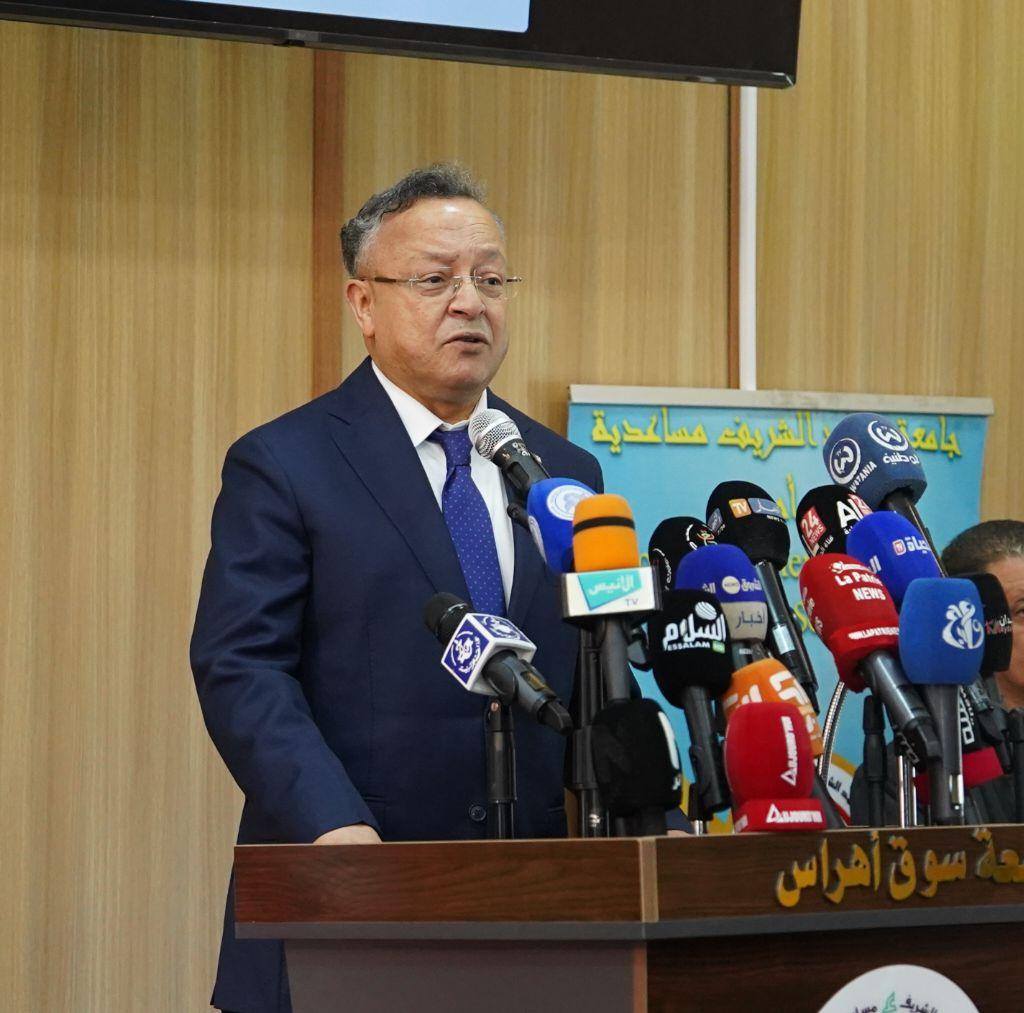
Souk Ahras, Algeria – Algerian Minister of Higher Education and Scientific Research, Kamal Badari, emphasized the pivotal role of Algerian-Tunisian border universities in driving regional development. Speaking on Tuesday in Souk Ahras, Minister Badari described these institutions as a “fundamental engine” for progress and prosperity for the communities they serve.
Minister Badari, alongside his Tunisian counterpart, Monther Belaid, inaugurated the 7th Forum of Algerian-Tunisian Border Universities at the Mohamed Cherif Messaadia University in Souk Ahras. The forum, held under the 5+5 joint cooperation program, carries the theme “Higher Education in the Digital Age: Knowledge, Innovation, and Economic Competitiveness.”
He stated that the partnership between the ten Algerian and Tunisian universities represents a “successful model of integration between the two countries and a reinforcement of Maghreb unity in the field of higher education and scientific research.”
The forum aims to develop joint training programs that meet the needs of citizens in border regions, conduct high-value scientific research focusing on challenges related to water, agriculture, and health sectors, support innovation, create job opportunities, and strengthen academic cooperation through student, faculty, and researcher exchanges.
The Tunisian Minister of Higher Education highlighted the crucial role of the border universities in enhancing academic and research cooperation. He affirmed that these universities “are no longer limited to transferring knowledge but have become centers for its production and the development of innovative capabilities, and bridges for economic, social, and cultural integration.”
The Tunisian minister also stressed the importance of strengthening research partnerships, establishing joint master’s and doctoral programs, creating applied laboratories, exchanging expertise, and adopting modern digital platforms to ensure effective academic collaboration between Algerian and Tunisian universities.
The forum’s program includes discussion sessions, workshops to exchange experiences and showcase successful initiatives in supporting innovative students, sessions on distance learning and digital transformation, and the signing of cooperation agreements to strengthen academic and research partnerships between higher education institutions in both countries.