Bangladesh Mourns Slain Student Leader Amid Tight Security
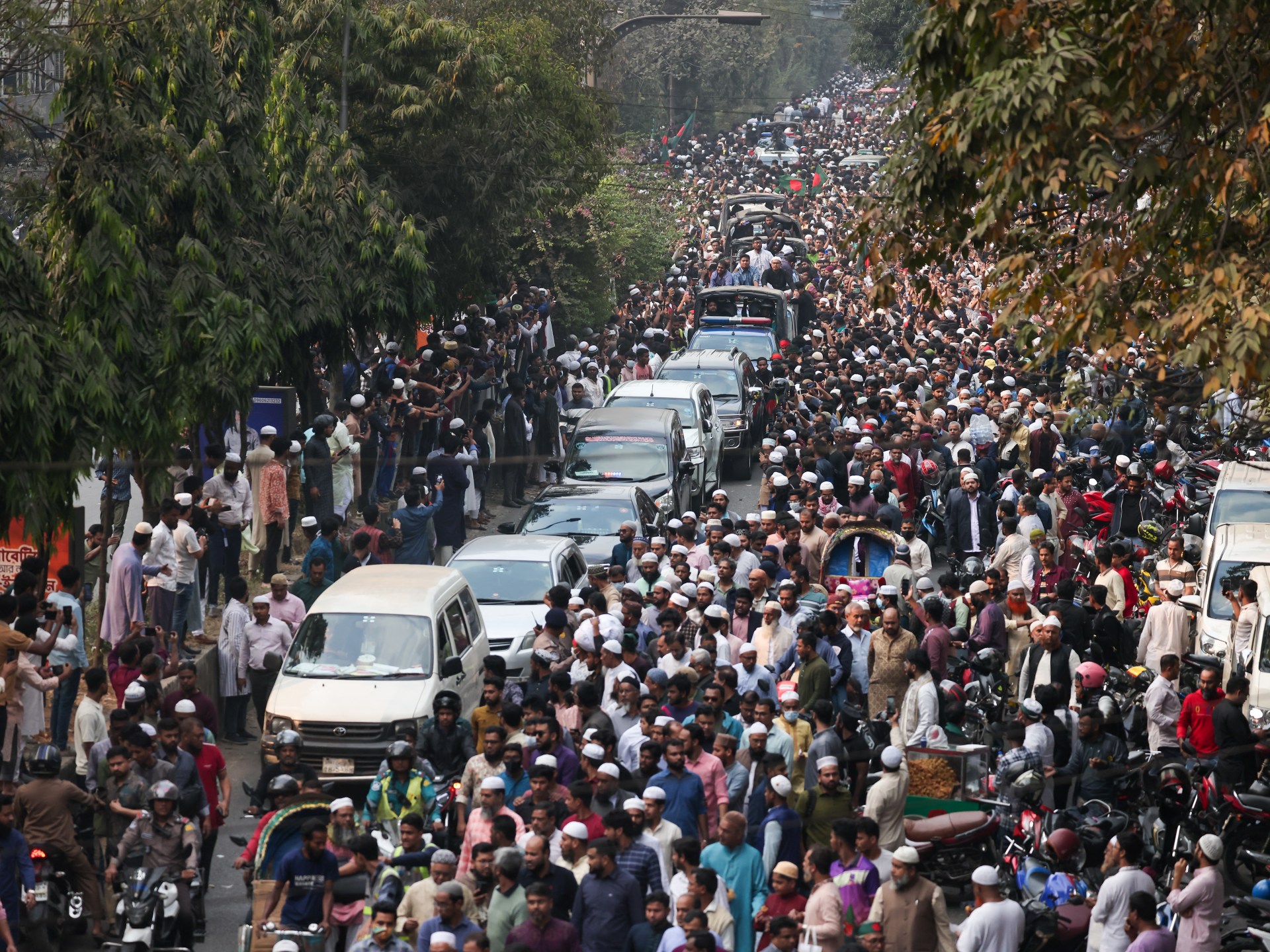
Dhaka, Bangladesh – Tens of thousands of Bangladeshis gathered in Dhaka today to mourn the death of Sharif Osman Hadi, a prominent student leader who played a key role in the protests that led to the ousting of former Prime Minister Sheikh Hasina last year. The funeral took place under heightened security measures and on a day of national mourning declared by the interim government.
Hadi, 32, died in a Singapore hospital on Thursday, six days after being shot in the head by masked gunmen during a campaign event in Dhaka. The attack sparked widespread outrage and violence that extended beyond the capital.
Interim government head Mohammed Yunus, a Nobel Peace Prize laureate, addressed the mourners, who included military leaders and representatives from various political factions. “We are not here to say goodbye,” Yunus said. “You are in our hearts and will remain in the hearts of all Bangladeshis as long as this nation exists.” He added that the funeral represented “a collective commitment to upholding the ideals that Hadi championed.”
In a symbolic gesture, Hadi was buried on the grounds of Dhaka University, near the tomb of a national poet. Flags were flown at half-staff, and police and paramilitary forces equipped with cameras were deployed throughout the capital. No new incidents were reported during the funeral.
Hadi’s assassination ignited a wave of unrest, including coordinated attacks on the newspapers “Prothom Alo” and “The Daily Star,” as well as cultural institutions. A cultural organization’s headquarters in Dhaka was also stormed. Violence spread to Chittagong, where protesters attacked an Indian diplomatic mission, reflecting growing anti-India sentiment since Hasina fled to New Delhi after her removal from power.
The country has also seen the murder of a Hindu garment worker following accusations of blasphemy, prompting Amnesty International to warn of escalating violence and call for urgent and independent investigations into Hadi’s death and the subsequent unrest.
Human Rights Watch has described Hadi’s assassination as “appalling” and condemned the attacks on media and cultural organizations.