Settler Violations Escalate at Al-Aqsa Mosque During Hanukkah
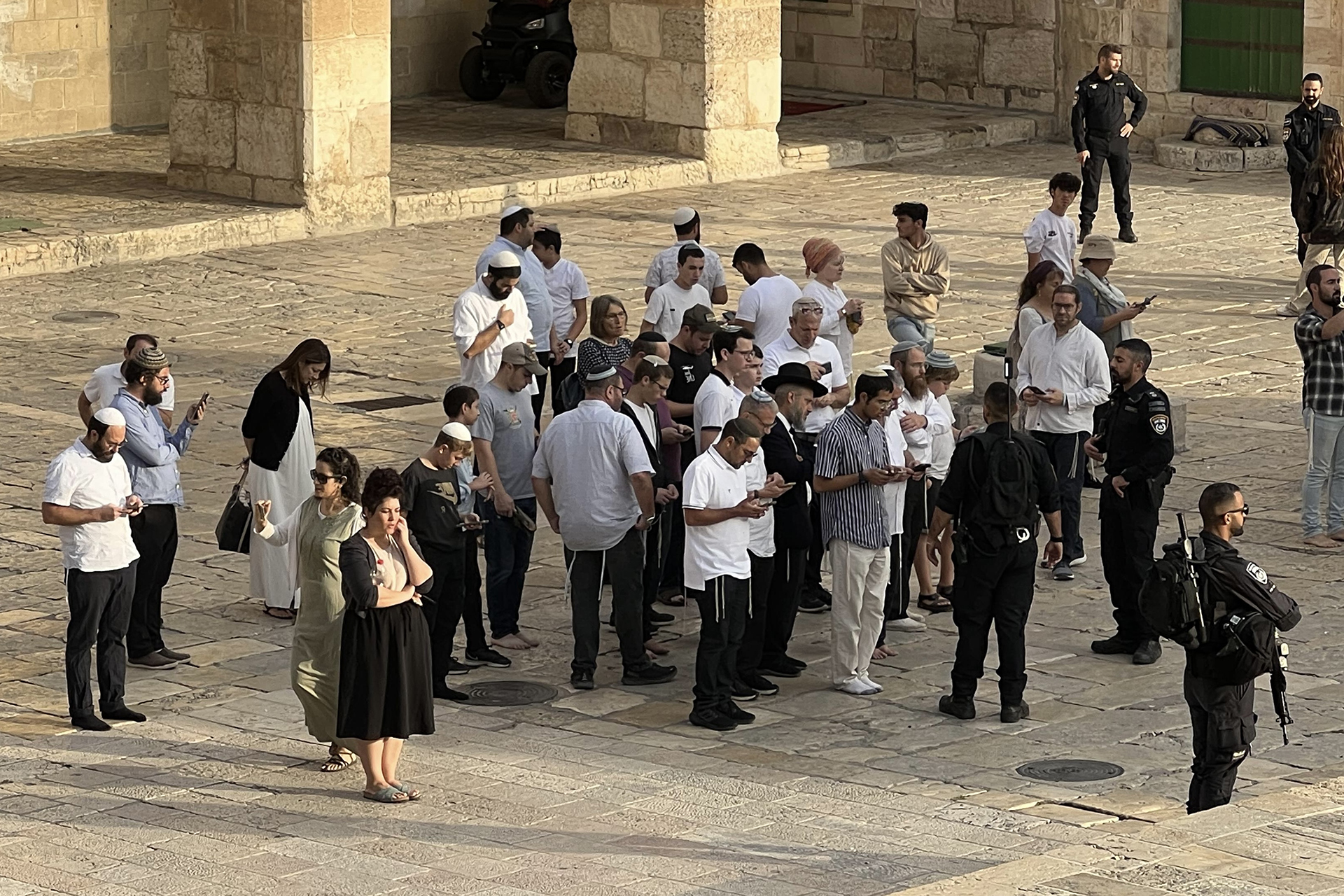
As the Jewish holiday of Hanukkah concluded on Monday, a surge in settler activity and violations within the Al-Aqsa Mosque compound has been reported. The eight-day holiday saw increased numbers of settlers entering the holy site, raising concerns among Palestinian authorities and international observers.
Following the closure of the Mughrabi Gate, the designated entry point for non-Muslim visitors, the total number of settlers who entered Al-Aqsa during Hanukkah reached 2,805, according to unofficial estimates. Israeli police secured the entry of these individuals over six days, with intrusions paused on Fridays and Saturdays. These entries began on Monday, December 15th with 276 settlers, followed by higher numbers throughout the week: Tuesday (370), Wednesday (339), Thursday (447), Sunday (917), and concluding on Monday with (456). These numbers represent a 9.7% increase compared to the 2,556 settlers who entered Al-Aqsa during Hanukkah in 2024, according to unofficial data.
Notable Violations During Hanukkah:
Due to restrictions imposed by Israeli police, Al-Aqsa guards are prevented from documenting settler violations directly, and journalists are often denied entry. Consequently, reports of violations primarily originate from Temple Mount groups and their online activities. Some of the most significant violations during the holiday include:
- The introduction of a small wooden model of a menorah, with two candles affixed, aimed at transferring candle-lighting rituals to Al-Aqsa. This occurred on at least two occasions during the holiday.
- Settlers brought in tefillin (phylacteries) and tallitot (prayer shawls), items used for Jewish prayer and religious rituals.
- The performance of the “Priestly Blessing” prayer and the “Epic Prostration” ritual, involving full prostration on the ground, a practice considered the highest form of submission.
- Several rabbis entered the mosque compound, including Elisha Wolfson, rabbi of the “Temple Mount Religious School,” and Dov Lior, head of the Council of Rabbis of the West Bank.
- Settlers engaged in singing and dancing to celebrate the “miracle of Hanukkah” in the eastern courtyards of Al-Aqsa.
- The introduction of flags associated with the alleged Temple, often raised during the Flag March on “Jerusalem Unification Day.”
These events occurred as the start of the Hebrew month approached. The increased settler presence and reported violations during Hanukkah have further heightened tensions surrounding the Al-Aqsa Mosque, a site of immense religious and historical significance to both Muslims and Jews.